

Detailed Explanation of Soybean Meal Pneumatic Conveying Systems
For industries dealing with soybean meal, efficient and reliable material handling is crucial. The pneumatic conveying system for soybean meal offers a solution that combines advanced technology with practical application, ensuring smooth and safe transport of this essential feed ingredient.
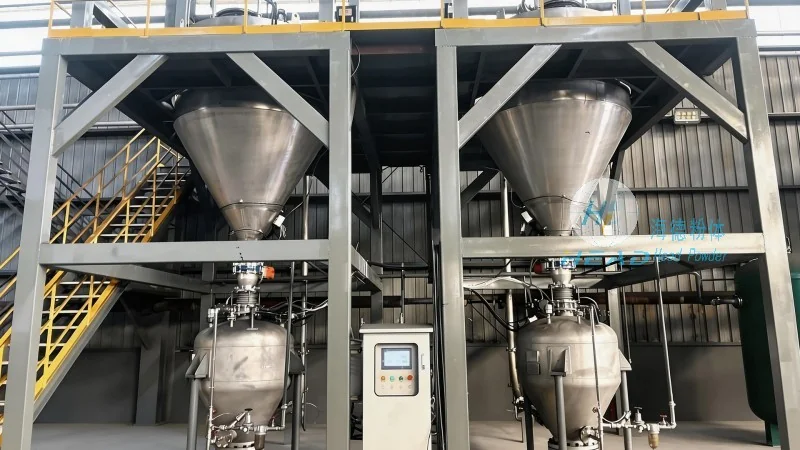
About HeadPowder Engineering
HeadPowder, the professional brand under Shandong HeadPowder Engineering Co., Ltd., specializes in designing and manufacturing high-quality pneumatic conveying systems tailored for various industrial needs. With a strong presence in Shandong, China, the company leverages decades of experience to deliver robust solutions that meet the demanding requirements of the agricultural and food processing sectors.
Overview of Soybean Meal Pneumatic Conveying Systems
Soybean meal, a vital component in animal feed and various food products, requires specialized handling due to its granular and sometimes dusty nature. Traditional methods like belt conveyors or bucket elevators may face challenges such as material degradation, contamination, and operational inefficiencies. The pneumatic conveying system addresses these issues by using air pressure to transport soybean meal in a closed, controlled environment, minimizing exposure to external factors and maintaining product integrity.
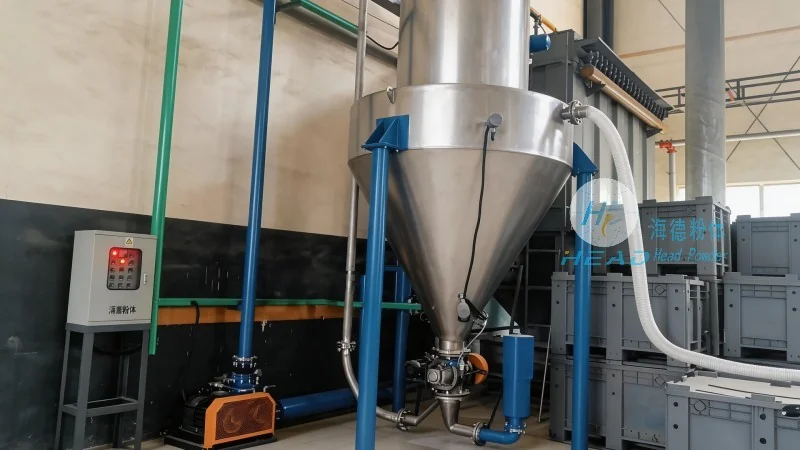
System Components and Working Principle
The soybean meal pneumatic conveying system typically consists of several key components that work in harmony to achieve efficient material transport. These include a hopper for material storage, a rotary valve or feeder to control the flow rate, a conveying line (usually made of stainless steel or other corrosion-resistant materials), a pressure vessel or receiver, and a dust collector or filter system. The working principle involves the feeder releasing soybean meal into the conveying line, where it is mixed with air under pressure. The air-solids mixture travels through the pipeline to the destination point, such as a storage silo or processing unit. The system may use either positive pressure (where air pushes the material) or negative pressure (where air pulls the material), depending on the specific application and layout.
Advantages of Pneumatic Conveying for Soybean Meal
Compared to traditional mechanical conveyors, the pneumatic system offers several advantages that make it an ideal choice for soybean meal handling. Firstly, it provides a completely enclosed transport path, preventing contamination from dust, moisture, or other environmental factors. This is particularly important for soybean meal, which is sensitive to quality degradation. Secondly, the system allows for gentle handling of the material, reducing the risk of breakage or agglomeration. Thirdly, it enables flexible and scalable solutions, as the conveying line can be easily extended or reconfigured to accommodate changes in production volume or facility layout. Additionally, the system is energy-efficient and can handle a wide range of particle sizes and moisture contents, making it versatile for different processing stages.
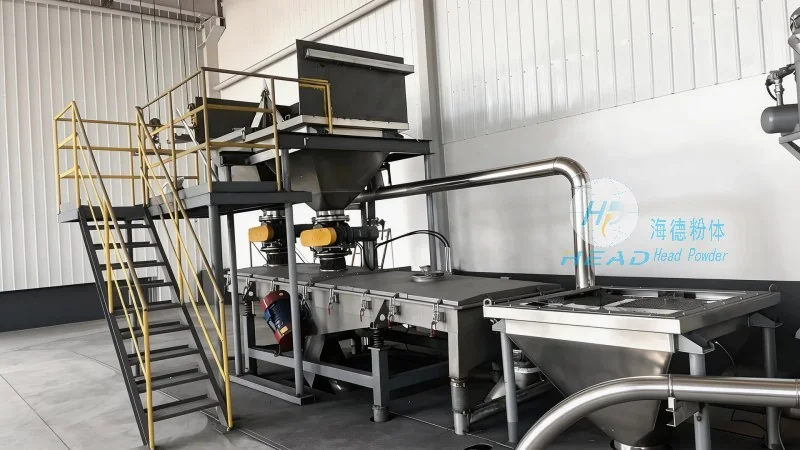
Applications and Industries
The soybean meal pneumatic conveying system is widely used in various industries that rely on soybean meal as a key ingredient. In the animal feed industry, it is used to transport soybean meal from storage silos to feed mills or mixing facilities. In the food processing industry, it may be employed to move soybean meal for use in products like protein powders, baked goods, or other food items. The system is also suitable for industrial applications where soybean meal is used as a raw material in manufacturing processes, such as in the production of biodegradable materials or organic fertilizers. Regardless of the industry, the system ensures consistent and reliable delivery of soybean meal, supporting efficient production and quality control.
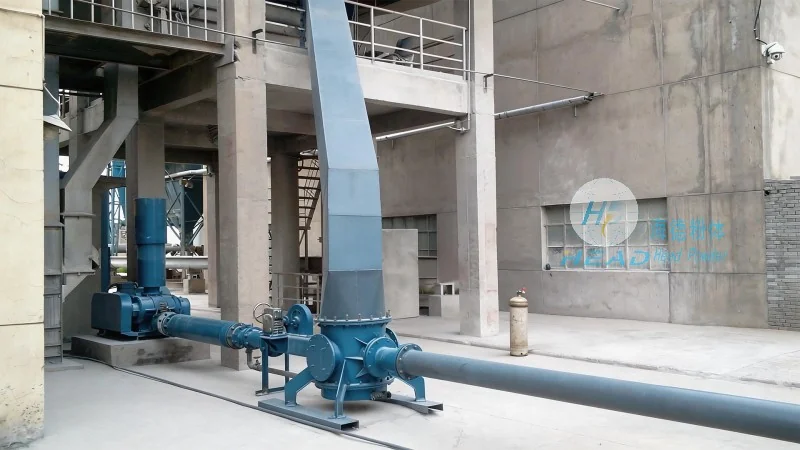
Technical Features and Customization
HeadPowder Engineering designs pneumatic conveying systems with a focus on customization to meet the unique needs of each client. The systems are engineered to handle specific characteristics of soybean meal, such as particle size distribution, moisture content, and bulk density. Advanced control systems are integrated to monitor and adjust the conveying process in real-time, ensuring optimal performance and minimizing downtime. The use of high-quality materials, such as stainless steel for the conveying line and corrosion-resistant components for the feeder and valve, ensures durability and long-term reliability. Additionally, the company offers after-sales support and maintenance services to ensure the system operates at peak efficiency throughout its lifespan.
Conclusion
The soybean meal pneumatic conveying system from Shandong HeadPowder Engineering Co., Ltd. represents a sophisticated and effective solution for the efficient handling of soybean meal. By leveraging advanced pneumatic technology and tailored engineering, the system addresses the challenges associated with traditional material transport methods, providing a reliable, clean, and efficient way to move this essential feed ingredient. With a strong commitment to quality and customer satisfaction, HeadPowder continues to deliver innovative solutions that support the growth and success of industries worldwide.