

Classification and Application Analysis of Pneumatic Conveying Systems for Lithium-Ion Battery Catho
HeadPowder, a leading engineering firm specializing in material handling solutions, provides comprehensive insights into the classification and practical applications of pneumatic conveying systems for lithium-ion battery cathode materials. This analysis aims to equip industry professionals with a clear understanding of system types, operational principles, and real-world deployment scenarios.
Company Profile and Background
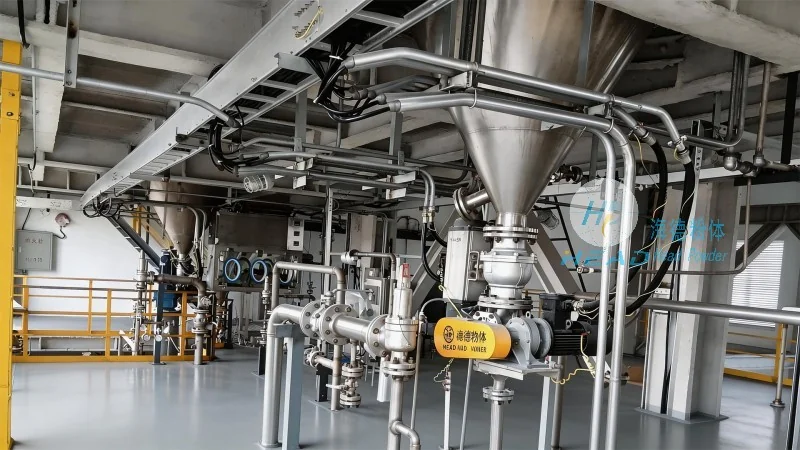
HeadPowder, operating under the full name Shandong HeadPowder Engineering Co., Ltd., is headquartered in Shandong, China. With a strong focus on advanced material processing technologies, the company has developed expertise in designing and implementing efficient systems for handling sensitive materials like lithium-ion battery cathode powders. The company's engineering solutions are tailored to meet the stringent requirements of modern battery manufacturing, ensuring safety, reliability, and optimal performance.
Introduction to Pneumatic Conveying Systems for Cathode Materials
Pneumatic conveying systems are critical components in the lithium-ion battery production chain, responsible for transporting cathode materials from storage to processing units. These systems utilize air or other gases to move powders through pipelines, offering advantages such as dust-free operation, low maintenance, and the ability to handle abrasive or sensitive materials. The choice of system type depends on factors including material properties, process requirements, and environmental considerations.
Classification of Pneumatic Conveying Systems
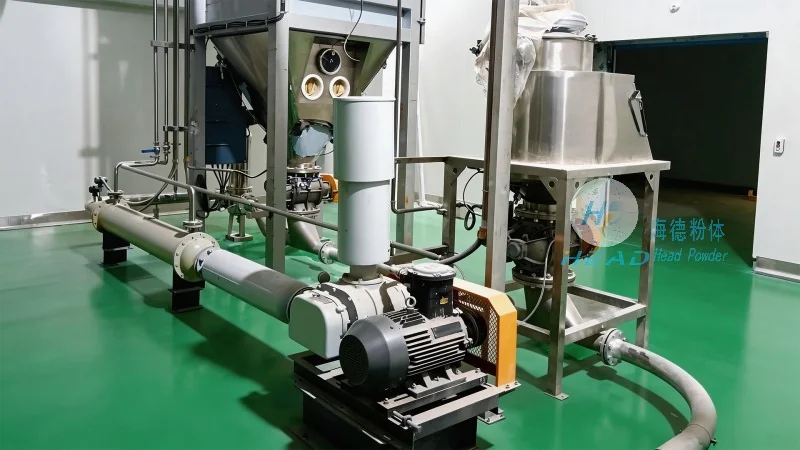
There are several key classifications of pneumatic conveying systems, each suited to different operational needs. The primary categories include pressure systems, vacuum systems, and combined systems. Pressure systems operate by forcing air or gas into a sealed system, pushing material through pipelines. Vacuum systems, conversely, create a negative pressure to draw material from a source. Combined systems integrate both pressure and vacuum capabilities, allowing for flexible material handling across various stages of the production process.
Application Analysis of Different System Types
Pressure systems are commonly used for long-distance material transport and high-volume applications. They are particularly effective for handling dry, free-flowing cathode powders that require consistent flow rates. Vacuum systems, on the other hand, are ideal for short-distance transport or when material needs to be drawn from a hopper or silo. These systems are often preferred for their ability to handle materials with varying moisture content or particle sizes. Combined systems offer the flexibility to switch between pressure and vacuum modes, making them suitable for complex production lines where material may need to be transferred between different processing stages.
Key Considerations in System Design and Implementation
When designing a pneumatic conveying system for lithium-ion battery cathode materials, several critical factors must be considered. Material properties, such as particle size, density, and moisture content, directly impact system performance and efficiency. The system must be engineered to prevent material degradation, agglomeration, or contamination, which are common issues in handling sensitive powders. Additionally, system scalability and integration with existing production lines are essential considerations to ensure seamless operation and minimal downtime.
Real-World Deployment Examples
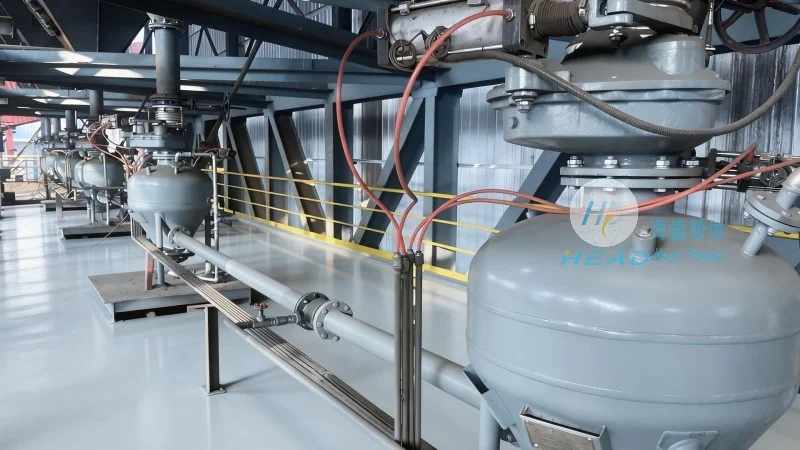
HeadPowder has successfully implemented pneumatic conveying systems in various lithium-ion battery manufacturing facilities. For instance, in a large-scale battery cell production plant, a pressure pneumatic system was deployed to transport high-purity cathode powders from bulk storage to mixing and coating lines. The system was designed to maintain particle integrity and prevent dust generation, ensuring compliance with environmental regulations. Another application involved a vacuum system used for transferring cathode powders from a raw material silo to a blending unit, where precise dosing was required to achieve uniform material composition. These case studies highlight the effectiveness of tailored pneumatic conveying solutions in optimizing production efficiency and product quality.
Conclusion and Future Outlook
In conclusion, pneumatic conveying systems play a vital role in the efficient and safe handling of lithium-ion battery cathode materials. The classification and application analysis provided by HeadPowder underscores the importance of selecting the appropriate system based on specific operational requirements. As the battery industry continues to grow, the demand for advanced material handling solutions will increase, driving further innovation in pneumatic conveying technologies. HeadPowder remains committed to providing cutting-edge engineering solutions that meet the evolving needs of the industry, ensuring sustainable and high-performance production of lithium-ion batteries.