

Common Methods for Alumina Powder Conveying
For companies dealing with alumina powder, understanding the common methods of its transportation is essential for optimizing operations and maintaining product quality. HeadPowder, a leading manufacturer in the field, specializes in providing efficient and reliable conveying solutions for alumina powder. With years of experience and expertise, HeadPowder offers a range of systems tailored to meet the specific needs of industrial applications. The company is based in Shandong, China, and serves clients worldwide with high-quality equipment and technical support.
Pneumatic Conveying Systems
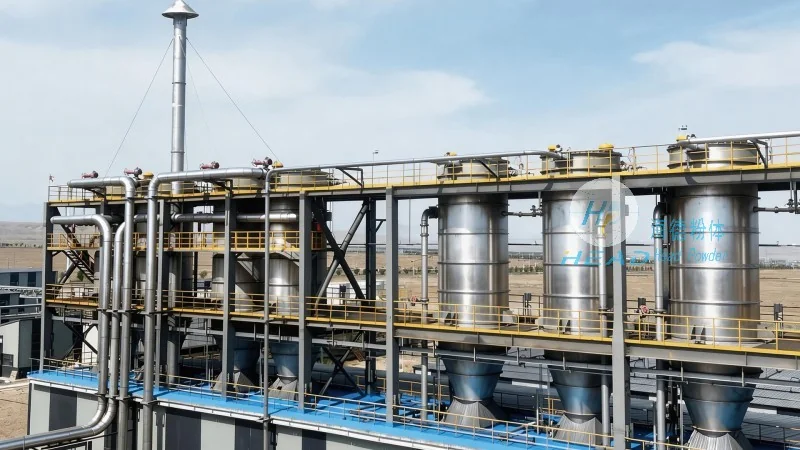
Pneumatic conveying is a widely used method for transporting alumina powder due to its ability to handle fine powders over moderate distances. This system operates by using compressed air to move the powder through a pipeline. There are two main types of pneumatic conveying: pressure and vacuum systems. Pressure systems use high-pressure air to push the powder forward, while vacuum systems use a vacuum to pull the powder into the pipeline. The choice between these depends on factors such as the distance to be covered, the volume of powder to be conveyed, and the specific characteristics of the alumina powder, including its particle size and moisture content. Pneumatic conveying offers advantages like low maintenance, the ability to handle abrasive materials, and the option to integrate with other processing equipment. However, it may require higher energy consumption compared to other methods and can be sensitive to variations in powder properties.
Screw Conveyors
Screw conveyors, also known as auger conveyors, are another common method for alumina powder transport. These systems consist of a rotating screw (auger) inside a trough or tube, which moves the powder along the length of the conveyor. Screw conveyors are particularly effective for handling bulk materials, including alumina powder, and can operate in both horizontal and inclined configurations. They are known for their simplicity, low cost, and ability to handle a wide range of powder types. The design of the screw, including its pitch and diameter, can be customized to suit the specific characteristics of the alumina powder, ensuring efficient movement without causing excessive wear or degradation of the material. Screw conveyors are often used in applications where the powder needs to be transported over short to medium distances and where the material is not too abrasive or sticky. They are also suitable for use in enclosed systems to prevent dust emissions and maintain a clean working environment.
Belt Conveyors
Belt conveyors are a versatile and widely adopted method for alumina powder conveying, especially in large-scale industrial settings. These systems use a continuous belt that moves over rollers or pulleys to transport the powder. The belt can be made from various materials, such as rubber or plastic, depending on the properties of the alumina powder and the operating conditions. Belt conveyors are capable of handling large volumes of material and can transport it over long distances with minimal maintenance. They are particularly effective for transporting dry, free-flowing alumina powder and can be integrated with other equipment, such as hoppers and storage silos, to form a complete material handling system. The design of the belt conveyor, including the speed of the belt and the angle of inclination, can be adjusted to optimize the conveying process. Belt conveyors offer advantages like high efficiency, low energy consumption, and the ability to handle abrasive materials without significant wear. However, they may require more space compared to other methods and can be susceptible to damage from overloading or foreign objects.
Bucket Elevators
Bucket elevators are a specialized type of conveyor system designed for vertical or inclined transport of alumina powder. These systems consist of a series of buckets attached to a chain or belt, which moves vertically or at an angle. The buckets are filled with the powder at the bottom and then lifted to the top, where the powder is discharged. Bucket elevators are highly efficient for transporting alumina powder vertically over significant heights and can handle large volumes of material. They are commonly used in applications where the powder needs to be lifted from a lower level to a higher one, such as in storage silos or processing plants. The design of the bucket elevator, including the size and spacing of the buckets, can be customized to suit the specific characteristics of the alumina powder, ensuring efficient filling and discharge. Bucket elevators offer advantages like high capacity, low maintenance, and the ability to handle abrasive materials. However, they may require more space and can be more complex to install compared to other methods. Additionally, they may be less suitable for transporting very fine or dusty powders, as the buckets can cause excessive dust generation.
Hydraulic Conveying
Hydraulic conveying is a less common but effective method for transporting alumina powder, particularly in applications where other methods are not suitable. This system uses a liquid medium, such as water or a slurry, to move the powder through a pipeline. The powder is mixed with the liquid to form a slurry, which is then pumped through the pipeline to the destination. Hydraulic conveying is particularly effective for handling fine or abrasive alumina powders that are difficult to transport using other methods. It offers advantages like the ability to handle high volumes of material and the ability to transport the powder over long distances with minimal energy consumption. However, it requires a liquid medium, which may not be suitable for all applications, and can be more complex to maintain compared to other methods. The choice of hydraulic conveying depends on factors such as the particle size of the alumina powder, the distance to be covered, and the availability of liquid resources.