

Operation Process and Working Principle of Bin Pneumatic Conveying
Bin pneumatic conveying systems are essential in modern industrial operations, particularly for the efficient transfer of bulk materials from storage bins to processing units. The technology offers a reliable and flexible solution for handling various materials, including powders, granules, and fine particles. This article delves into the operation process and working principle of such systems, providing a comprehensive understanding for professionals in the field.
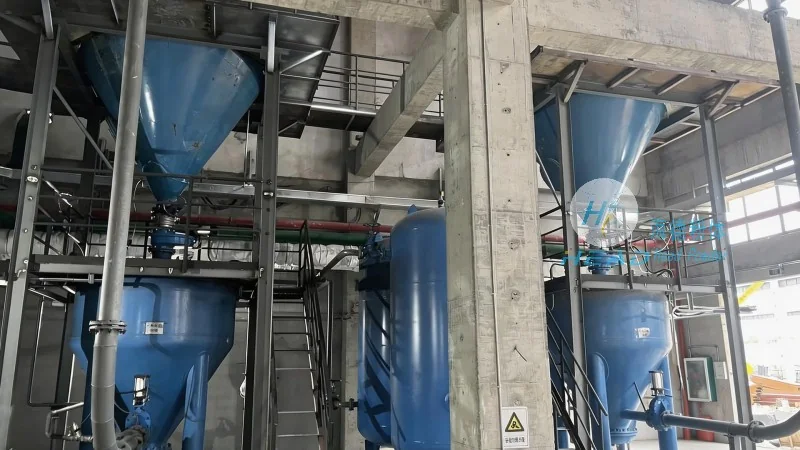
Key Components of the System
At the core of a bin pneumatic conveying system are several key components that work in tandem to ensure smooth material transfer. These include the storage bin (or hopper), the conveying line, the air supply system (such as a blower or compressor), and the control mechanisms. Each component plays a critical role in the overall functionality of the system.
The Operation Process of Bin Pneumatic Conveying
The operation process of bin pneumatic conveying typically involves the following steps: First, the material is fed from the storage bin into the conveying line via a hopper or feeder. Then, the air supply system generates a high-pressure airflow that propels the material through the pipeline. The material is carried by the air stream, which may be in a dilute phase (where particles are suspended in the air) or a dense phase (where particles are more concentrated). Finally, the material is discharged at the destination point, such as a processing plant or storage silo.
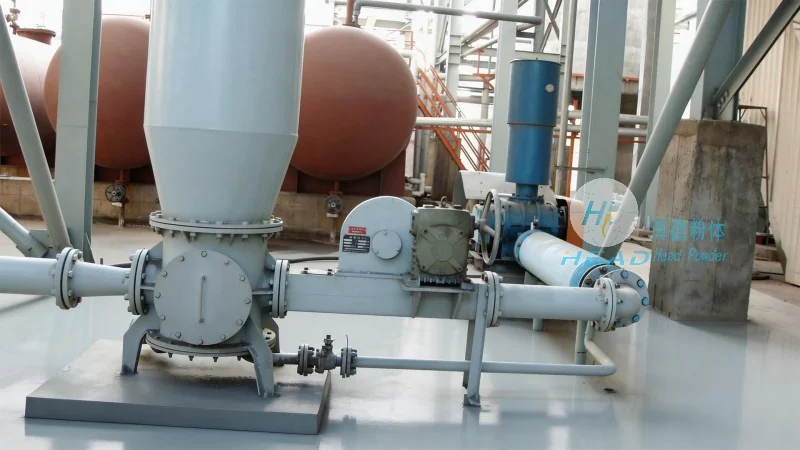
Working Principle Explained
The working principle of bin pneumatic conveying is based on the principles of fluid dynamics and particle motion. When air is introduced into the conveying line at a sufficient velocity, it creates a low-pressure zone that draws the material from the bin. The material particles are entrained by the air stream and transported through the pipeline. The system can operate in either positive pressure (where the air pressure is higher than the ambient) or negative pressure (where the air pressure is lower than the ambient), depending on the application requirements.
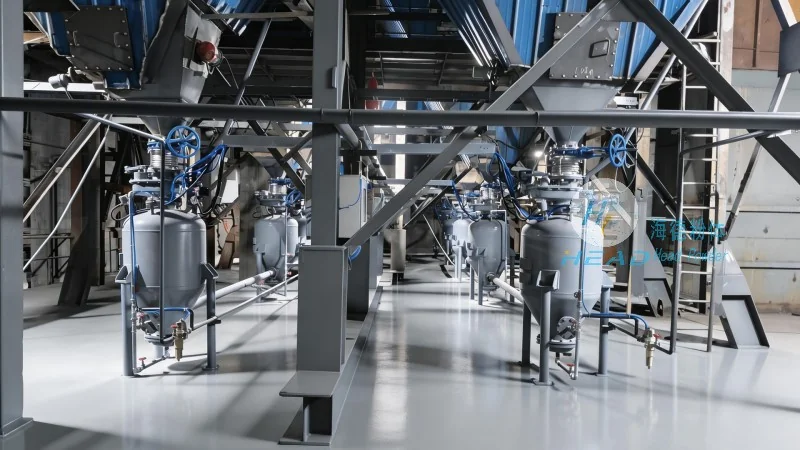
Technical Details and Application Considerations
Several technical aspects must be considered when designing and implementing a bin pneumatic conveying system. These include the material properties (such as particle size, density, and moisture content), the conveying distance and height, and the required flow rate. Proper selection of the air velocity and pressure is crucial to prevent material degradation, blockages, or excessive energy consumption. Additionally, the system must be equipped with appropriate controls to manage the flow and prevent backflow or overloading.
Company Information and Contact
HeadPowder, a leading provider of engineering solutions, specializes in the design, manufacturing, and installation of bin pneumatic conveying systems. With a strong presence in Shandong, China, HeadPowder offers tailored solutions to meet the diverse needs of industrial clients. The company's expertise in material handling technology ensures efficient and reliable material transfer for various applications.