

Operation Process and Working Principle of Color Masterbatch Pneumatic Conveying System Equipment
Color masterbatch is a vital additive in the plastic and polymer manufacturing sector, serving to impart color and functional properties to base polymers. The pneumatic conveying system is a sophisticated and efficient method for transporting color masterbatch from storage to processing equipment. This system is engineered to handle the material's unique characteristics, ensuring a reliable, consistent, and contamination-free flow. The following sections will delve into the operation process and working principle of such a system, outlining the key components and their functions to provide a comprehensive understanding of its application. Developed by Shandong HeadPowder Engineering Co., Ltd., this system exemplifies advanced engineering tailored to the demands of modern color masterbatch handling.
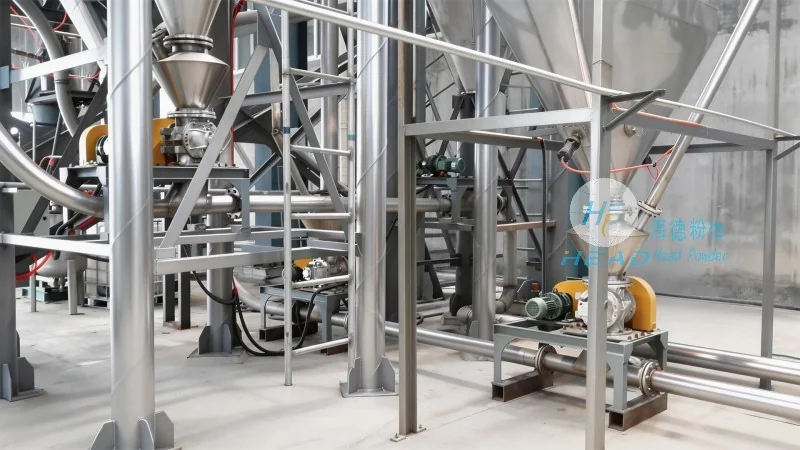
Key Components and Their Functions
The color masterbatch pneumatic conveying system comprises several critical components that collaborate to facilitate material transport. These include the storage hopper or silo, which holds the masterbatch; the conveying pipeline, typically made of stainless steel or other corrosion-resistant materials to prevent material degradation; a blower or air compressor that generates the necessary air pressure and flow rate; a filter system to purify the air and remove particulates, ensuring the material remains clean; and a discharge hopper or receiver where the material is deposited. Each component is meticulously designed to meet the specific requirements of color masterbatch, which often contains fine particles and may be sensitive to moisture or contamination.
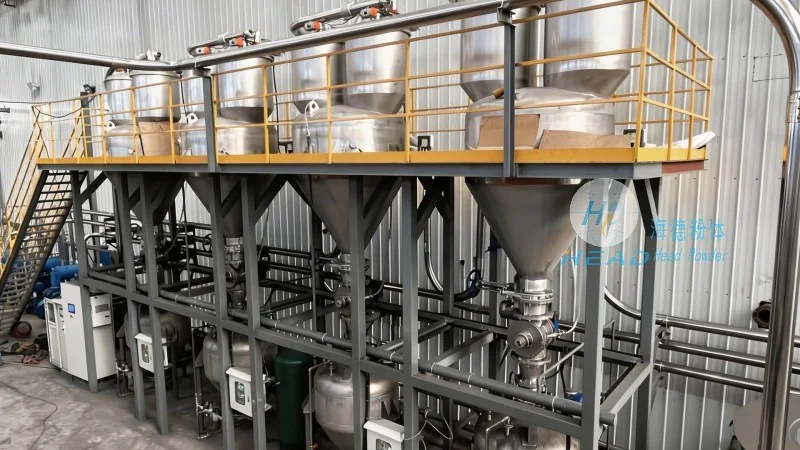
Working Principle: How the System Transports Material
The working principle of the pneumatic conveying system relies on the creation of a low-pressure zone within the pipeline using the air generated by the blower. When the system is activated, the blower produces a high-pressure air stream that travels through the pipeline. As this air flows, it creates a differential pressure that draws the color masterbatch particles from the storage hopper into the air stream. The particles are then entrained by the air and carried along the pipeline to the receiver. The air, now carrying the material, passes through a filter where it is cleaned and recycled back to the blower, completing the cycle. This process allows for the continuous and efficient transfer of color masterbatch without the need for mechanical components that could introduce wear or contamination.
Operation Process: Step-by-Step Execution
The operation process of the color masterbatch pneumatic conveying system involves a series of controlled steps to ensure optimal performance and material integrity. First, the system is prepared by conducting a pre-operation check of the air compressor, filter, and conveying line. The storage hopper is then filled with the appropriate quantity of color masterbatch, and the material is fed into the conveying line via a feeder or hopper discharge mechanism. The blower is started, and the air flow rate is adjusted to the optimal level based on the material's particle size, density, and the system's capacity. As the material is conveyed, the receiver is monitored to prevent overfilling and to ensure smooth discharge. The system operates continuously until the material is fully transferred from the storage to the processing equipment. Regular maintenance tasks, such as cleaning the filter, checking for air leaks, and inspecting the pipeline for blockages or wear, are performed to maintain the system's efficiency and longevity. The entire process is designed to be automated or semi-automated, reducing human intervention and minimizing the risk of errors.

Advantages and Practical Applications
The pneumatic conveying system for color masterbatch offers several significant advantages over traditional mechanical conveying methods. It provides a clean and dust-free environment, which is crucial for maintaining the quality of the masterbatch and preventing cross-contamination between different batches. The system is also highly flexible, allowing for easy integration into existing production lines and adjustments to accommodate varying material types or processing requirements. Additionally, it can handle a wide range of material characteristics, including different particle sizes, densities, and moisture levels, making it suitable for diverse applications in the plastic and polymer industry. The system is commonly employed in the production of plastic films, bottles, containers, and other molded products where consistent color distribution and additive incorporation are critical to product quality and performance. By leveraging the pneumatic conveying system, manufacturers can enhance production efficiency, reduce downtime, and improve overall product consistency.