

Operation Process and Working Principle of a Powder Mixing and Conveying System for Formulation
For industrial applications requiring precise and efficient handling of powders, the operation process and working principle of a powder mixing and conveying system are critical to ensuring optimal performance and product quality. This article provides a detailed overview of the system's functionality, focusing on the key components and operational steps involved in the process.
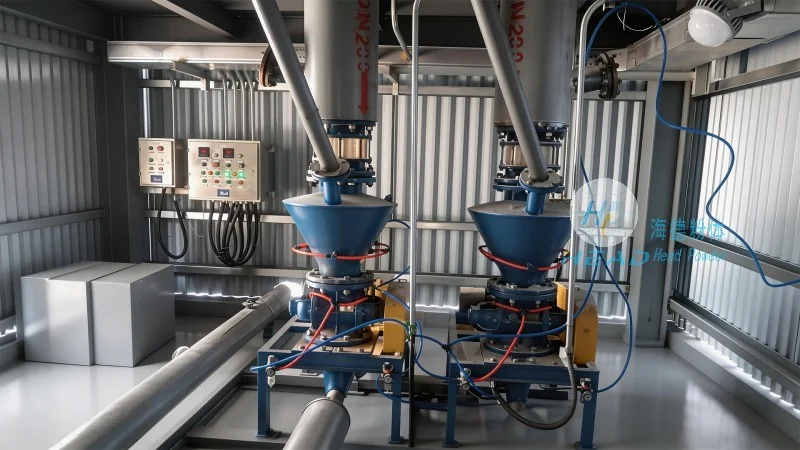
Introduction to the Powder Mixing and Conveying System
The powder mixing and conveying system is a specialized equipment designed to handle, blend, and transport dry powders in various industrial settings. Developed by Shandong HeadPowder Engineering Co., Ltd. (headpowder), a company based in Shandong, China, this system integrates advanced technology to meet the demands of modern manufacturing processes, particularly in sectors such as pharmaceuticals, food processing, and chemical production. The system's design emphasizes efficiency, reliability, and safety, making it a preferred choice for industries where precision and consistency are paramount.
Key Components of the System
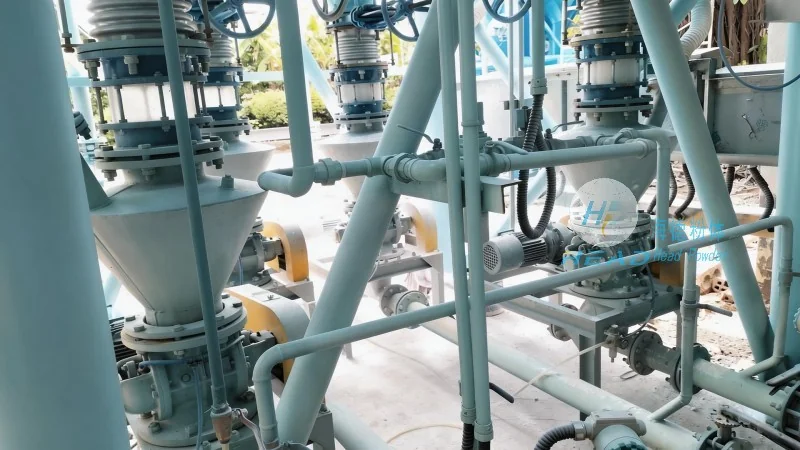
The powder mixing and conveying system comprises several essential components that work in tandem to achieve the desired outcomes. These include feed hoppers, mixing chambers, conveying mechanisms, and control systems. Each component plays a vital role in the overall operation, ensuring that powders are handled with minimal degradation and maximum uniformity.
Operation Process of the System
The operation process of the powder mixing and conveying system begins with the loading of raw materials into the feed hoppers. The system then proceeds to the mixing phase, where the powders are blended thoroughly to achieve the desired composition. Once mixed, the material is transferred to the conveying section, where it is transported to the next stage of the production line. The entire process is controlled by an advanced control system that monitors parameters such as flow rate, mixing time, and temperature to maintain consistency and prevent issues like clogging or uneven distribution.
Working Principle of the System
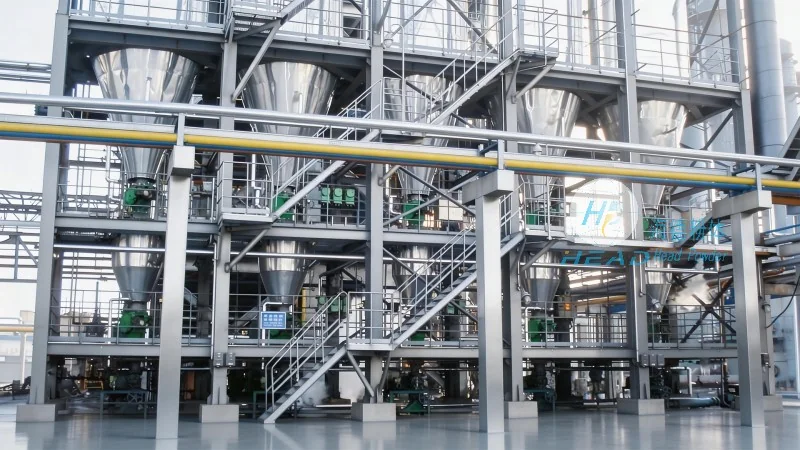
The working principle of the powder mixing and conveying system is based on the principles of fluid dynamics and mechanical agitation. The mixing process involves the use of agitators or paddles that rotate at controlled speeds to break up agglomerates and ensure uniform blending. The conveying mechanism typically employs pneumatic or mechanical methods to move the mixed powder from one location to another. The system's design minimizes particle attrition and maintains the integrity of the powder, which is crucial for applications where particle size and shape are critical to product performance.
Benefits and Applications
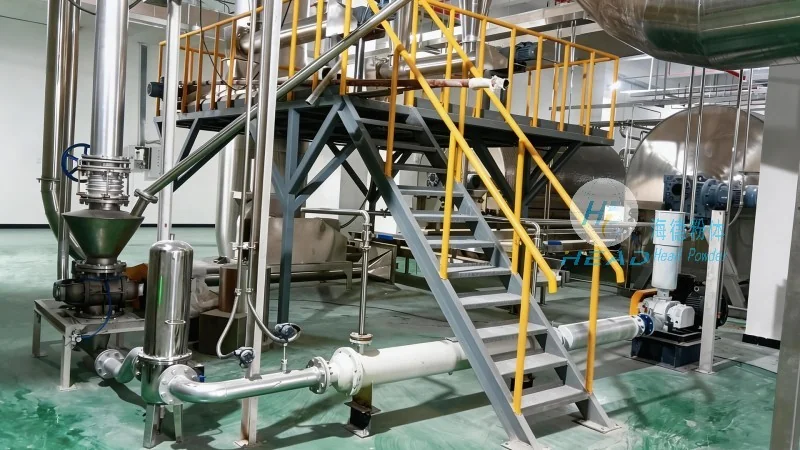
The powder mixing and conveying system offers numerous benefits, including improved product quality, reduced downtime, and enhanced safety. Its ability to handle a wide range of powders, from fine to coarse, makes it suitable for diverse applications. In the pharmaceutical industry, for example, the system ensures that active ingredients are uniformly mixed, leading to consistent drug formulations. In the food industry, it helps maintain the quality and flavor of ingredients, while in chemical production, it supports the production of high-purity products.
Conclusion
Shandong HeadPowder Engineering Co., Ltd. has developed a robust and efficient powder mixing and conveying system that meets the stringent requirements of modern industrial applications. By understanding the operation process and working principle of this system, users can optimize their processes, enhance product quality, and improve overall operational efficiency. The system's design, combined with advanced control technology, ensures reliable performance and long-term durability, making it a valuable asset for any facility dealing with powder handling and processing.