

Comparison of Common Lithium Battery Mineral Powder Conveying Methods
Conveying lithium battery mineral powders is a critical process in the production of lithium-ion batteries, where the efficient and reliable transport of raw materials such as lithium carbonate, lithium hydroxide, and other mineral powders directly impacts production efficiency and product quality. Various conveying methods are employed in the industry, each with distinct characteristics suited to different production scenarios. This article provides a detailed comparison of common lithium battery mineral powder conveying methods, focusing on their operational principles, advantages, disadvantages, and typical applications.
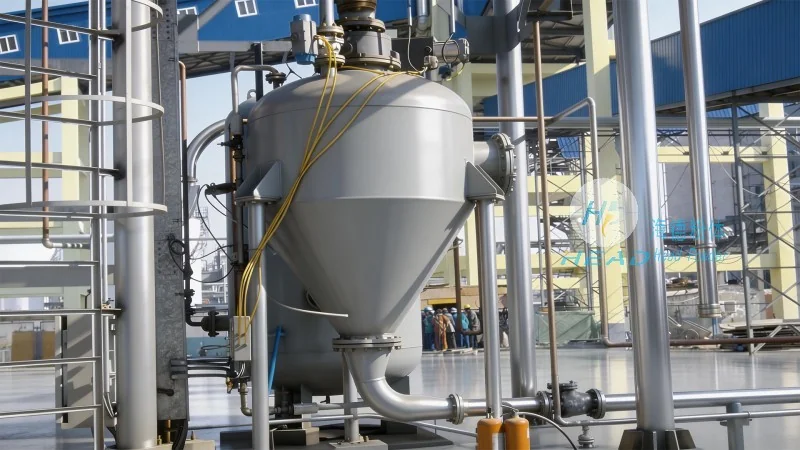
1. Screw Conveyor (Auger Conveyor)
Screw conveyors are one of the most widely used equipment for conveying mineral powders in lithium battery production. They consist of a rotating screw (auger) inside a U-shaped or cylindrical tube, which pushes the material forward through rotation. The screw conveyor is particularly suitable for conveying powders with good flowability and moderate moisture content. In lithium battery manufacturing, screw conveyors are commonly used for transporting raw materials like lithium carbonate and lithium hydroxide from storage silos to mixing or processing equipment. The advantages of screw conveyors include simple structure, low cost, and easy maintenance. However, they have limitations in handling materials with high moisture content or large particle sizes, as this can cause blockages and reduce conveying efficiency. Additionally, the screw conveyor may generate dust during operation, requiring proper dust collection systems to ensure environmental compliance.
2. Pneumatic Conveying System (Air-Driven)
Pneumatic conveying systems use compressed air to transport mineral powders through a pipeline network. This method is highly effective for conveying fine powders over long distances and can handle materials with high moisture content or sticky properties. In the lithium battery industry, pneumatic conveying is often employed for transporting lithium carbonate or lithium hydroxide from raw material storage areas to production lines, especially in facilities with multiple processing stages. The primary advantages of pneumatic conveying include high conveying capacity, ability to handle diverse materials, and reduced labor costs due to automated operation. However, this method has higher energy consumption compared to mechanical conveyors, and the system requires regular maintenance of air compressors and filter systems to prevent dust accumulation and ensure stable operation. Moreover, the initial investment for a pneumatic conveying system is generally higher than that of screw or belt conveyors.
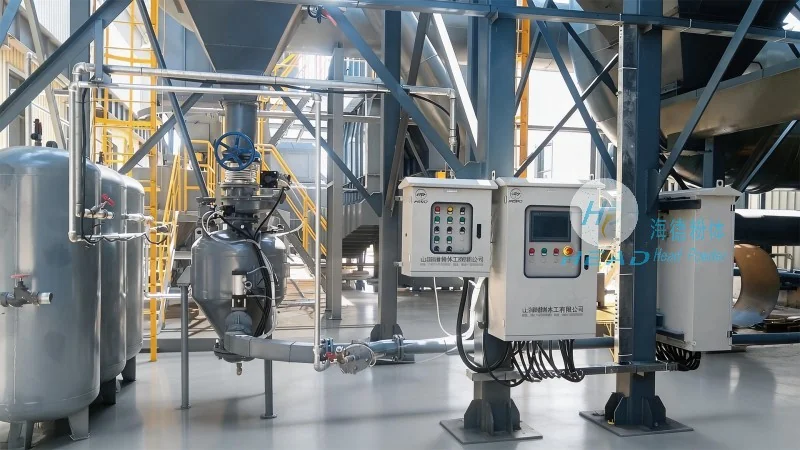
3. Belt Conveyor
Belt conveyors are another common solution for mineral powder transport, especially in large-scale lithium battery production lines. They consist of a continuous belt that moves over rollers, transporting materials from one point to another. Belt conveyors are suitable for conveying bulk materials over long distances with high throughput. In lithium battery manufacturing, belt conveyors are often used to transport larger quantities of raw materials such as lithium ore or intermediate products from raw material processing areas to the main production facilities. The advantages of belt conveyors include high conveying capacity, ability to handle heavy loads, and low maintenance costs for the conveyor belt itself. However, belt conveyors require a relatively large footprint and may be less suitable for conveying fine powders, as the material can fall through the belt gaps, leading to material loss and inefficiency. Additionally, the system needs proper alignment and tensioning to prevent belt slippage or damage.
4. Bucket Elevator
Bucket elevators are vertical or inclined conveyors that use a chain with attached buckets to lift and transport mineral powders. This method is ideal for vertical or steep incline conveying, allowing materials to be moved from lower to higher levels without horizontal displacement. In lithium battery production, bucket elevators are commonly used to transport powders from raw material storage silos to elevated processing equipment or mixing tanks. The advantages of bucket elevators include high vertical conveying capacity, minimal material spillage, and the ability to handle materials with high moisture content or sticky properties. However, bucket elevators have a higher installation cost compared to other conveying methods and require more complex maintenance due to the chain and bucket system. The system also has a limited conveying capacity for very fine powders, as the buckets may not effectively lift small particles.
5. Hydraulic Conveying
Hydraulic conveying systems use water or other liquids to transport mineral powders through pipelines. This method is particularly effective for handling materials with high moisture content or sticky properties, as the liquid helps to lubricate and move the material. In the lithium battery industry, hydraulic conveying is sometimes used for transporting lithium carbonate or lithium hydroxide from raw material processing areas to storage tanks or mixing equipment. The advantages of hydraulic conveying include high conveying efficiency for wet or sticky materials and the ability to transport materials over long distances with minimal energy consumption. However, this method has limitations in handling dry powders, as the liquid may cause clogging or material degradation. Additionally, the system requires regular cleaning and maintenance of pipelines to prevent blockages and ensure consistent operation.
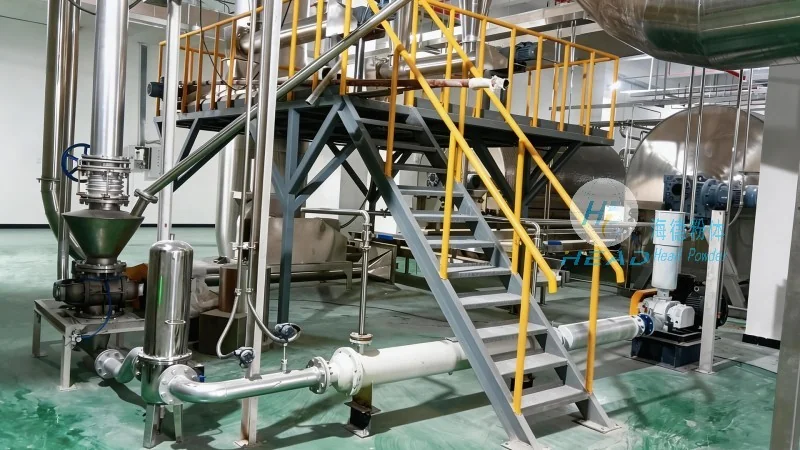
6. Comparison Summary
When selecting a conveying method for lithium battery mineral powders, manufacturers must consider factors such as material properties (e.g., particle size, moisture content, flowability), production scale, conveying distance, and cost. Screw conveyors are suitable for short-distance, moderate-capacity applications with dry powders. Pneumatic conveying is ideal for long-distance, high-capacity transport of fine powders, especially in automated production lines. Belt conveyors are preferred for large-scale, bulk material transport over long distances. Bucket elevators are best for vertical or steep incline conveying of materials with high moisture content. Hydraulic conveying is effective for wet or sticky materials but less suitable for dry powders. Each method has its strengths and weaknesses, and the optimal choice depends on the specific production requirements and operational constraints.
Conclusion
Efficient mineral powder conveying is essential for maintaining smooth operations in lithium battery production. The choice of conveying method directly impacts production efficiency, product quality, and operational costs. By understanding the characteristics and applications of different conveying systems, manufacturers can select the most suitable solution to meet their production needs. Shandong HeadPowder Engineering Co., Ltd. specializes in providing customized conveying solutions tailored to the unique requirements of lithium battery manufacturers, ensuring reliable and efficient transport of mineral powders throughout the production process.