

Introduction to the Pneumatic Conveying of Manganese Sulfate and Its Structural Principles
Manganese sulfate is a critical industrial chemical widely used in various sectors including battery manufacturing, agriculture, and chemical production. Efficient material handling is essential for maintaining production efficiency and safety. Pneumatic conveying systems offer a reliable method for transporting manganese sulfate, ensuring consistent flow and minimizing material degradation. This overview will explore the fundamental principles and structural components of such systems, highlighting their application in handling manganese sulfate.
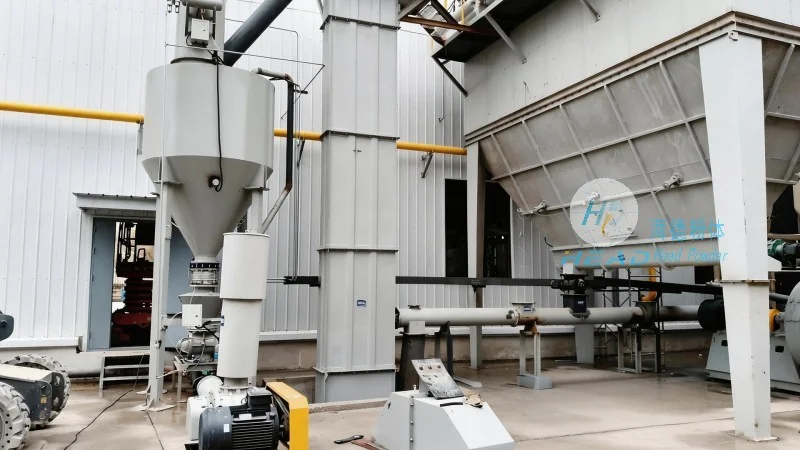
Key Characteristics of Manganese Sulfate and Its Handling Requirements
Manganese sulfate (MnSO₄) is typically available in powder or granular forms, with specific properties that influence the choice of conveying method. The material's particle size, moisture content, and flowability are crucial factors. For instance, fine powders may require more sophisticated control to prevent clogging or dust emissions. Understanding these characteristics is vital for designing an effective pneumatic conveying system that ensures the material is transported without loss or contamination. The system must also consider the potential for static electricity, as manganese sulfate can be prone to generating static charges during handling.
Structural Components of Pneumatic Conveying Systems
A pneumatic conveying system for manganese sulfate consists of several key components that work in tandem to achieve efficient material transport. The primary components include a hopper for material storage, a feeder to control the flow rate, a conveying line (often equipped with airlocks or rotary valves), and a receiver for the discharged material. Each component plays a critical role in the overall operation. The hopper ensures a consistent supply of material, while the feeder regulates the amount of manganese sulfate introduced into the system. The conveying line, which may be of the dilute or dense phase type, transports the material using compressed air. Airlocks or rotary valves are used to separate the material from the air stream, preventing backflow and ensuring a smooth transfer. The receiver collects the transported material, completing the process.
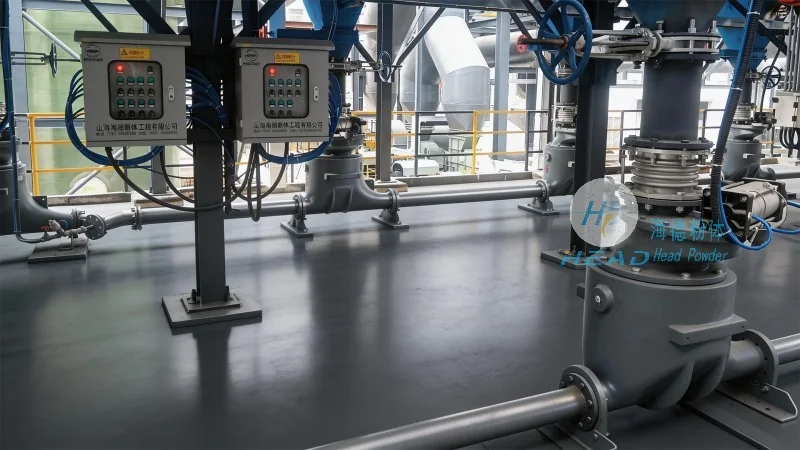
Working Principle of Pneumatic Conveying for Manganese Sulfate
The operation of a pneumatic conveying system for manganese sulfate relies on the principles of fluid dynamics and material transport. In a typical setup, compressed air is introduced into the conveying line, creating a flow that lifts and transports the manganese sulfate particles. The system can operate in either dilute phase (where particles are suspended in the air stream) or dense phase (where particles are more densely packed). The choice between these phases depends on the material's properties and the required conveying distance. For manganese sulfate, a dilute phase system is often preferred due to its ability to handle fine powders and maintain a consistent flow. The compressed air provides the necessary force to move the material through the system, while the components like airlocks ensure that the material is separated from the air at the discharge point. This process ensures that the manganese sulfate is transported efficiently and safely, minimizing the risk of material loss or equipment damage.
Advantages of Using Pneumatic Conveying for Manganese Sulfate Handling
Pneumatic conveying systems offer several advantages when handling manganese sulfate. One of the key benefits is the ability to transport the material in a closed system, which helps to control dust emissions and maintain a clean working environment. This is particularly important in industrial settings where dust can pose health risks or interfere with other processes. Additionally, pneumatic conveying allows for flexible system design, as the conveying line can be adjusted to fit the layout of the facility. The system can also handle varying material flow rates, making it suitable for both small-scale and large-scale production. Another advantage is the reduced need for mechanical components compared to other conveying methods, which can lower maintenance costs and improve system reliability. Overall, pneumatic conveying provides a cost-effective and efficient solution for handling manganese sulfate, enhancing production efficiency and safety.
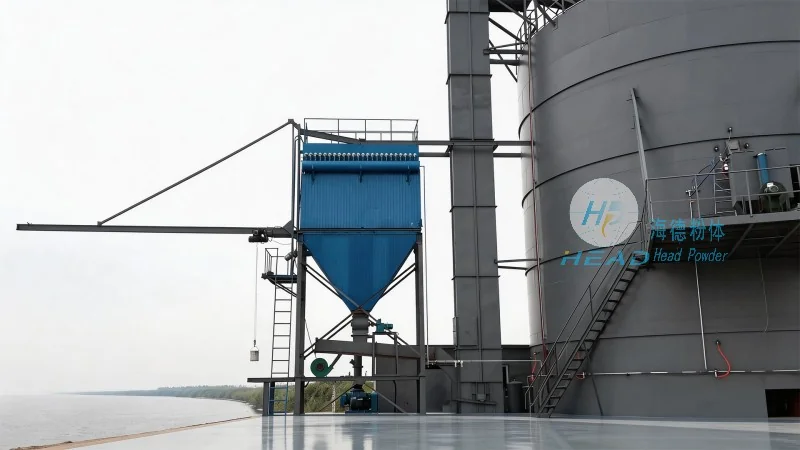
Application Examples and Case Studies
The application of pneumatic conveying systems for manganese sulfate is widespread across various industries. For example, in battery manufacturing, manganese sulfate is used as a raw material for cathode production. The pneumatic conveying system ensures that the material is delivered to the production line in a controlled manner, maintaining the quality of the final product. In agricultural applications, manganese sulfate is used as a fertilizer, and the system helps to transport it from storage to application equipment. These applications demonstrate the versatility and effectiveness of pneumatic conveying in handling manganese sulfate under different conditions. Case studies have shown that implementing a well-designed pneumatic conveying system can lead to significant improvements in production efficiency, reduced material loss, and lower operational costs. The success of these systems highlights the importance of proper design and maintenance to ensure optimal performance.
Conclusion and Company Profile
Pneumatic conveying systems are a reliable and efficient method for handling manganese sulfate, offering numerous benefits over traditional conveying methods. The structural components and working principles of such systems are designed to meet the specific requirements of manganese sulfate, ensuring safe and effective material transport. As a leading provider in the field, Shandong HeadPowder Engineering Co., Ltd. specializes in designing and manufacturing customized pneumatic conveying solutions tailored to the needs of various industries. With a focus on quality and innovation, the company has established itself as a trusted partner for businesses seeking to optimize their material handling processes. Located in Shandong, China, HeadPowder Engineering Co., Ltd. leverages its expertise to deliver high-performance pneumatic conveying systems that enhance production efficiency and safety for clients worldwide.