

Comparative Analysis of Common Calcite Conveying Methods: Advantages and Disadvantages
Calcite, a widely used mineral in various industrial applications, requires efficient and reliable conveying systems to ensure smooth material handling processes. The choice of conveying method significantly impacts operational efficiency, cost-effectiveness, and overall productivity in calcite processing facilities. This article provides a comparative analysis of common calcite conveying methods, examining their advantages and disadvantages to help industrial operators make informed decisions.
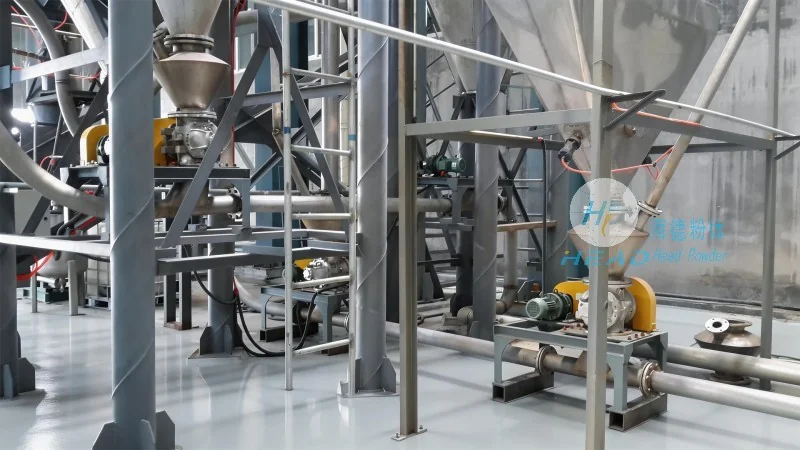
Introduction to Calcite Conveying Systems
Calcite, with its fine particle size and varying bulk density, demands specialized conveying solutions to maintain material integrity and prevent degradation. Conveying systems for calcite must address challenges such as dust generation, material segregation, and the need for gentle handling to preserve the mineral's quality. The selection of an appropriate conveying method depends on factors like the calcite's physical properties, the scale of operation, and the specific requirements of the downstream processes.
1. Screw Conveyors for Calcite Handling
Screw conveyors, also known as auger conveyors, are a popular choice for calcite transportation due to their compact design and ability to handle bulk materials in a closed system. These conveyors consist of a rotating helical screw blade inside a U-shaped or cylindrical housing, which moves calcite from the inlet to the outlet through gravity and mechanical force. The primary advantage of screw conveyors is their simplicity and low maintenance requirements, making them suitable for small to medium-scale calcite processing operations. They are particularly effective for conveying calcite with a relatively uniform particle size, as the screw's design minimizes material impact and reduces the risk of particle breakage.
However, screw conveyors have limitations when handling calcite with high moisture content or sticky properties, as the screw may experience clogging. Additionally, their capacity is generally lower compared to other conveying systems, and they are not ideal for long-distance transport. The mechanical wear on the screw and housing can also increase operational costs over time, especially with abrasive calcite materials.
2. Belt Conveyors in Calcite Transportation
Belt conveyors are widely used in calcite handling due to their high capacity, long-distance transport capability, and adaptability to various operating conditions. These systems consist of a continuous belt loop supported by rollers, which transports calcite from the loading point to the discharge point. Belt conveyors excel in handling large volumes of calcite, making them suitable for large-scale mining and processing facilities. They can be installed at steep angles, allowing for vertical or inclined transport, which is beneficial for optimizing space in calcite processing plants.
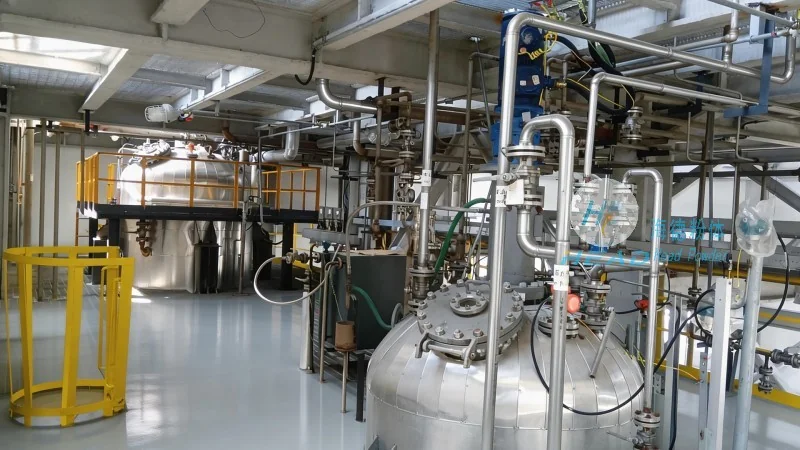
A key advantage of belt conveyors is their ability to maintain material integrity over long distances, as the belt provides a smooth surface that reduces particle abrasion. They are also relatively low in maintenance compared to other systems, with the primary components being the belt, rollers, and drive mechanism. Belt conveyors are particularly effective for calcite with a wide range of particle sizes, as the belt's flexibility accommodates different material characteristics.
Nevertheless, belt conveyors have drawbacks, including the risk of belt slip or damage in wet or dusty environments, which can lead to material loss or system downtime. The initial investment for belt conveyor systems is higher than for screw conveyors, and the need for regular belt tensioning and replacement adds to long-term operational costs. Additionally, belt conveyors may not be suitable for calcite with high moisture content, as the belt can become slippery and less effective in transporting the material.
3. Pneumatic Conveying Systems for Calcite
Pneumatic conveying systems use air or other gases to transport calcite particles through a pipeline network. These systems are ideal for calcite with fine particle sizes, as they can handle materials that are difficult to convey with mechanical systems. Pneumatic conveyors are available in two main types: pressure and vacuum systems. Pressure systems force air and calcite through the pipeline, while vacuum systems draw calcite into the system using a vacuum pump.
One of the significant advantages of pneumatic conveying is its ability to handle calcite with high moisture content or sticky properties, as the air flow prevents material buildup and clogging. Pneumatic systems also offer flexibility in layout, allowing for complex pipeline configurations to accommodate calcite processing plants with multiple processing stages. They are particularly effective for calcite that requires gentle handling to avoid particle degradation, as the air flow minimizes mechanical impact.
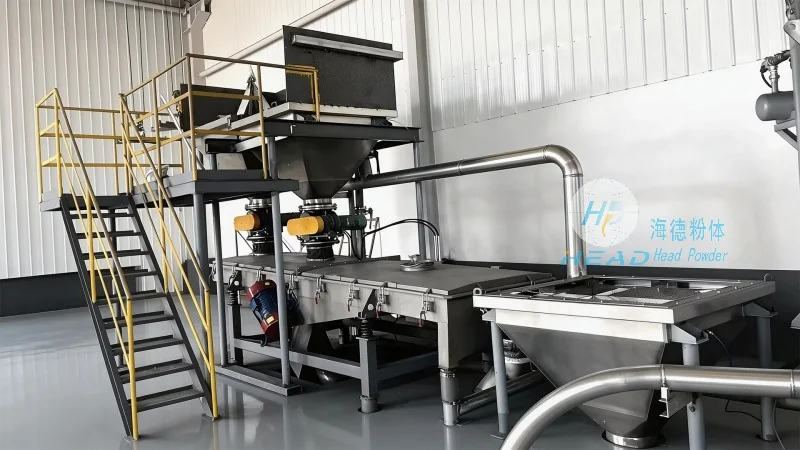
However, pneumatic conveying has limitations, including higher energy consumption compared to mechanical systems, as the air flow requires significant power. The system also needs regular maintenance of air filters and pipeline components to prevent dust accumulation and system blockages. Additionally, pneumatic conveyors may not be suitable for calcite with high bulk density or large particle sizes, as the air flow may not provide sufficient lift to transport the material efficiently.
4. Comparison of Conveying Methods
When selecting a calcite conveying method, industrial operators must weigh the advantages and disadvantages of each system based on their specific operational needs. Screw conveyors are best suited for small-scale operations with uniform calcite particles and low moisture content. Belt conveyors are ideal for large-scale, long-distance transport of calcite with varying particle sizes. Pneumatic systems are preferred for calcite with high moisture or sticky properties, requiring gentle handling and complex layout flexibility.
The choice of conveying method also impacts operational costs, including initial investment, maintenance, and energy consumption. Screw conveyors have the lowest initial cost and maintenance requirements but the lowest capacity. Belt conveyors offer higher capacity and longer transport distances but require higher initial investment and maintenance. Pneumatic systems provide flexibility and gentle handling but have the highest energy consumption and maintenance needs.
Conclusion
Efficient calcite conveying is crucial for optimizing industrial processes and ensuring the quality of the final product. The selection of an appropriate conveying method depends on the calcite's physical properties, operational scale, and specific requirements of the downstream processes. By understanding the advantages and disadvantages of each conveying system, industrial operators can make informed decisions to enhance operational efficiency, reduce costs, and improve overall productivity. Shandong HeadPowder Engineering Co., Ltd., a leading provider of calcite processing solutions, offers tailored conveying systems to meet the diverse needs of calcite handling facilities.