

Comparison of Common Carbon Calcium Dust Removal and Transport Methods: Advantages and Disadvantages
Carbon calcium dust, a byproduct of calcium carbide production, poses significant challenges in industrial processing due to its fine particle size and potential health hazards. Efficient removal and transport of this dust are critical for maintaining operational safety, environmental compliance, and overall production efficiency. This article provides a detailed comparison of common dust removal and transport methods used in the carbon calcium industry, highlighting their respective advantages and disadvantages to assist engineers and facility managers in selecting the most suitable solution for their specific applications.
1. Pneumatic Conveying Systems
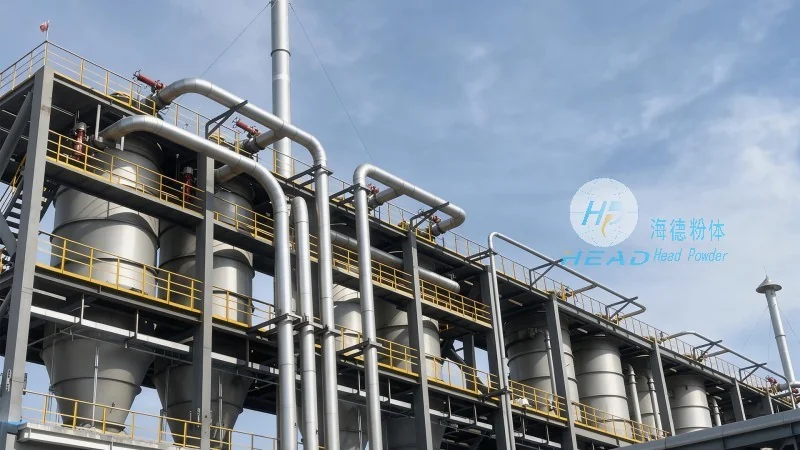
Pneumatic conveying, also known as air-pneumatic transport, is a widely adopted method for handling carbon calcium dust due to its ability to transport materials in a closed system. This approach involves using compressed air to move dust particles through a pipeline, effectively containing dust and minimizing exposure risks. The system typically consists of a dust collector, a transport line, and a discharge unit, with the compressed air serving as the driving force.
One of the primary advantages of pneumatic conveying is its ability to handle fine and abrasive particles, which are common in carbon calcium dust. The closed system design prevents dust from escaping into the environment, reducing the risk of respiratory issues among workers and ensuring compliance with environmental regulations. Additionally, this method allows for the integration of dust collection and transport processes, streamlining the overall workflow in industrial settings.
However, pneumatic conveying also has notable drawbacks. The most significant disadvantage is its high energy consumption, as it requires substantial compressed air pressure to move particles, especially for long distances or large volumes. This can lead to increased operational costs and may not be feasible for facilities with limited power resources. Furthermore, the system's performance is highly dependent on the size and moisture content of the dust particles; overly large or wet particles may cause blockages or reduced efficiency. Another consideration is the need for regular maintenance of air compressors and pipeline components, as wear and tear from abrasive dust can shorten equipment lifespan.
2. Screw Conveyors
Screw conveyors, or auger conveyors, are another common solution for transporting carbon calcium dust. These systems utilize a rotating screw (auger) inside a trough to move material along the length of the conveyor. Screw conveyors are often preferred for their simplicity and relatively low initial cost, making them an attractive option for smaller-scale operations or facilities with budget constraints.
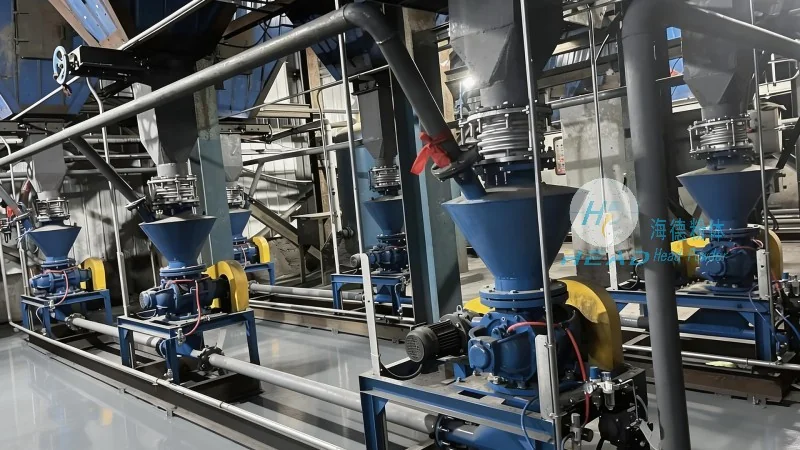
A key advantage of screw conveyors is their straightforward design, which minimizes the risk of complex mechanical failures. The system operates with minimal moving parts, reducing the need for extensive maintenance and lowering long-term operational expenses. Additionally, screw conveyors can handle a wide range of particle sizes and moisture levels, making them versatile for various dust compositions. They are also capable of vertical and horizontal transport, providing flexibility in layout planning.
Despite these benefits, screw conveyors have several limitations. The most critical drawback is their susceptibility to blockages, particularly when dealing with sticky or wet carbon calcium dust. Blockages can halt production and require manual intervention to clear, leading to downtime and increased labor costs. Furthermore, the screw and trough components are prone to wear from abrasive dust, necessitating periodic replacement or repair. Another disadvantage is the limited capacity compared to other methods, as screw conveyors are generally less effective for high-volume transport over long distances. The enclosed design, while reducing dust exposure, can also trap heat and moisture, potentially affecting dust quality or causing corrosion over time.
3. Belt Conveyors
Belt conveyors are widely used in bulk material handling, including carbon calcium dust, due to their high capacity and ability to transport materials over long distances. These systems consist of a continuous belt that moves over rollers or pulleys, with the dust placed on the belt and carried to the discharge point. Belt conveyors are particularly suitable for large-scale operations where high throughput and long transport distances are required.
One of the main advantages of belt conveyors is their exceptional capacity, allowing for the transport of large volumes of dust at high speeds. This makes them ideal for industrial facilities with high production rates or extensive processing areas. Additionally, belt conveyors are relatively simple to install and maintain, with standardized components that are readily available in the market. The system's open design facilitates easy inspection and cleaning, reducing the risk of component failure due to dust accumulation.
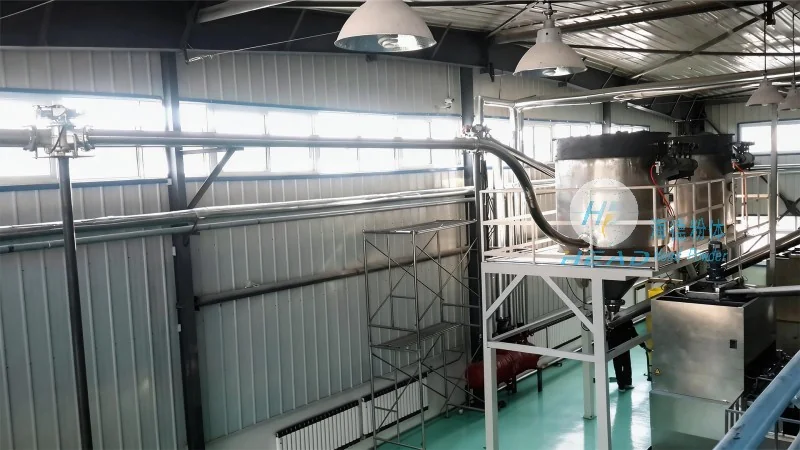
However, belt conveyors also present significant challenges. The primary disadvantage is the potential for dust leakage, as the open structure allows particles to escape from the edges or through gaps in the belt. This can lead to increased dust exposure for workers and environmental contamination, violating safety and regulatory standards. Furthermore, belt conveyors require regular tension adjustments and belt replacement, as the abrasive nature of carbon calcium dust can cause premature wear and tear. The system is also susceptible to damage from foreign objects or overloading, which may result in belt breaks or system shutdowns. Another consideration is the need for a stable foundation and level ground, as uneven surfaces can cause belt misalignment and reduce efficiency.
4. Bucket Elevators
Bucket elevators are vertical transport systems that use a series of buckets attached to a chain or belt to lift and transport carbon calcium dust from a lower to a higher level. These systems are commonly employed in facilities where vertical transport is necessary, such as when moving dust from a collection hopper to a storage silo or processing unit.
A key advantage of bucket elevators is their ability to handle vertical transport efficiently, eliminating the need for complex horizontal conveyors in multi-level facilities. The enclosed design prevents dust from escaping during lifting, ensuring a clean and safe operation. Additionally, bucket elevators can transport materials at high speeds and capacities, making them suitable for large-scale industrial applications. The system's vertical orientation also reduces floor space requirements, which is beneficial for facilities with limited horizontal area.
Nevertheless, bucket elevators have several drawbacks. The most significant limitation is their high initial cost and complex installation, as they require precise alignment and structural support to operate safely. The system is also prone to mechanical failures, such as chain or bucket breakage, which can cause dust spillage and operational disruptions. Maintenance of bucket elevators is more involved compared to other methods, as components like buckets and chains are subject to wear from abrasive dust and require frequent inspection and replacement. Another disadvantage is the limited ability to handle wet or sticky dust, as these materials can cause buckets to stick or block the elevator. The vertical design also limits the flexibility of layout, as the system must be installed in a straight vertical line, which may not fit all facility configurations.
5. Comparison and Selection Criteria
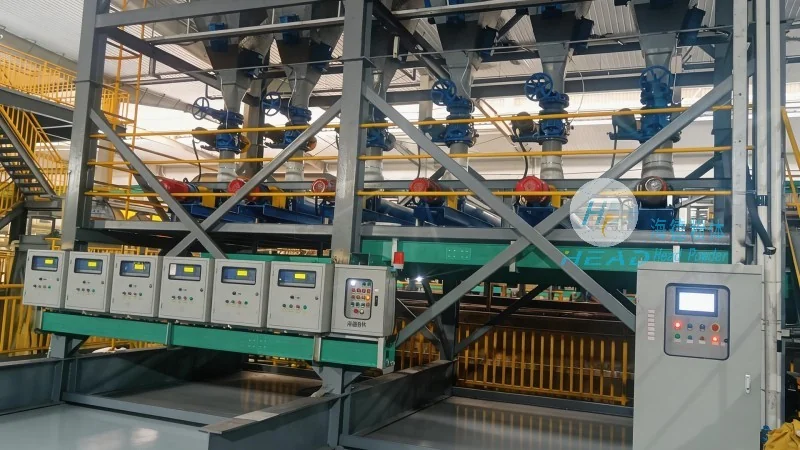
When selecting a dust removal and transport method for carbon calcium applications, several factors must be considered to ensure optimal performance and cost-effectiveness. The choice of system depends on the specific characteristics of the dust, such as particle size, moisture content, and abrasiveness, as well as the operational requirements of the facility, including distance, capacity, and budget constraints.
For facilities prioritizing dust containment and worker safety, pneumatic conveying is often the preferred choice due to its closed system design. However, the high energy costs and dependency on particle size make it less suitable for applications with large or wet dust. Screw conveyors are ideal for smaller-scale operations with budget limitations, offering simplicity and versatility but requiring careful management to avoid blockages. Belt conveyors excel in high-volume, long-distance transport but must be equipped with dust containment measures to meet safety standards. Bucket elevators are best suited for vertical transport needs but are more expensive and complex to install and maintain.
Ultimately, the most effective solution is often a combination of methods tailored to the specific requirements of the facility. For example, a facility might use a dust collector to capture carbon calcium dust and then employ a pneumatic conveying system to transport it to a storage silo, followed by a screw conveyor for final processing. This integrated approach ensures efficient dust removal while minimizing operational risks and costs.
Shandong HeadPowder Engineering Co., Ltd., based in Shandong, China, specializes in providing customized dust removal and transport solutions for the carbon calcium industry. With years of experience in industrial engineering, the company offers expert consultation and tailored equipment to meet the unique needs of clients, ensuring compliance with safety and environmental regulations while optimizing operational efficiency.