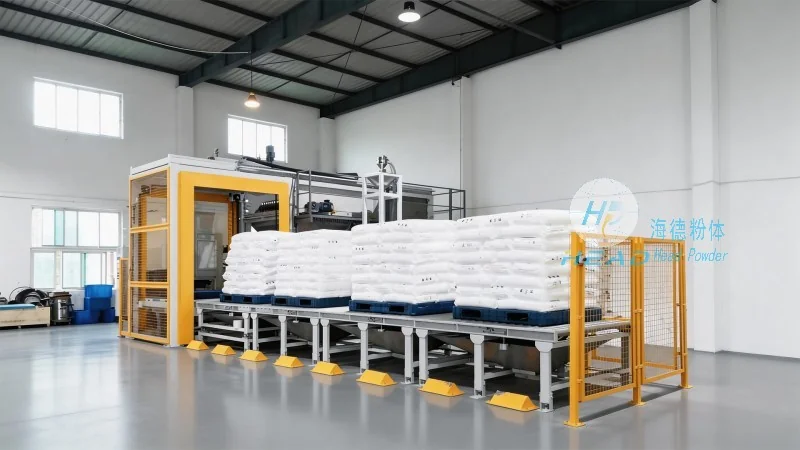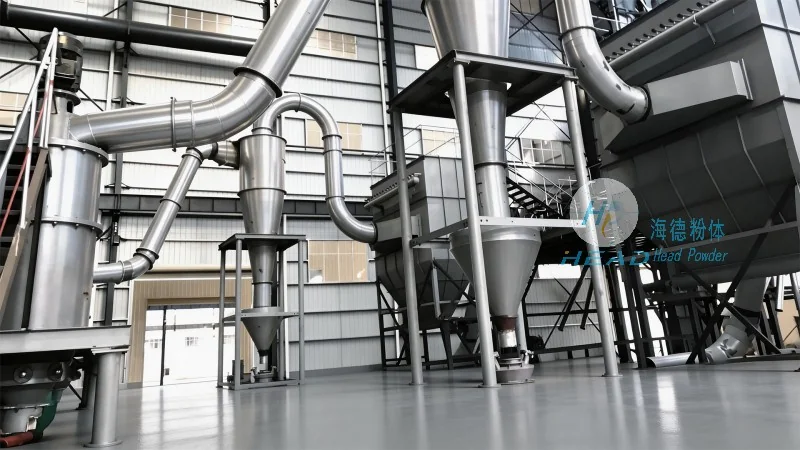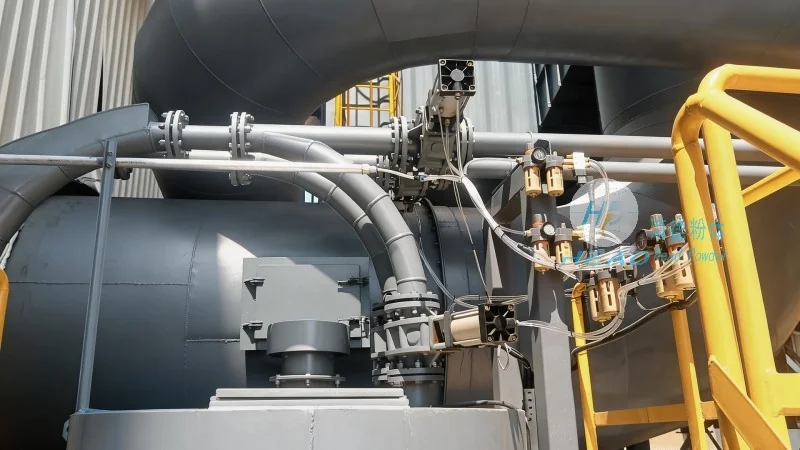

In the heart of the United Arab Emirates, specifically within the industrial corridors of Dubai, a groundbreaking engineering endeavor has been successfully executed: the UAE Dubai Catalyst Particle Low-Breakage Pipeline Conveying Project. This project represents a milestone in the field of pneumatic conveying, addressing the critical need for gentle handling of fragile catalyst particles during long-distance transport. The system was designed and implemented to ensure minimal particle breakage while maintaining high throughput efficiency, a challenge that has long plagued the petrochemical and refining industries. By leveraging advanced pneumatic conveying technology, the project delivers a reliable solution for moving catalyst particles from storage to reactor units without compromising their structural integrity. The successful deployment in Dubai underscores the growing demand for specialized conveying systems in the Middle East, where strict operational standards and harsh environmental conditions require robust yet delicate material handling capabilities.
This project serves as a prominent pneumatic conveying case study, demonstrating the feasibility of transporting catalyst particles over extended distances using low-velocity, dense-phase pneumatic systems. The key challenge was to preserve the spherical shape and mechanical strength of the catalyst particles, which are essential for maintaining catalytic activity in downstream processes. Traditional conveying methods often result in high attrition rates, leading to increased operational costs and reduced catalyst lifetime. However, through careful engineering of the pipeline geometry, air velocity control, and particle impact mitigation measures, the system achieved a breakage rate below industry benchmarks. The success of this UAE pneumatic conveying installation has attracted attention from other refineries and chemical plants in the region, solidifying its status as a reference for similar projects. The integration of real-time monitoring sensors and adaptive control algorithms further enhanced the reliability of the system, ensuring consistent performance even under varying feed conditions.
Dubai's rapid industrial growth has created a unique demand for specialized material handling equipment, and this project exemplifies how Dubai pneumatic conveying expertise can be adapted to local requirements. The system was designed to withstand the extreme ambient temperatures and dusty environment typical of the Arabian Peninsula, with all components rated for continuous operation in such conditions. The pipeline layout minimized frictional losses and pressure drops, allowing for energy-efficient transport over a distance of several hundred meters. Additionally, the project incorporated advanced filtration systems to prevent fugitive dust emissions, aligning with Dubai's stringent environmental regulations. The successful implementation has encouraged other companies in the region to explore pneumatic conveying for other bulk materials, including catalysts, adsorbents, and other granular solids. This project not only showcases the technical capabilities of the engineering team but also highlights the strategic importance of Dubai as a hub for industrial innovation in the Middle East.
At the core of this project is the application of catalyst pneumatic conveying technology, specifically engineered to handle the delicate nature of catalyst particles. The system employs a dense-phase conveying regime where the material is transported in a slug or plug flow pattern, significantly reducing particle-to-particle and particle-to-wall collisions. This low-breakage approach is critical for catalysts that are both expensive and sensitive to mechanical degradation. The project team conducted extensive laboratory tests and computational fluid dynamics simulations to optimize the conveying parameters, including air flow rate, solids loading ratio, and pipeline diameter. The result is a system that consistently achieves a breakage rate of less than 0.5% by weight, far outperforming conventional dilute-phase systems. This catalyst pneumatic conveying solution has been recognized by industry peers for its ability to maintain product quality while reducing operational downtime associated with catalyst replacement. The technology is now being considered for application in other regions, including the Gulf Cooperation Council countries and beyond.
The project's success in catalyst particle conveying lies in the meticulous design of the entire material handling chain, from the feed hopper to the receiving vessel. Each component was selected or custom-designed to minimize impact forces and abrasive wear. The pipeline itself was lined with a smooth, abrasion-resistant material to reduce friction, while the bends were engineered with large radii to prevent particle impingement. The air supply system was equipped with variable frequency drives to precisely control the conveying velocity, ensuring that the particles remain in a fluidized state without excessive acceleration. Furthermore, the project incorporated a series of pressure relief valves and flow diversion devices to handle emergency situations and maintain system stability. This comprehensive approach to catalyst particle conveying has set a new standard for the industry, demonstrating that even the most fragile materials can be transported efficiently and safely over long distances. The project's documentation and performance data are now used as training material for other engineers working on similar applications.
The low-breakage pipeline pneumatic conveying methodology employed in this Dubai project is based on decades of research and field experience in the field of bulk solids handling. The key principles include maintaining a low conveying velocity (typically below 10 m/s), using a high solids-to-air ratio, and employing a stepped pipeline diameter to maintain a consistent flow regime. The project also utilized a proprietary air injector system that gently introduces the particles into the pipeline, avoiding the shock loading common in conventional systems. Real-time particle size analysis was performed at multiple points along the pipeline to verify that the breakage was within acceptable limits. The results confirmed that the system could handle catalyst particles with an average diameter of 2-5 mm without significant degradation, even after repeated conveying cycles. This low-breakage pipeline pneumatic conveying concept has since been patented and is being offered as a standard solution for clients requiring high-integrity transport of friable materials. The Dubai project serves as a living proof of concept, attracting interest from companies in the pharmaceutical, food, and chemical industries.
This project was executed by Shandong Haide Powder Engineering Co., Ltd., a leading provider of pneumatic conveying systems and powder handling solutions. Based in Shandong, China, the company has extensive experience in designing and manufacturing equipment for the chemical, petrochemical, and energy sectors. The company's expertise in catalyst pneumatic conveying has been developed over many years of collaboration with international clients, resulting in a portfolio of successful installations across the Middle East, Southeast Asia, and Europe. The engineering team behind the Dubai project includes specialists in fluid dynamics, materials science, and process control, ensuring that each system is optimized for the specific characteristics of the material being conveyed. For more information about this project or to discuss your own material handling needs, please contact the project manager: Mr. Zhang, phone number: 15662777102. The company is dedicated to providing customized solutions that meet the highest standards of quality and reliability.
For detailed technical specifications, case studies, or to arrange a site visit to similar installations, you are welcome to reach out to the responsible engineer. The project team is available to answer questions regarding the design, operation, and maintenance of low-breakage pneumatic conveying systems for catalyst particles and other granular materials. Please direct all inquiries to Mr. Zhang at 15662777102. Shandong Haide Powder Engineering Co., Ltd. is committed to supporting clients in the UAE and across the globe with innovative and reliable material handling solutions. Whether you require a complete turnkey system or a component upgrade, the company's experienced staff can provide prompt assistance. This project in Dubai stands as a testament to the company's capability to deliver complex engineering projects on time and within budget, while exceeding performance expectations.
Shandong Headpowder Engineering Co., Ltd.
156-6277-7102(Manager Zhang)
0531-83386006
Jinan City, Shandong Province, China 
telephone
WeChatconsult
top