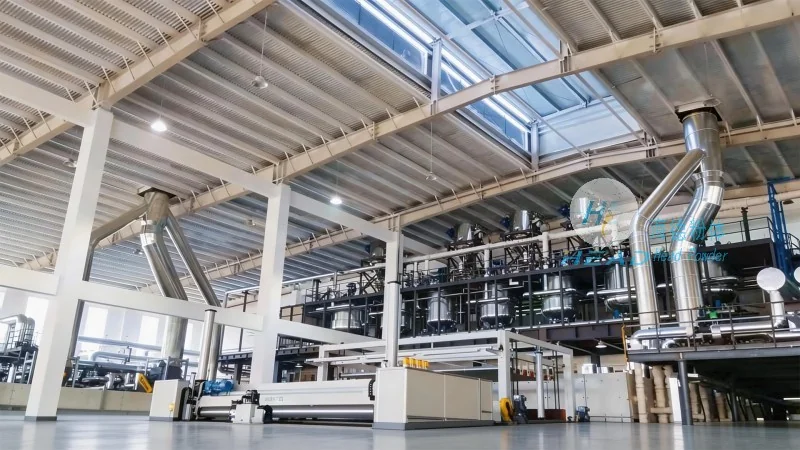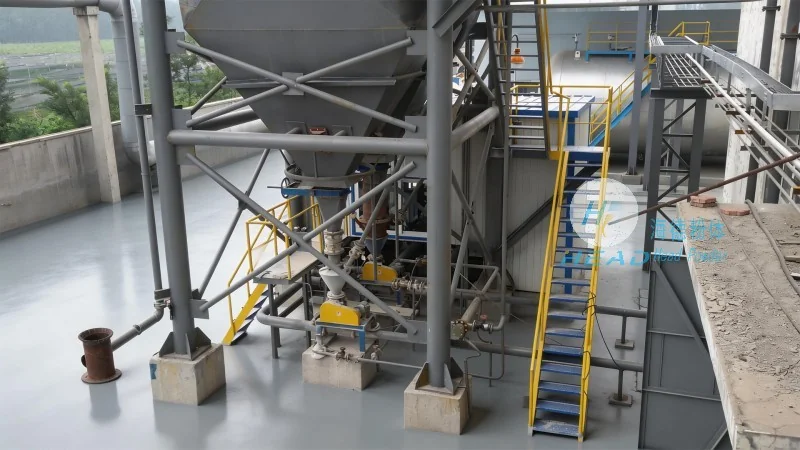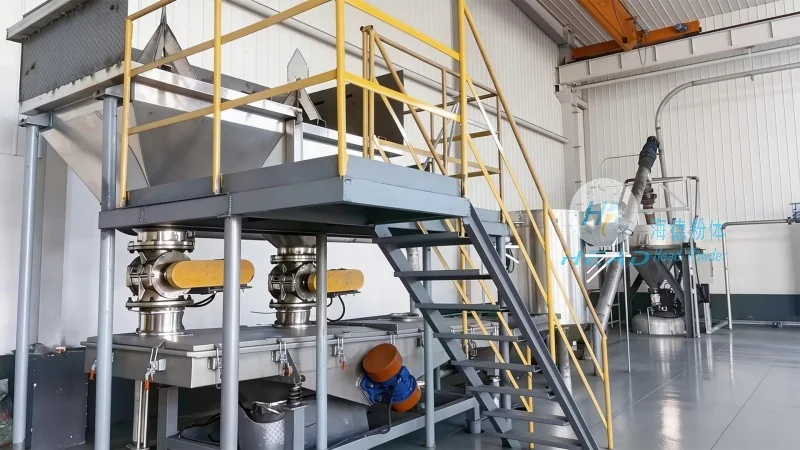

Understanding the challenges of handling plastic food carrier particles is critical for industries ranging from food processing to packaging. These lightweight, often irregularly shaped materials demand a conveyance method that maintains product integrity, prevents contamination, and ensures consistent throughput. Pneumatic conveying, or air conveying, has emerged as the preferred solution, and a well-designed plastic food carrier particles pneumatic conveying system can transform your production line. This article provides a comprehensive overview of the plastic food carrier particles pneumatic conveying scheme, covering everything from system design to the expertise of a reliable manufacturer.
A plastic food carrier particles pneumatic conveying system uses air pressure or vacuum to move food-grade plastic carriers—such as pellets, granules, or beads—through sealed pipelines. Unlike mechanical conveyors, this method eliminates moving parts in contact with the material, reducing wear and contamination risk. The system typically consists of a feed point, a conveying line, a separator, and a control unit. Air velocity, particle size, and material density are carefully calibrated to ensure smooth flow without degradation. For companies handling plastic food carrier particles, this technology offers exceptional flexibility, enabling both dilute phase and dense phase transport depending on the specific application. The plastic food carrier particles pneumatic conveying system is engineered to meet stringent hygiene standards, making it ideal for direct contact with food products in many regulatory environments.
Every successful plastic food carrier particles pneumatic conveying scheme begins with a thorough understanding of the material's properties. Plastic food carriers often have low bulk density, high flowability, and can be susceptible to electrostatic charge accumulation. A professional plastic food carrier particles conveying engineering design must account for these factors. The core components include a rotary airlock feeder for metering the material into the airstream, a blower or compressor generating the motive force, and a filtration system to separate the particles from the conveying air at the destination. Additionally, pipeline bends are designed with large radii to minimize particle impact and breakage. The control system integrates sensors for pressure, flow rate, and material level, ensuring automatic operation with minimal human intervention. An experienced plastic food carrier particles pneumatic conveying manufacturer will customize each element to match the plant layout and throughput requirements.
Selecting the right plastic food carrier particles pneumatic conveying manufacturer is as important as selecting the equipment itself. Not all pneumatic conveying providers have experience with food-grade plastic materials. A specialized manufacturer understands the unique challenges—such as preventing cross-contamination, managing static electricity, and maintaining consistent particle size during transport. Shandong Haide Powder Engineering Co., Ltd., based in China Shandong, has built a reputation for delivering robust plastic food carrier particles pneumatic conveying systems that meet international food safety standards. With decades of engineering experience, the company offers comprehensive services from initial consultation to installation and commissioning. Their team of experts evaluates factors like conveying distance, material temperature, and required capacity to design a system that operates efficiently with minimal energy consumption. When you partner with a dedicated plastic food carrier particles conveying engineering design provider, you gain access to proprietary technologies that reduce wear and extend equipment lifespan.
The plastic food carrier particles conveying engineering design process involves multiple stages, each critical to the final system performance. First, the material characteristics of the plastic food carriers are analyzed in a laboratory—measuring particle size distribution, bulk density, moisture content, and angle of repose. Next, the conveying route is mapped, accounting for vertical lifts, horizontal runs, and any direction changes. The design team then selects the appropriate conveying mode: dilute phase for high-velocity, low-pressure systems, or dense phase for low-velocity, high-pressure systems that minimize particle attrition. Computational fluid dynamics simulations are often used to predict airflow patterns and pressure drops. The final design includes a detailed layout of pipes, supports, and control panels. This rigorous engineering approach ensures that the plastic food carrier particles pneumatic conveying system operates reliably for years, even under demanding 24/7 production schedules. A well-executed design also simplifies future expansion or modification, accommodating changes in production volume or material type.
Converting to a plastic food carrier particles pneumatic conveying system offers numerous operational advantages. The enclosed nature of the system eliminates dust emissions, improving workplace safety and compliance with environmental regulations. Because the material moves through a sealed pipe, there is zero risk of foreign object contamination, which is critical for food applications. The system also reduces manual labor, lowering the potential for human error and repetitive strain injuries. From a maintenance perspective, pneumatic conveyors have fewer moving parts compared to belt or screw conveyors, resulting in lower downtime and repair costs. Energy efficiency can be optimized through variable frequency drives and intelligent control algorithms. Furthermore, the system can be integrated with existing production equipment, such as mixers, packaging machines, and storage silos, creating a seamless material handling flow. For any facility handling plastic food carrier particles, these benefits translate directly into higher productivity and better product quality.
To ensure the success of your investment, it is essential to work with a company that offers not only hardware but also comprehensive expertise. Shandong Haide Powder Engineering Co., Ltd. (China Shandong) provides end-to-end solutions for plastic food carrier particles pneumatic conveying projects. Their portfolio includes systems for a wide range of food-grade plastic materials, from polyethylene pellets to polypropylene granules. The company's engineering team excels in customizing the plastic food carrier particles conveying engineering design to fit unique facility constraints, whether it is a retrofit of an existing line or a greenfield project. They also offer post-installation support, including training, spare parts, and remote monitoring services. For more information about how a plastic food carrier particles pneumatic conveying system can improve your operation, you can reach out to their contact person: Manager Zhang, telephone: 15662777102. A dedicated consultant will discuss your specific requirements and provide a tailored proposal.
As the demand for safe, efficient, and environmentally friendly food processing grows, the plastic food carrier particles pneumatic conveying scheme stands out as a proven technology. By investing in a custom-designed system from a reputable manufacturer like Shandong Haide Powder Engineering Co., Ltd., companies can achieve significant improvements in throughput, quality, and operational safety. The key is to prioritize a detailed plastic food carrier particles conveying engineering design that addresses the unique characteristics of the material. Whether you are looking to upgrade an existing line or install a new system, the expertise of a specialized plastic food carrier particles pneumatic conveying manufacturer ensures that you receive a solution optimized for your specific needs. Do not hesitate to contact Manager Zhang at 15662777102 to discuss your project and take the first step towards a more reliable and efficient conveying process.
Shandong Headpowder Engineering Co., Ltd.
156-6277-7102(Manager Zhang)
0531-83386006
Jinan City, Shandong Province, China 
telephone
WeChatconsult
top