
Microcrystalline cellulose (MCC) is a highly refined, purified, and partially depolymerized cellulose widely used in pharmaceutical, food, cosmetic, and chemical industries. Its unique properties—such as excellent compressibility, high binding capacity, and chemical inertness—make it an essential excipient in tablet manufacturing and a versatile additive in many processes. However, transporting MCC efficiently and safely from one processing point to another poses significant challenges due to its fine particle size, low bulk density, and tendency to agglomerate or generate dust. Pneumatic conveying offers the ideal solution for moving microcrystalline cellulose through closed systems, ensuring product integrity, minimal contamination, and consistent flow. This article presents a comprehensive overview of MCC pneumatic conveying solutions, including system design, engineering considerations, and the expertise of Haide Powder in delivering reliable conveying systems.
Microcrystalline cellulose MCC is produced by treating alpha-cellulose with mineral acids, resulting in a white, free-flowing powder. Its particle size typically ranges from 20 to 200 microns, and its bulk density can vary from 0.2 to 0.5 g/cm³. These characteristics make MCC prone to dusting, segregation, and bridging during transport. Traditional mechanical conveyors, such as screw conveyors or belt conveyors, often cause attrition, caking, or contamination. Pneumatic conveying, on the other hand, uses air or inert gas to propel the material through pipelines, offering a gentle, enclosed, and dust-free transport method. Whether you are a microcrystalline cellulose MCC pneumatic conveying manufacturer, designing a new system, or upgrading an existing one, understanding the specific flow properties of MCC is critical for selecting the right conveying mode.
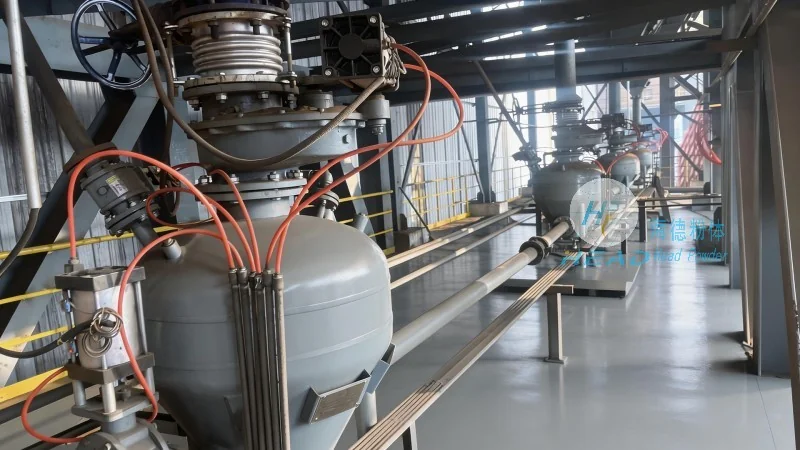
For microcrystalline cellulose, two primary pneumatic conveying modes are commonly employed: dilute phase and dense phase. Dilute phase conveying suspends the MCC particles in a high-velocity air stream, typically operating at speeds above 20 m/s. This method is suitable for short distances and moderate throughputs, but it may cause particle degradation or pipe wear if the material is friable. Dense phase conveying, in contrast, moves the material at lower velocities (typically 2–10 m/s) using higher pressure, forming a plug or slug flow. This gentle approach minimizes dust generation and preserves the particle size distribution of MCC, making it the preferred choice for high-value pharmaceutical applications. As a leading microcrystalline cellulose MCC conveying engineering design provider, Haide Powder evaluates material properties, conveying distance, capacity, and plant layout to recommend the optimal system.
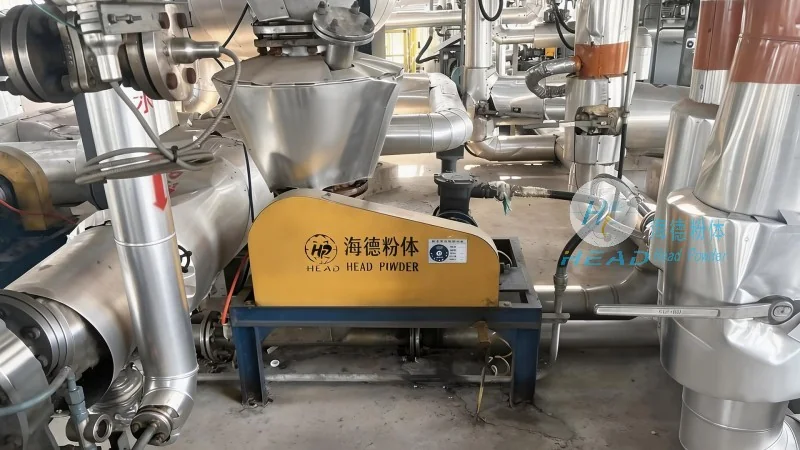
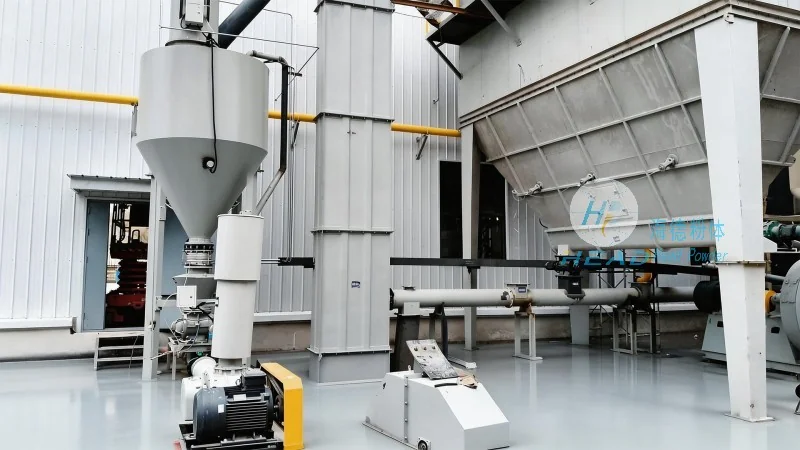
A complete MCC pneumatic conveying system comprises several integrated components: a material feed device (such as a rotary valve or venturi feeder), a conveying pipeline, a gas-solid separation unit (e.g., cyclone separator or bag filter), and a control system. The feed device must handle the fine, cohesive nature of MCC without bridging or flooding. The pipeline should be designed with smooth bends and appropriate diameters to prevent blockages. The separation unit must capture the fine MCC dust efficiently, often using a pulse-jet filter to ensure clean discharge. Additionally, the system may include a vacuum source (blower or vacuum pump) or a pressure source (compressor) depending on whether the system is a positive pressure or negative pressure (vacuum) configuration. Haide Powder, as a professional microcrystalline cellulose MCC pneumatic conveying manufacturer, customizes each component to match the specific requirements of the client's production environment.
Successful microcrystalline cellulose MCC conveying engineering design requires a thorough analysis of material characteristics, including particle size distribution, moisture content, angle of repose, and abrasiveness. For MCC, the high hygroscopicity and electrostatic charge generation must be addressed. Anti-static pipelines, grounding systems, and humidity control may be incorporated to prevent static buildup and material sticking. The conveying pressure and air volume must be precisely calculated to maintain stable flow without causing excessive friction or heat. Furthermore, the system should be designed for easy cleaning and maintenance, especially in food and pharmaceutical applications where cross-contamination is unacceptable. Haide Powder's engineering team utilizes advanced simulation tools and decades of experience to deliver robust and efficient MCC conveying systems.
Shandong Haide Powder Engineering Co., Ltd. (Haide Powder), based in Shandong, China, is a dedicated microcrystalline cellulose MCC pneumatic conveying system provider with a strong track record in the powder handling industry. The company specializes in full-service solutions, from initial consultation and system design to equipment fabrication, installation, and commissioning. Haide Powder's systems are engineered to handle the unique challenges of microcrystalline cellulose, ensuring high reliability, low energy consumption, and compliance with GMP and food safety standards. The company's team, led by experienced professionals, works closely with clients to optimize conveying parameters and integrate the system seamlessly into existing production lines. For inquiries about microcrystalline cellulose MCC pneumatic conveying systems, please contact Manager Zhang at 15662777102.
Every manufacturing facility has unique requirements regarding capacity, layout, material properties, and hygiene standards. Haide Powder offers tailored solutions for microcrystalline cellulose MCC conveying system design, whether for direct tablet compression lines, granulation processes, or blending operations. The company can design vacuum conveying systems for gentle transfer from bulk bags to process equipment, or pressure conveying systems for long-distance distribution. Additionally, Haide Powder provides turnkey projects, including control automation, dust collection, and safety interlocks. The goal is to deliver a system that maximizes throughput while minimizing product degradation and maintenance downtime. For more information on how Haide Powder can assist with your MCC conveying needs, feel free to reach out to Manager Zhang at 15662777102.
Incorrect conveying system design for microcrystalline cellulose can lead to frequent blockages, excessive dusting, particle breakage, and high energy costs. A poorly designed pneumatic system may also cause segregation of the MCC powder, affecting product uniformity in downstream processes. By partnering with a specialized microcrystalline cellulose MCC pneumatic conveying manufacturer like Haide Powder, you gain access to in-depth knowledge of material behavior and proven engineering practices. Haide Powder's team conducts thorough material testing and uses computational fluid dynamics (CFD) modeling to predict flow patterns and optimize pipe sizing. The result is a system that operates smoothly, reduces waste, and meets the stringent quality requirements of the pharmaceutical and food industries.
Haide Powder, with its headquarters in Shandong, China, has been serving the powder handling industry for many years, earning a reputation for reliability and innovation. The company's expertise covers not only microcrystalline cellulose MCC but also a wide range of other fine powders. For a detailed consultation on microcrystalline cellulose MCC conveying engineering design or to request a quotation for a complete conveying system, please contact the company's sales manager: Manager Zhang, phone 15662777102. Haide Powder looks forward to helping you achieve efficient, safe, and cost-effective transport of your microcrystalline cellulose.
Shandong Headpowder Engineering Co., Ltd.
156-6277-7102(Manager Zhang)
0531-83386006
Jinan City, Shandong Province, China 
telephone
WeChatconsult
top