

Technical Parameters and Transport System Process of Limestone and Gypsum Powder
Shandong HeadPowder Engineering Co., Ltd. specializes in the design, manufacturing, and installation of advanced processing and transport systems for limestone and gypsum powder. This article provides an overview of key technical parameters and the integrated transport system processes used in our solutions, tailored for industrial applications requiring efficient material handling and precise control.
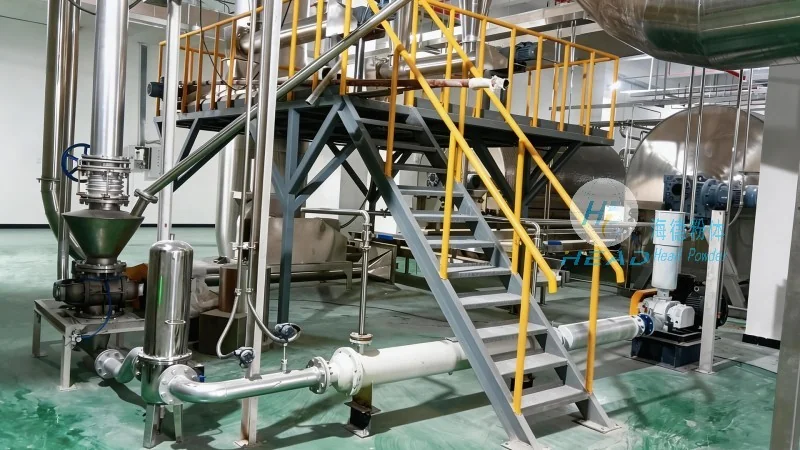
Key Technical Parameters for Limestone and Gypsum Powder Processing
When designing systems for limestone and gypsum powder, several critical technical parameters must be considered to ensure optimal performance and reliability. These parameters include particle size distribution, moisture content, bulk density, and flow characteristics. For limestone powder, typical particle sizes range from 0.1 to 200 microns, with a bulk density of approximately 1.1 to 1.3 g/cm³. Gypsum powder, often used in construction and industrial applications, has a particle size range of 0.05 to 150 microns and a bulk density around 1.0 to 1.2 g/cm³. Understanding these parameters is essential for selecting appropriate equipment such as grinding mills, classifiers, and conveying systems.
Integrated Transport System Process for Limestone and Gypsum Powder
Our transport systems for limestone and gypsum powder are engineered as comprehensive solutions that integrate multiple components to achieve seamless material flow from raw material storage to final product discharge. The process typically begins with raw material storage in silos or hoppers, where the material is stored under controlled conditions to prevent moisture absorption or degradation. From the storage silos, the material is fed into grinding mills, such as ball mills or vertical roller mills, where it is ground to the desired particle size. The ground material then passes through a classifier, which separates particles based on size, ensuring the final product meets the required specifications.
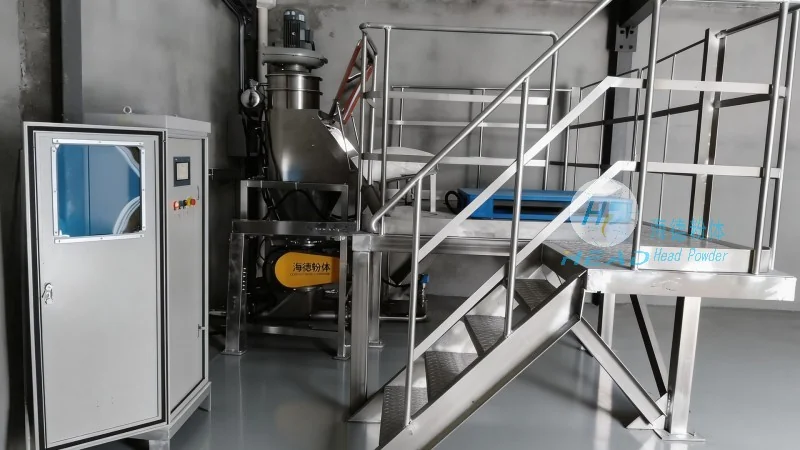
Conveying Methods and Equipment for Efficient Material Transport
Efficient material transport is a core component of our systems, utilizing various methods to move limestone and gypsum powder from one stage to another. Common conveying methods include pneumatic conveying systems, screw conveyors, and bucket elevators. Pneumatic conveying systems use air pressure to transport dry powders, offering advantages such as flexibility in layout and minimal material degradation. Screw conveyors are suitable for horizontal or slightly inclined transport, providing reliable and low-maintenance operation. Bucket elevators are used for vertical transport, capable of handling high volumes of material with minimal space requirements.
Control Systems and Automation for Process Optimization
Advanced control systems and automation are integral to our limestone and gypsum powder transport systems, enabling precise control over the entire process. These systems include sensors for monitoring parameters like pressure, temperature, and flow rate, as well as programmable logic controllers (PLCs) that adjust equipment operation based on real-time data. Automation ensures consistent product quality, reduces downtime, and enhances overall system efficiency. For example, the system can automatically adjust the grinding mill speed or classifier settings to maintain the desired particle size distribution, minimizing waste and improving production throughput.
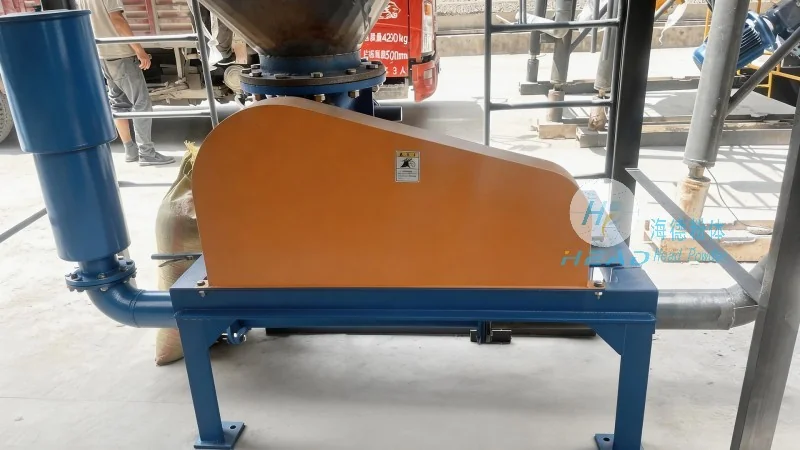
Applications and Industries Served
The technical parameters and transport systems for limestone and gypsum powder are widely used in various industries, including construction, cement production, and chemical manufacturing. In the construction industry, limestone powder is used as a filler in concrete and plaster, while gypsum powder is a key component in drywall and plaster products. In cement production, limestone is a primary raw material, and efficient transport systems are critical for maintaining production rates and quality. Our solutions are tailored to meet the specific needs of these industries, ensuring reliable and cost-effective material handling.
Conclusion and Company Overview
Shandong HeadPowder Engineering Co., Ltd. provides comprehensive technical solutions for limestone and gypsum powder processing and transport, combining advanced engineering with practical application. By focusing on key technical parameters and integrated transport systems, we deliver reliable and efficient solutions that meet the demands of modern industrial applications. With our expertise and commitment to quality, we continue to serve clients in China and beyond, providing innovative solutions for material handling and processing.