

Operation Process and Working Principle of Dense Phase Powder Conveying
Understanding the operation process and working principle of dense phase powder conveying is crucial for industries that rely on efficient and reliable material handling solutions. This technology, developed by Shandong HeadPowder Engineering Co., Ltd., represents a sophisticated approach to transporting bulk powders and granular materials over long distances with minimal pressure drop and high efficiency.
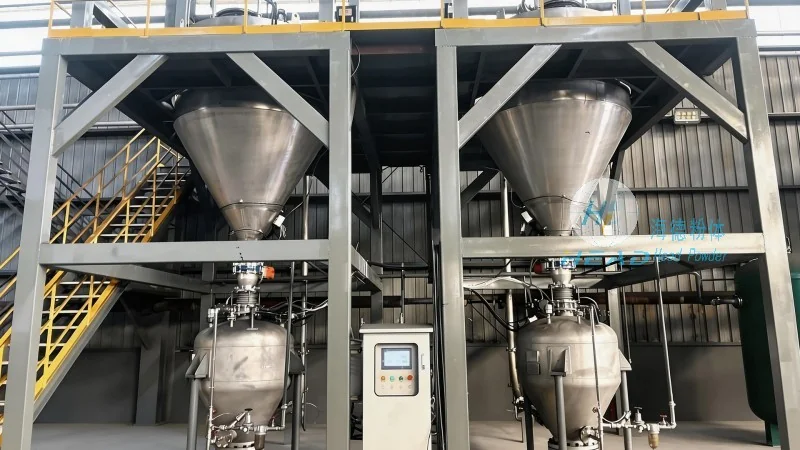
Company Overview: HeadPowder
HeadPowder, the professional manufacturer behind this advanced conveying system, is a leading company based in Shandong, China. With a strong commitment to innovation and quality, HeadPowder specializes in designing and supplying dense phase powder conveying equipment tailored to meet the diverse needs of various industrial sectors. The company’s expertise lies in optimizing material flow, ensuring product integrity, and enhancing overall operational efficiency for clients worldwide.
What is Dense Phase Powder Conveying?
Dense phase powder conveying, also known as high-pressure or slurry conveying, is a method that involves transporting powders in a dense, semi-liquid state. Unlike traditional pneumatic conveying systems that use low pressure and air as the primary medium, dense phase conveying utilizes high-pressure air or gas to push the material through a pipeline. This approach results in a higher material concentration, reduced air consumption, and lower energy costs, making it ideal for handling abrasive, sensitive, or valuable powders.
The Working Principle of Dense Phase Powder Conveying
The core of dense phase powder conveying lies in the interaction between the material and the conveying medium. The process typically begins with the material being fed into a hopper or feeder, where it is then mixed with a small amount of air or gas under high pressure. The high-pressure air creates a slurry-like mixture, which is then forced through the pipeline by a positive displacement pump or compressor. As the mixture travels through the pipeline, it maintains a dense phase, minimizing the risk of material degradation and ensuring consistent flow rates.
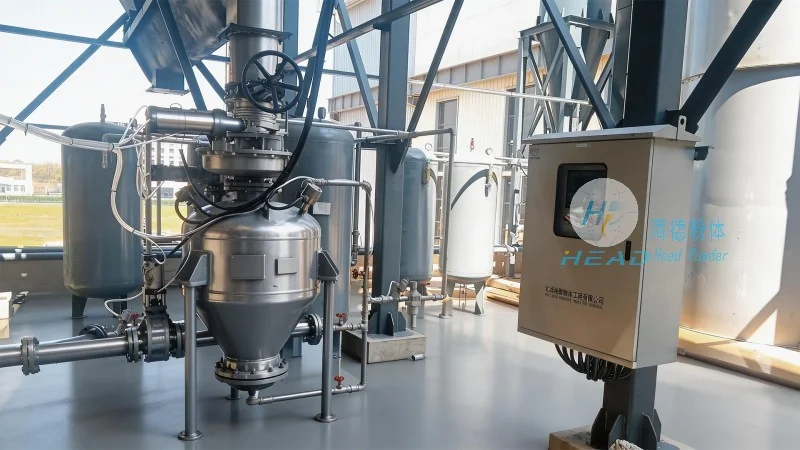
Key Components and Their Roles
Several critical components work in tandem to ensure the smooth operation of a dense phase powder conveying system. These include the hopper or feeder for material storage and feeding, the high-pressure pump or compressor to generate the necessary pressure, the pipeline system for material transport, and the control valves and sensors to regulate flow and pressure. Each component is designed to handle the specific characteristics of the material being conveyed, such as particle size, density, and moisture content, ensuring optimal performance and longevity of the system.
Operation Process: Step-by-Step
The operation process of dense phase powder conveying involves several key steps that ensure efficient and reliable material transport. First, the material is loaded into the hopper or feeder, where it is stored and prepared for conveying. Next, the high-pressure pump or compressor is activated, generating the necessary pressure to mix the material with the conveying medium. The mixed slurry is then fed into the pipeline, where it travels to the destination point. At the receiving end, the material is discharged into a storage tank or processing unit, completing the conveying cycle. This process is typically automated, with control systems monitoring and adjusting parameters in real-time to maintain optimal performance.
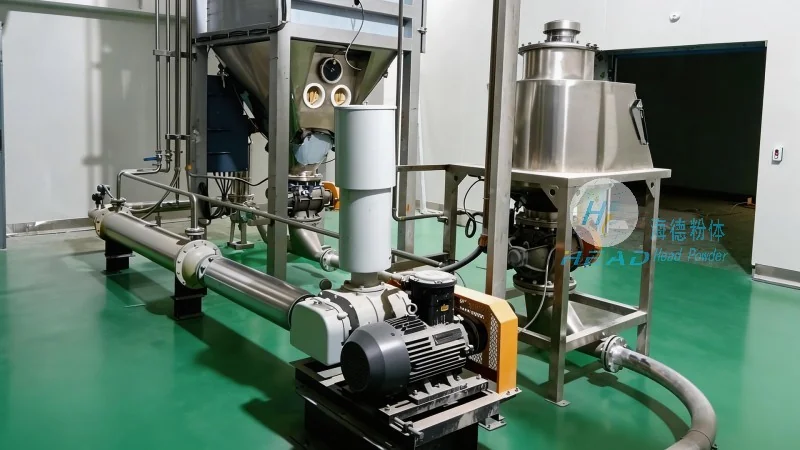
Advantages of Dense Phase Powder Conveying
Dense phase powder conveying offers numerous advantages over traditional conveying methods. These include higher material concentration, reduced air consumption, lower energy costs, and improved material handling efficiency. The technology is particularly suitable for transporting abrasive or sensitive materials, as it minimizes particle attrition and maintains product integrity. Additionally, dense phase conveying systems are more compact and require less space compared to other bulk material handling solutions, making them ideal for applications with limited floor space.
Applications in Various Industries
The versatility of dense phase powder conveying makes it suitable for a wide range of industrial applications. In the chemical industry, it is used to transport powders such as catalysts, pigments, and polymers. In the food and pharmaceutical sectors, it is employed to handle sensitive materials like spices, powders, and active pharmaceutical ingredients (APIs), ensuring product purity and quality. The mining and mineral processing industries also benefit from this technology for transporting ores, concentrates, and other bulk materials. Overall, dense phase powder conveying provides a reliable and efficient solution for industries that require precise and controlled material handling.
Conclusion: The Future of Bulk Material Handling
As industries continue to seek more efficient and sustainable material handling solutions, dense phase powder conveying remains a leading technology. With its ability to handle a wide variety of materials, reduce energy consumption, and maintain product quality, this technology is well-positioned to meet the evolving needs of modern manufacturing. Shandong HeadPowder Engineering Co., Ltd. continues to innovate and improve its dense phase powder conveying systems, providing clients with reliable and high-performance solutions that enhance operational efficiency and profitability.