

Operation Process and Working Principle of Calcium Phosphate Powder Conveying System Equipment
HeadPowder, a leading enterprise based in Shandong, China, specializes in the design, manufacturing, and supply of advanced powder handling equipment. The company's core product, the Calcium Phosphate Powder Conveying System, is engineered to meet the demanding requirements of industries that rely on efficient and reliable transport of calcium phosphate powders. This system is crucial for applications ranging from pharmaceutical production to food processing and chemical manufacturing, where precise and consistent powder flow is essential for maintaining product quality and operational efficiency.
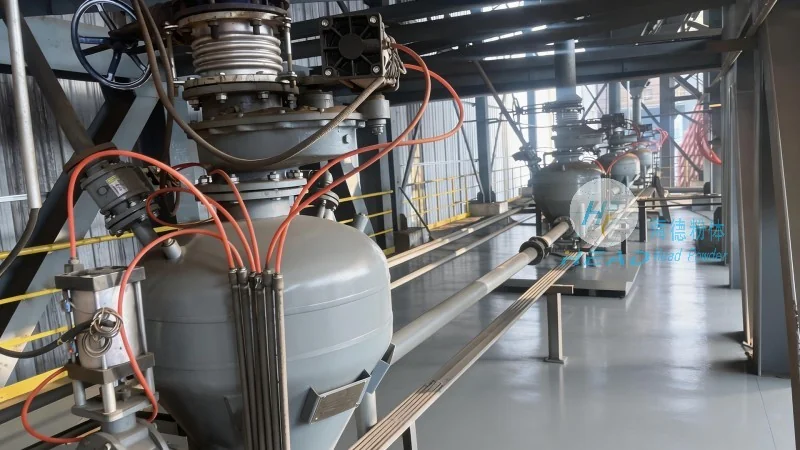
Overview of the Calcium Phosphate Powder Conveying System
The Calcium Phosphate Powder Conveying System is a sophisticated piece of equipment designed to handle the unique characteristics of calcium phosphate powders. These powders are often fine, abrasive, and can be hygroscopic, which makes conventional conveying methods inefficient or even damaging to the material. The system addresses these challenges through a combination of advanced components and intelligent control mechanisms, ensuring that the powder is transported safely, efficiently, and without degradation.
Key Components and Their Roles
The system typically consists of several key components, each playing a critical role in the overall operation. These include a hopper for material storage, a feeder to regulate the flow rate, a conveyor system (such as a screw or pneumatic conveyor) to move the powder, and a control panel to monitor and adjust the process parameters. The hopper is designed with a smooth interior to prevent material buildup and ensure consistent feeding. The feeder, often a rotary valve or a variable-speed screw feeder, controls the exact amount of powder released into the conveyor, preventing overloading and maintaining a steady flow. The conveyor system is chosen based on the specific properties of the calcium phosphate powder, with options including screw conveyors for bulk material handling and pneumatic conveyors for more delicate or fine powders. The control panel integrates sensors and indicators to monitor pressure, flow rate, and other critical parameters, allowing operators to make real-time adjustments and maintain optimal performance.
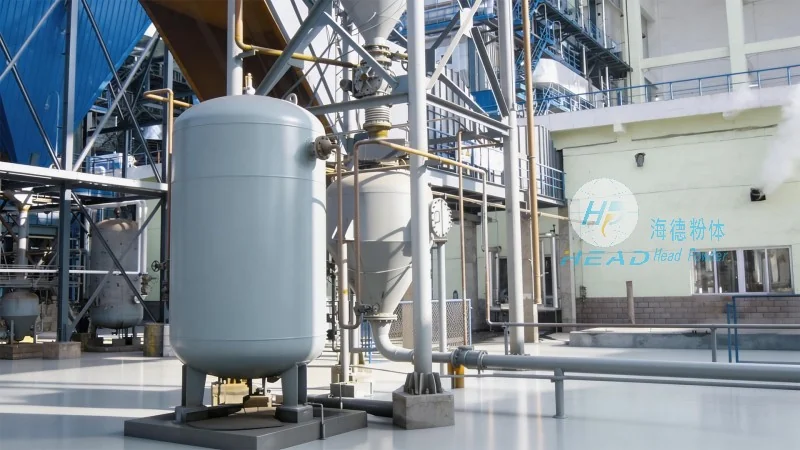
Operation Process: Step-by-Step Guide
The operation of the Calcium Phosphate Powder Conveying System follows a systematic process to ensure smooth and efficient material transport. The steps are as follows:
- Material Loading: The calcium phosphate powder is loaded into the hopper. The hopper is equipped with a lid and a discharge valve to facilitate easy loading and unloading. Proper sealing is essential to prevent dust contamination and material loss.
- Feeder Activation: The feeder is activated, and its speed is adjusted to the desired flow rate. This step ensures that the powder is released at a consistent rate, preventing surges or bottlenecks in the conveyor system.
- Conveyor Operation: The conveyor system begins to transport the powder from the hopper to the discharge point. The speed of the conveyor is synchronized with the feeder to maintain a steady flow. For screw conveyors, the rotating screw pushes the powder forward; for pneumatic conveyors, the powder is carried by a stream of air.
- Monitoring and Adjustment: The control panel continuously monitors the system's performance. Sensors detect any changes in pressure, flow rate, or temperature, and the control system adjusts the feeder speed or conveyor speed as needed to maintain optimal conditions. Operators can also manually adjust these parameters based on real-time feedback.
- Discharge and Collection: The powder is discharged from the conveyor system into a collection bin or directly into the next processing stage. The discharge point is designed to minimize dust generation and ensure a clean transfer of material.
Working Principle: How the System Transfers Powder
The working principle of the Calcium Phosphate Powder Conveying System is based on the principles of fluidization and mechanical transport. The system uses a combination of gravity, pressure, and mechanical force to move the powder from the source to the destination. The key mechanisms include:
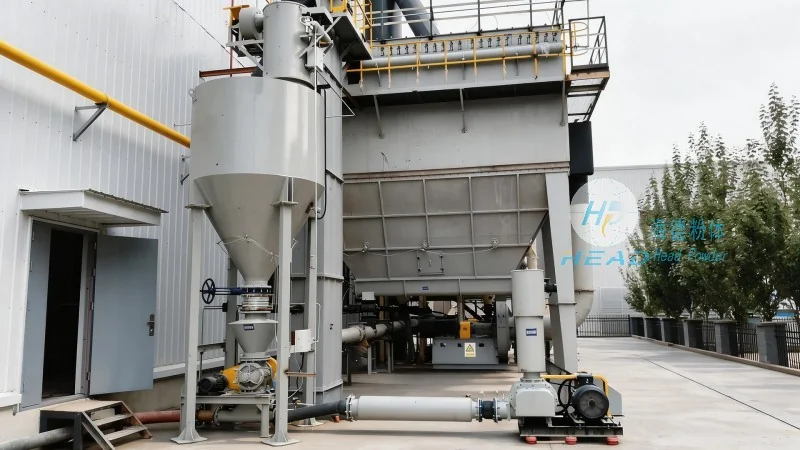
- Feeding Mechanism: The feeder regulates the flow of powder from the hopper. This is typically achieved through a rotating screw or a variable-speed valve that controls the amount of material released per unit time. The feeder ensures that the powder is fed at a consistent rate, preventing overloading of the conveyor and maintaining a stable flow.
- Conveying Mechanism: The conveyor system transports the powder. For screw conveyors, the rotating screw creates a helical path that moves the powder forward due to friction and gravity. The screw's pitch and speed are optimized to handle the specific characteristics of calcium phosphate powders, ensuring efficient transport without causing excessive wear or degradation. For pneumatic conveyors, the powder is suspended in a stream of air and carried to the discharge point. This method is particularly effective for fine powders that are prone to caking or agglomeration.
- Control and Regulation: The control panel monitors and regulates the system's operation. Sensors such as pressure transducers, flow meters, and temperature sensors provide real-time data on the system's performance. The control system uses this data to adjust the feeder speed or conveyor speed, ensuring that the powder is transported at the desired rate. This feedback loop ensures that the system operates efficiently and maintains product quality.
Advantages of the Calcium Phosphate Powder Conveying System
The Calcium Phosphate Powder Conveying System offers several advantages over traditional conveying methods, making it an ideal choice for industries dealing with calcium phosphate powders:
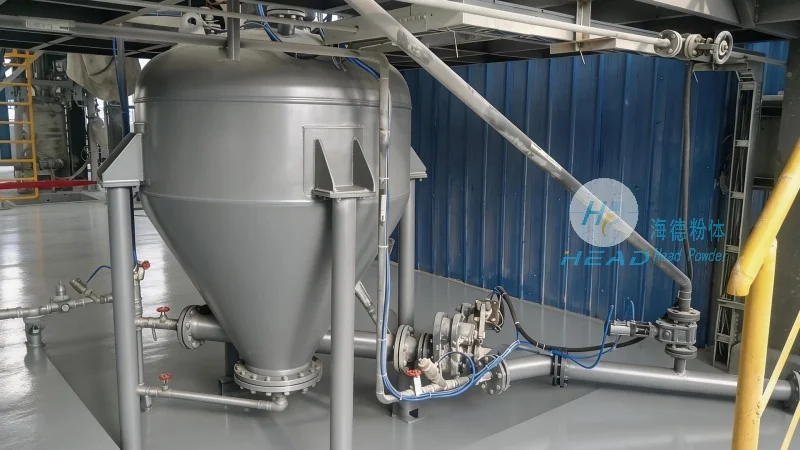
- High Efficiency and Reliability: The system is designed to operate continuously with minimal downtime, ensuring a steady supply of powder to the next processing stage. The intelligent control system prevents common issues such as clogging or overloading, maintaining consistent performance.
- Minimal Material Degradation: The system uses gentle conveying methods that minimize the breakdown of the powder particles. This is crucial for maintaining the quality and properties of calcium phosphate powders, which are often used in sensitive applications such as pharmaceuticals or food products.
- Easy Maintenance and Cleaning: The components of the system are designed for easy access and cleaning. The hopper and conveyor are constructed with smooth surfaces to prevent material buildup, and the system can be easily disassembled for maintenance. This reduces downtime and maintenance costs.
- Customizable for Specific Applications: The system can be customized to meet the specific requirements of different applications. For example, the type of conveyor (screw or pneumatic) can be selected based on the particle size and moisture content of the powder. The feeder speed and conveyor speed can also be adjusted to optimize performance for different production rates.
Applications and Industries
The Calcium Phosphate Powder Conveying System is widely used in various industries that require the efficient transport of calcium phosphate powders. Some of the key applications include:
- Pharmaceutical Industry: Calcium phosphate is used as a filler and excipient in pharmaceutical formulations. The system ensures that the powder is transported without contamination, maintaining the purity and quality of the final product.
- Food Industry: Calcium phosphate is used as a fortifier and stabilizer in food products such as dairy, beverages, and baked goods. The system provides a clean and efficient way to transport the powder, ensuring that the food products meet safety and quality standards.
- Chemical Industry: Calcium phosphate is used in the production of fertilizers, coatings, and other chemical products. The system handles the abrasive and fine nature of the powder, ensuring that the production process is efficient and cost-effective.
- Industrial Manufacturing: The system is used in various industrial processes where calcium phosphate powders are used as a raw material. It ensures that the powder is transported safely and efficiently, reducing the risk of accidents and improving overall productivity.
Conclusion
The Calcium Phosphate Powder Conveying System from HeadPowder is a reliable and efficient solution for industries that require the transport of calcium phosphate powders. By combining advanced components with intelligent control mechanisms, the system ensures that the powder is transported safely, efficiently, and without degradation. The system's customizable design and easy maintenance make it an ideal choice for various applications, from pharmaceutical production to food processing and chemical manufacturing. HeadPowder, with its headquarters in Shandong, China, continues to lead the way in providing high-quality powder handling solutions that meet the evolving needs of the industry.