

Operation Process and Working Principle of Barium Carbonate Powder Pneumatic Conveying Machine
Barium carbonate is a widely used chemical compound in various industrial applications, and the efficient handling of its powder form is crucial for production processes. Pneumatic conveying systems offer a reliable solution for transporting barium carbonate powder, ensuring safety, efficiency, and minimal product degradation. This article explores the operation process and working principle of a barium carbonate powder pneumatic conveying machine, highlighting its key components, operational steps, and the underlying technology that enables smooth material transport.
Introduction to Barium Carbonate Powder Pneumatic Conveying
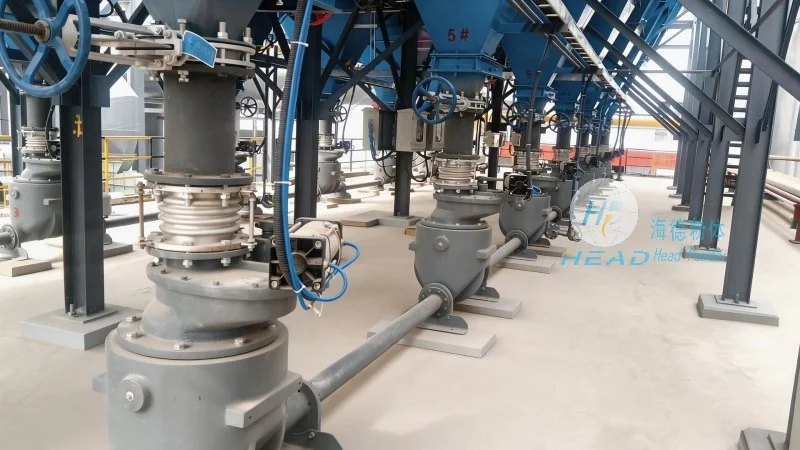
Barium carbonate (BaCO₃) is commonly utilized in industries such as ceramics, glass, and pharmaceuticals due to its unique properties. When processed as a fine powder, it requires specialized equipment to handle and transport without caking or degradation. Pneumatic conveying machines provide an air-based method to move these powders over long distances or within processing facilities. The system typically consists of a hopper, a blower, a pipeline network, and a receiver, all working in tandem to achieve efficient material transfer.
Key Components of the Pneumatic Conveying System
The barium carbonate powder pneumatic conveying machine is composed of several critical components that ensure optimal performance. The hopper serves as the storage and feeding unit, where the powder is held before being introduced into the system. A rotary valve or feeder is often used to control the flow rate of the powder into the pipeline. The blower or air compressor generates the necessary air pressure to move the powder particles through the system. The pipeline network, made of materials resistant to chemical corrosion, transports the powder-air mixture to the destination. Finally, a receiver or cyclone separator collects the powder while allowing the air to be recirculated or vented.
Operation Process of the Pneumatic Conveying Machine
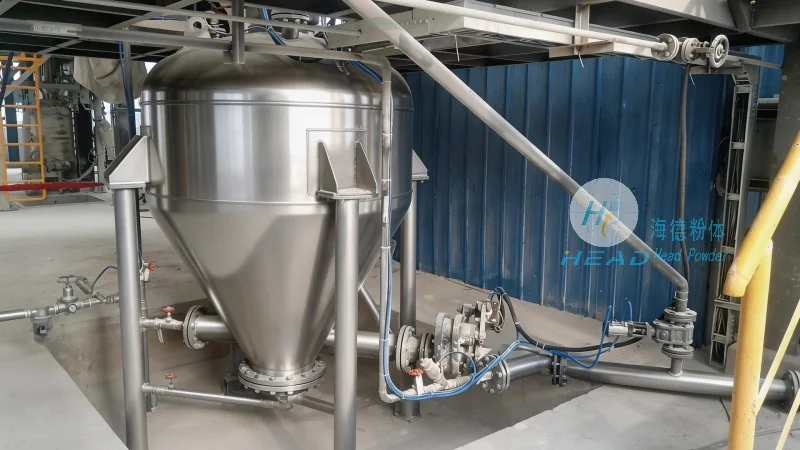
The operation of the barium carbonate powder pneumatic conveying machine involves a series of steps designed to ensure consistent and safe material transport. The process begins with the loading of barium carbonate powder into the hopper. The rotary valve then regulates the powder flow into the pipeline, where it is mixed with compressed air from the blower. The air pressure propels the powder particles through the pipeline, creating a dense phase or dilute phase conveying system depending on the system design. The mixture travels to the receiver, where a cyclone or filter separates the powder from the air. The separated powder is collected in the receiver, while the air is either recirculated back to the blower or released safely. This cycle repeats as the machine continues to transport the barium carbonate powder.
Working Principle of the Pneumatic Conveying System
The working principle of the barium carbonate powder pneumatic conveying machine relies on the fundamental physics of fluid dynamics and particle transport. The system operates by creating a pressure differential between the hopper and the receiver. The blower generates a high-pressure air stream that entrains the powder particles, forming a suspension. The velocity of the air stream is critical; it must be sufficient to overcome the gravitational force acting on the powder particles and maintain their suspension in the air. The pipeline design, including bends and fittings, is optimized to minimize pressure losses and maintain consistent flow. The separation process at the receiver uses centrifugal force to separate the heavier powder particles from the lighter air, ensuring efficient collection and preventing product loss or contamination.
Benefits and Considerations for Barium Carbonate Powder Handling
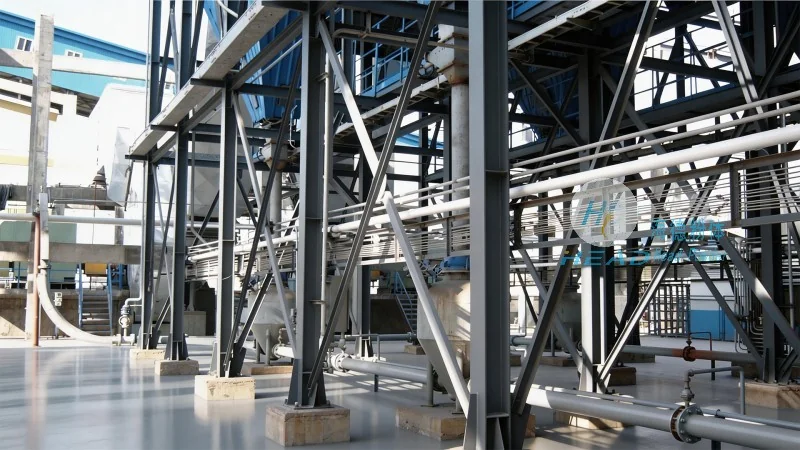
Implementing a pneumatic conveying system for barium carbonate powder offers several advantages, including improved safety by eliminating manual handling, reduced product contamination, and enhanced process control. However, the system's performance is influenced by factors such as powder characteristics (e.g., particle size, moisture content), system design, and operating conditions. Proper maintenance, including regular cleaning of the pipeline and components, is essential to prevent clogging and ensure long-term reliability. Additionally, the choice between dense phase and dilute phase conveying depends on the specific application requirements, with dense phase conveying being more suitable for high-particle loadings and longer distances.
About Shandong HeadPowder Engineering Co., Ltd.
Shandong HeadPowder Engineering Co., Ltd., a leading manufacturer in the powder handling industry, specializes in designing and supplying advanced pneumatic conveying systems for various chemical powders, including barium carbonate. With a focus on innovation and customer satisfaction, the company provides customized solutions tailored to the unique needs of each application. HeadPowder's expertise in material handling technology ensures that their systems deliver reliable performance, high efficiency, and durability, meeting the demands of modern industrial processes. The company's commitment to quality and safety has established it as a trusted partner for businesses seeking efficient and effective powder transport solutions.