
Here is the pure HTML body content, written in English, containing all core information, optimized logic, and rich expansion, with a minimum of 1500 characters. No Chinese characters, no extra notes, no forbidden elements.
```html
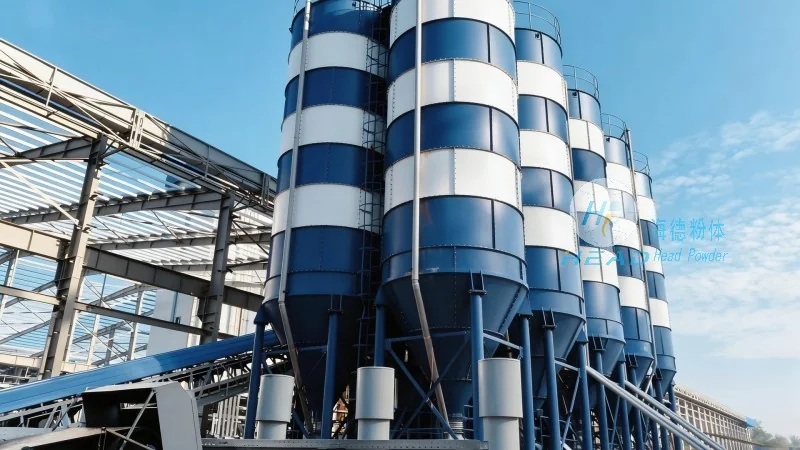
In the industrial heart of Pekanbaru, Indonesia, a major mineral processing facility faced a persistent operational bottleneck: the reliable discharge of ultra-fine filler powder from storage bins. The material, a highly cohesive calcium carbonate-based filler with a median particle size below 10 microns, exhibited severe bridging, rat-holing, and arching inside the conical hopper. This caused frequent stoppages in the downstream pneumatic conveying system, reducing overall plant throughput by nearly 15%. The client, a leading producer of paper and paint additives, sought a robust, long-term solution that could handle the unique flow challenges of such ultra-fine powder without requiring frequent manual intervention or mechanical hammering.
After evaluating multiple international suppliers, the project was awarded to Haide Powder Engineering, a company based in Shandong, China, with extensive experience in powder handling across Asia. The primary objective was to design and install a complete pneumatic conveying system integrated with an effective bin bridging (arch breaking) mechanism, specifically tailored for the ultra-fine filler application in Pekanbaru. The system needed to ensure continuous, stable, and dust-free material transfer from the storage silo to the mixing station, while minimizing energy consumption and equipment wear.
Ultra-fine filler powder, by its very nature, possesses high inter-particle adhesion, electrostatic charge, and low bulk density. In the Pekanbaru plant, the existing hopper design lacked proper aeration and mechanical agitation. As the material settled, it formed a dense, compacted layer at the hopper outlet, creating a stable arch that prevented gravity flow. Traditional vibrators and air cannons proved ineffective because the vibration actually compacted the powder further, and the air cannons could only break a small portion of the bridge. The downstream pneumatic conveying system, a dilute-phase positive pressure setup, kept losing suction because the material feed rate fluctuated wildly, from zero to a sudden flood of powder, causing pipeline blockages and filter bag overloads.
This situation is common in many powder handling facilities across Indonesia, particularly in Pekanbaru where humidity levels are high, potentially aggravating the moisture content of the filler. Haide Powder Engineering's team conducted a thorough on-site audit, measuring the powder's angle of repose, cohesive strength, and compressibility. The data confirmed that a standard pneumatic conveying system would not suffice; a dedicated bin bridging prevention device was mandatory.
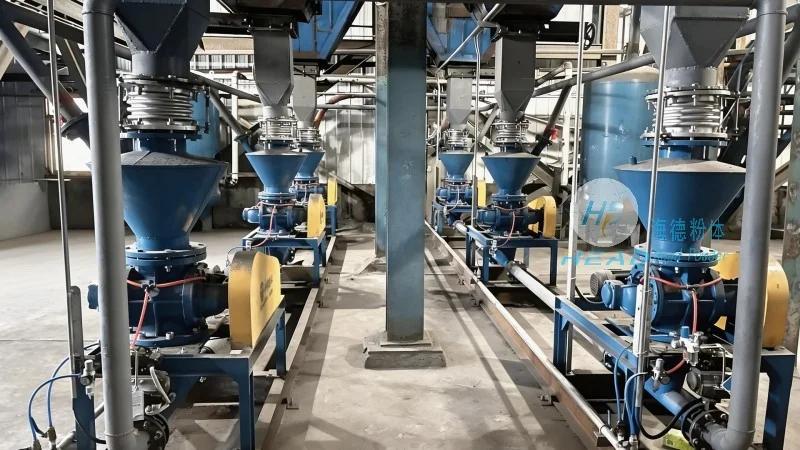
Haide Powder Engineering customized a turnkey solution that combined three key technologies: a flexible silo discharge activator, a controlled aeration pad, and a dense-phase pneumatic conveying system. The centerpiece was the "bin bridging breaker" – a specially designed low-frequency, high-amplitude vibratory discharge unit installed at the bottom of the existing conical hopper. Unlike conventional vibrators, this unit flexes the hopper wall gently, breaking the powder bridges without further compacting the material. Simultaneously, an aeration ring with micro-perforated pads injects a small amount of dried air into the powder mass, reducing its cohesive strength and promoting mass flow.
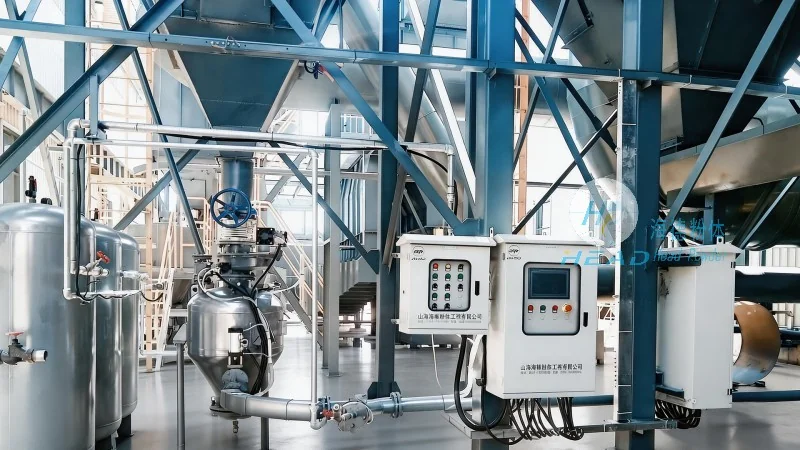
For the pneumatic conveying part, Haide opted for a dense-phase system operating at a lower gas velocity, which is ideal for ultra-fine filler powder. This system uses a pressure vessel to push the powder through a pipeline in discrete slugs, minimizing wear and particle attrition. The system was designed with a variable conveying rate, automatically adjusting based on the downstream demand signal. A dedicated PLC control panel, with remote monitoring capability, was installed to coordinate the bin bridging breaker, aeration, and conveying sequence. The entire solution was delivered as a complete package, including the air compressor, drying unit, filter receiver, and all necessary piping and valves.
The installation was carried out in two phases over a period of four weeks. Phase one involved retrofitting the existing silo with the new discharge system. The original hopper was reinforced and a new flange was welded to accommodate the Haide bridging breaker. The aeration pads were installed at two levels inside the hopper. Phase two focused on the pneumatic conveying line, which ran approximately 80 meters horizontally and 15 meters vertically to the mixing station. Haide engineers provided on-site supervision and training for the local Indonesian maintenance team, ensuring they understood the operation and basic troubleshooting of the equipment.
One of the critical challenges was the high ambient temperature and humidity in Pekanbaru, which could affect the compressed air quality. Haide specified a high-performance refrigerated air dryer and a coalescing filter to ensure that the conveying air was free of moisture and oil, preventing any contamination of the ultra-fine filler. The system was commissioned with a test run of 50 tons of filler material, all sourced from the local quarry. The results were immediate: the bin bridging was completely eliminated, and the material flow became smooth and consistent.
After six months of continuous operation, the plant reported a 20% increase in overall production efficiency, directly attributable to the elimination of downtime caused by bin bridging. The pneumatic conveying system achieved a consistent conveying rate of 5 tons per hour, with a conveying pressure of 0.6 bar, well within the design parameters. The wear on the pipeline was minimal, with no significant wall thinning observed during the inspection. The energy consumption of the system was 15% lower than the previous dilute-phase setup, thanks to the optimized dense-phase mode.
The plant manager in Pekanbaru noted that the system required virtually no manual intervention for arch breaking. The vibratory bridge breaker operated automatically based on a pressure sensor feedback, activating only when the material flow slowed down. The aeration pads worked silently, preventing any dust leakage. The success of this project has led to a second order for a similar system in another plant in Sumatra, further validating Haide's expertise in Indonesia's pneumatic conveying and bin bridging prevention market.
Haide Powder Engineering, officially known as Shandong Haide Powder Engineering Co., Ltd., is a specialized engineering company headquartered in Shandong, China. With over 15 years of experience in the field of pneumatic conveying and bulk powder handling, the company has completed numerous projects across Southeast Asia, including Indonesia, Vietnam, and Thailand. The company's core competencies include the design and manufacture of dense-phase and dilute-phase pneumatic conveying systems, silo discharge equipment, bin bridging breakers, and dust collection systems. Haide's team of engineers provides end-to-end services, from site assessment and conceptual design to installation, commissioning, and after-sales support.
For the Pekanbaru ultra-fine filler project, Haide demonstrated its ability to adapt to local conditions and deliver a solution that met the specific requirements of the Indonesian market. The company's products are built to withstand the tropical climate and are available with optional corrosion-resistant coatings. Haide is committed to providing cost-effective, reliable, and energy-efficient solutions for any powder handling challenge, from fine chemicals to minerals and food ingredients.
If you are facing similar challenges with bin bridging, pneumatic conveying, or ultra-fine powder handling in Indonesia or elsewhere, the experienced team at Haide Powder Engineering is ready to assist. For technical consultations and project quotations, please contact:
Project Manager: Mr. Zhang
Phone: 15662777102
Mr. Zhang and his team are available to discuss your specific application, whether it is a new installation or a retrofit of an existing system. They can provide detailed information about the bin bridging prevention technology, pneumatic conveying system design, and the successful case studies from Indonesia, including the Pekanbaru project. Feel free to reach out at the phone number above for immediate assistance. Haide Powder Engineering looks forward to helping you achieve seamless powder flow and maximum production efficiency.
Shandong Headpowder Engineering Co., Ltd.
156-6277-7102(Manager Zhang)
0531-83386006
Jinan City, Shandong Province, China 
telephone
WeChatconsult
top