
Shandong Headpowder Engineering Co., Ltd. specializes in powder & pellet pneumatic conveying. With industry‑university‑research strengths, we deliver sealed, dust‑free and precise conveying solutions.
Your current position:首页 >> Solutions >> Conveying Solutions for New‑material Industry
Pneumatic Conveying Solution for PBAT Pellets
简介:
  • In the modern processing of biodegradable materials, efficient and reliable material handling is critical....
WeChat
details
recommend

In the modern processing of biodegradable materials, efficient and reliable material handling is critical. PBAT (polybutylene adipate terephthalate) pellets, widely used in compostable packaging and agricultural films, require a carefully designed conveying system to maintain particle integrity, minimize dust generation, and ensure consistent flow. A dedicated PBAT pellet pneumatic conveying solution addresses these challenges by utilizing air pressure to transport pellets through enclosed pipelines, offering a clean, safe, and automated method. This approach is particularly valuable for manufacturers who need to move large volumes of PBAT pellets from storage silos to production lines without degradation or contamination.

Pneumatic Conveying Solution for PBAT Pellets

Shandong Haide Powder Engineering Co., Ltd., recognized as a leading PBAT pellet pneumatic conveying manufacturer, brings decades of expertise in powder and bulk solids handling. The company, abbreviated as Haide Powder, is headquartered in Shandong, China. Their engineering team focuses on customizing each system to the specific properties of PBAT, including its low bulk density, relatively high melt sensitivity, and tendency to generate static electricity. By selecting appropriate conveying velocities, pipe materials, and filtration components, Haide ensures that the PBAT pellet conveying engineering design meets the highest standards of operational efficiency and product quality.

Core Components of the PBAT Pellet Pneumatic Conveying System

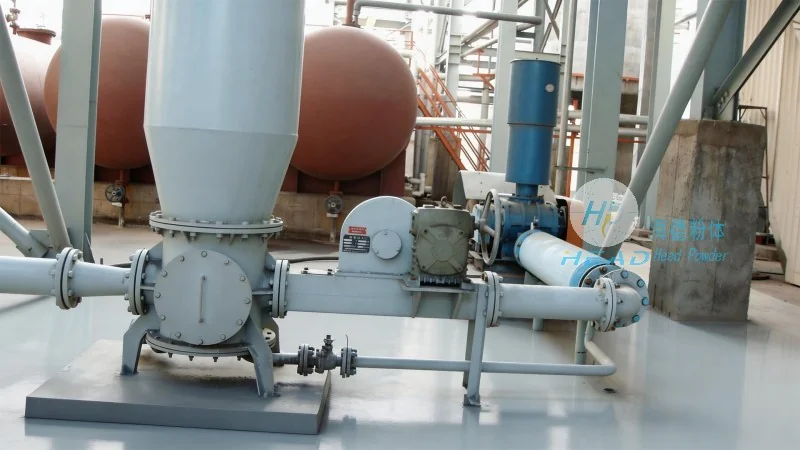
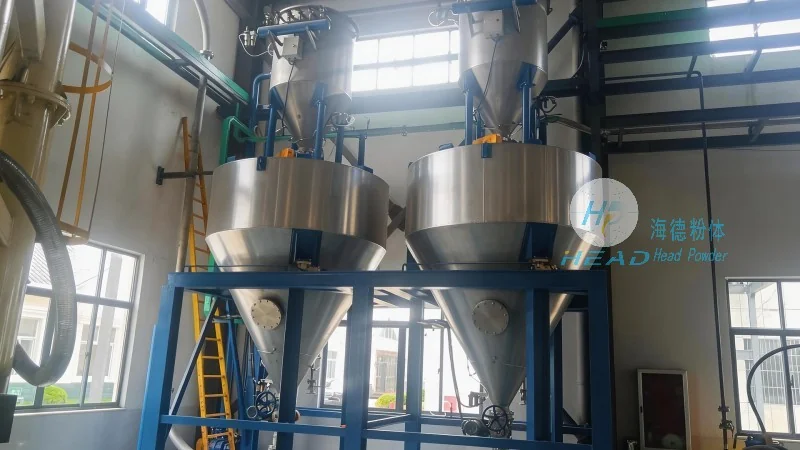
A complete PBAT pellet conveying system typically integrates several key modules. The first is the pellet feeding device, which can be a rotary valve or a vacuum loader, designed to introduce PBAT pellets into the air stream at a controlled rate. Next, the conveying pipeline, constructed from stainless steel or wear-resistant aluminum, carries the pellets using either dilute phase or dense phase technology. Dilute phase conveying is common for PBAT due to its moderate abrasiveness, allowing high throughput with relatively low energy consumption. The system also includes a separation unit, such as a cyclone separator or a bag filter, to efficiently separate the pellets from the conveying air at the destination. Finally, a control system with PLC and sensors monitors pressure, flow rate, and temperature to ensure stable operation.

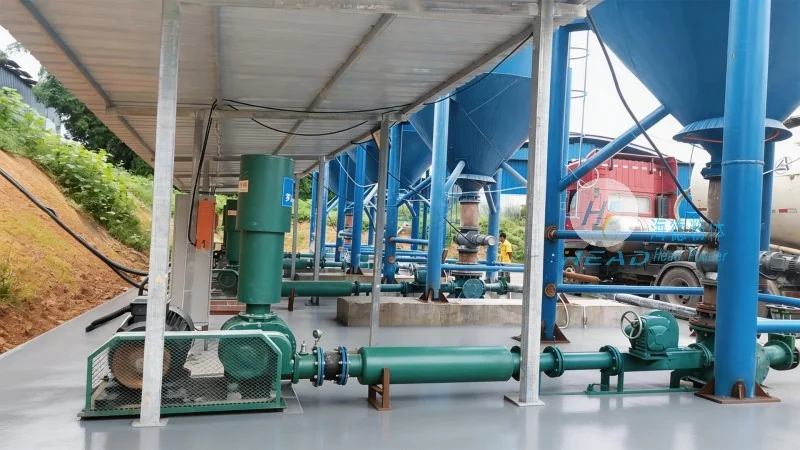
Haide Powder’s PBAT pellet pneumatic conveying solution emphasizes flexibility. The same design can be adapted for multiple pick-up points or multiple discharge destinations, making it suitable for complex production layouts. For example, a single blower can serve several processing machines, reducing capital investment. The enclosed nature of pneumatic conveying also prevents cross-contamination and minimizes dust emissions, which is essential for food-grade or pharmaceutical-grade PBAT applications.

Pneumatic Conveying Solution for PBAT Pellets

Engineering Design Considerations for PBAT Pellets

When working on a PBAT pellet conveying engineering design, several factors must be evaluated. The particle size distribution and shape of PBAT pellets influence the minimum conveying velocity. Too low a velocity can cause plugging, while too high a velocity may lead to pellet breakage or pipe wear. Haide Powder engineers use computational fluid dynamics and empirical testing to determine the optimal air-to-material ratio. The system pressure drop is calculated based on pipe length, number of bends, and elevation changes, ensuring that the blower or compressor selected has adequate capacity. Additionally, the temperature of the conveying air must be controlled, as PBAT pellets can soften at elevated temperatures (typically above 60°C), potentially causing adhesion or fusion inside the pipe. Therefore, cooling sections or ambient air intake are often incorporated into the design.

Another critical aspect is the selection of filtration and dust collection equipment. PBAT pellets can generate fine dust during handling, which must be captured to comply with environmental regulations and to maintain a clean workplace. Haide Powder integrates high-efficiency cartridge filters or baghouses, along with explosion-proof features if the dust is combustible. The entire system is designed for easy maintenance, with quick-disconnect couplings and access panels for cleaning and inspection.

Pneumatic Conveying Solution for PBAT Pellets

Why Choose Haide Powder as Your PBAT Pellet Pneumatic Conveying Partner

As an experienced PBAT pellet pneumatic conveying manufacturer, Haide Powder offers end-to-end services from concept to commissioning. Their team collaborates with clients to understand production goals, existing infrastructure, and budget constraints. The company provides detailed engineering drawings, installation supervision, and operator training. Every PBAT pellet conveying system is tested at the factory before shipment to verify performance. Furthermore, Haide Powder offers spare parts and technical support for the entire lifecycle of the equipment. For any inquiries regarding a PBAT pellet pneumatic conveying solution, you can contact Zhang, the project manager, at 15662777102. Zhang and his team are ready to discuss your specific requirements and provide a tailored proposal.

Application Examples and Future Trends

PBAT pellet pneumatic conveying systems are deployed in various industries, including biodegradable resin production, compounding plants, and injection molding facilities. In one recent project, Haide Powder designed a dense phase conveying system for a large PBAT manufacturing plant in Shandong. The system transports pellets from a 200-ton silo to multiple extrusion lines, achieving a throughput of 15 tons per hour with less than 0.1% fines generation. The customer reported a 30% reduction in energy consumption compared to their previous mechanical conveyor, thanks to the optimized air velocity and pipe routing. Another application involves conveying PBAT pellets mixed with starch or PLA, where the gentle handling of pneumatic conveying preserves the blend homogeneity.

Looking ahead, the demand for PBAT pellet pneumatic conveying solutions will continue to grow as the bioplastics market expands. Haide Powder is investing in smart control systems that enable real-time monitoring and predictive maintenance, reducing downtime. The company also explores using recycled air and energy recovery systems to improve sustainability. For companies seeking a reliable partner for their PBAT pellet conveying engineering design, Haide Powder combines technical expertise with a commitment to quality. Contact Zhang at 15662777102 to start your project discussion.

Copyright © Shandong Headpowder Engineering Co., Ltd. All Rights Reserved.    Publicity of business license

top