
In the industrial heart of Kuwait, the Al Ahmadi region has long been recognized as a hub for advanced manufacturing and processing operations. One of the most notable pneumatic conveying cases in this area involves the simultaneous, automatic transfer of two distinct bulk materials: calcium carbonate and talc powder. This project, executed by a specialized engineering firm, demonstrates how modern pneumatic conveying technology can handle multiple powdery substances with precision, efficiency, and minimal human intervention. The system is specifically designed to meet the rigorous demands of industries such as plastics, rubber, paints, and ceramics, where consistent particle size and purity are critical.
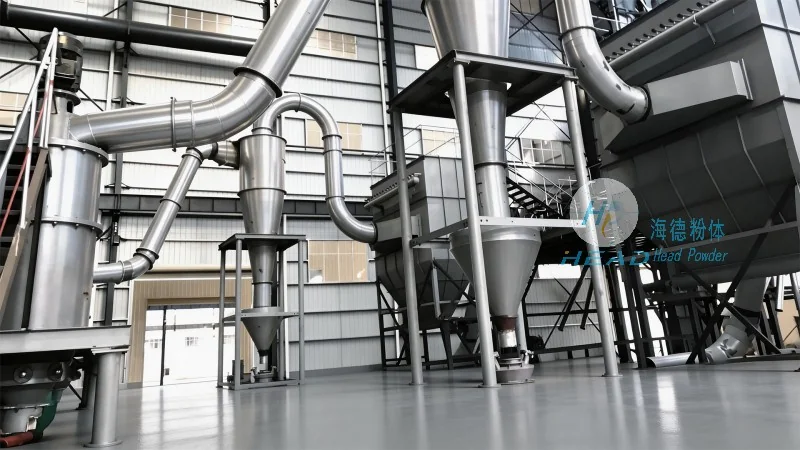
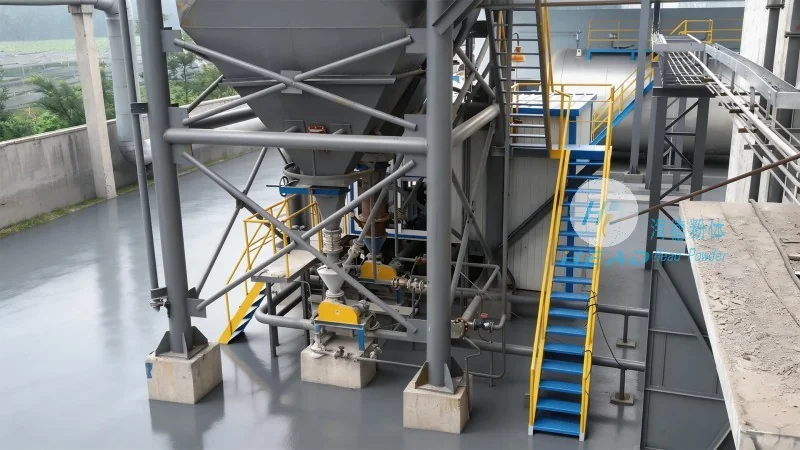
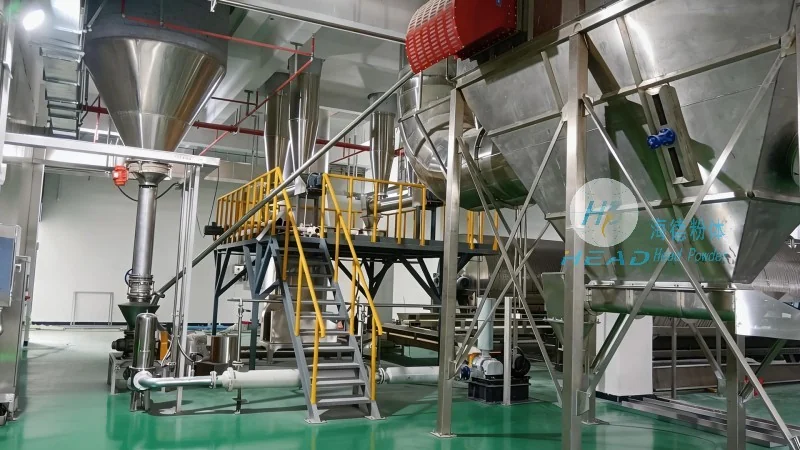
The dual material automatic pneumatic conveying system installed in Al Ahmadi, Kuwait, represents a breakthrough in bulk material handling. It integrates two separate conveying lines that operate in parallel, each tailored to the unique flow characteristics of calcium carbonate and talc powder. Calcium carbonate, with its higher density and abrasive nature, requires a different conveying velocity and pipeline material compared to the softer, more lubricious talc powder. The engineering team configured the system with dedicated rotary valves, blow tanks, and filtration units to ensure that each material maintains its integrity throughout the transfer process. This Kuwait pneumatic conveying solution not only increases throughput but also reduces contamination risks, as the two materials never mix in the conveying lines.
The Al Ahmadi pneumatic conveying installation is a testament to customized engineering. The calcium carbonate conveying line operates at a pressure of 2.5 bar, using a dense-phase mode to minimize particle degradation. The talc powder line, on the other hand, employs a dilute-phase approach with air velocities carefully controlled to prevent the powder from becoming airborne too aggressively. Both lines are equipped with automatic diverter valves that allow seamless switching between destinations – from storage silos to mixing stations or packaging machines. The entire system is controlled by a central PLC that monitors material flow rates, pressure differentials, and filter conditions in real time.
One of the key features of this Kuwait pneumatic conveying case is the inclusion of an integrated moisture removal system. Given the humid coastal climate of Kuwait, especially in Al Ahmadi, moisture can cause clumping in both calcium carbonate and talc powder. The system incorporates desiccant dryers and heated air blowers that precondition the conveying air, ensuring that the materials remain free-flowing. This attention to local environmental factors significantly reduces downtime and maintenance costs. The project also used abrasion-resistant piping for the calcium carbonate route, extending the service life of the equipment by over 40% compared to standard steel pipes.
The adoption of automatic dual material pneumatic conveying in Al Ahmadi offers several operational advantages. First, it eliminates the need for manual handling of bulk bags or drums, which is not only labor-intensive but also poses safety risks due to the fine dust generated by calcium carbonate and talc powder. Second, the system achieves a high level of accuracy in material dosing, with a margin of error of less than 0.5%. This precision is critical for downstream processes where the ratio of calcium carbonate to talc powder must be tightly controlled.
From a logistics perspective, the Kuwait pneumatic conveying solution reduces the footprint required for material handling equipment. Instead of separate conveyors, bucket elevators, and screw feeders for each material, a single centralized pneumatic network handles both. This compact design frees up valuable floor space for other production equipment. The automatic system also integrates with existing ERP and MES systems, providing real-time data on material consumption and inventory levels. For the plant manager in Al Ahmadi, this means better planning and reduced waste.
The dual material automatic pneumatic conveying system in Al Ahmadi, Kuwait, was designed and installed by Shandong Haide Powder Engineering Co., Ltd., a leading Chinese enterprise specializing in pneumatic conveying and powder handling solutions. With its headquarters located in China Shandong, the company has a proven track record of delivering complex projects across the Middle East, including Kuwait. The Al Ahmadi project required close collaboration with local contractors to ensure compliance with Kuwaiti safety standards and operational requirements. The engineering team from Haide Powder Engineering conducted on-site surveys, computer simulations, and performance testing before finalizing the system configuration.
For inquiries about similar pneumatic conveying systems for calcium carbonate, talc powder, or other bulk materials, potential clients can contact the company directly. The project manager, Mr. Zhang, is available to discuss custom solutions. Reach him at 15662777102 for detailed technical consultations and quotations. Whether you need a single-material line or a complex dual material automatic conveying system, the team at Shandong Haide Powder Engineering Co., Ltd. has the expertise to deliver reliable, efficient, and cost-effective results.
Calcium carbonate and talc powder are two of the most widely used fillers in the global manufacturing industry. In the Al Ahmadi project, the calcium carbonate pneumatic conveying system handles particles ranging from 5 to 100 microns, with a bulk density of approximately 1.2 g/cm³. The talc powder, with a lower bulk density of around 0.9 g/cm³ and a platy particle shape, requires gentler handling to preserve its lubricating properties. The dual material automatic pneumatic conveying system in Kuwait was calibrated to operate at conveying rates of up to 8 tons per hour for calcium carbonate and 6 tons per hour for talc powder, meeting the client's production targets consistently.
The success of this Kuwait pneumatic conveying case lies in the careful selection of components. For the calcium carbonate line, the system uses a venturi-type injector combined with a fluidized bed discharge to ensure even flow. For the talc powder line, a screw feeder with variable speed control feeds the material into the air stream, preventing bridging or rat-holing. The entire network is designed with easy-access cleanout ports, allowing maintenance crews to quickly clear any blockages. This attention to detail has made the Al Ahmadi installation a reference project for future pneumatic conveying deployments in the region.
If you are planning a similar project in Kuwait, Qatar, Saudi Arabia, or any other part of the Middle East, the team at Shandong Haide Powder Engineering Co., Ltd. is ready to assist. With extensive experience in international projects, they understand the unique challenges of arid climates, local regulations, and diverse material properties. The company's contact person, Mr. Zhang, can be reached at 15662777102. He will provide a comprehensive assessment of your material handling needs and propose a tailored pneumatic conveying system, whether for calcium carbonate, talc powder, or any other bulk solid. The company's address is China Shandong, and they welcome inquiries from global clients.
In summary, the Al Ahmadi, Kuwait, dual material automatic pneumatic conveying system for calcium carbonate and talc powder exemplifies how modern engineering can solve complex material handling challenges. By combining advanced control systems, robust mechanical design, and material-specific handling strategies, this project sets a new standard for efficiency and reliability. Industries seeking to upgrade their powder handling processes should consider the proven technology demonstrated in this Kuwait pneumatic conveying case. For more information, contact Mr. Zhang at 15662777102 – the expert behind this successful installation.
Shandong Headpowder Engineering Co., Ltd.
156-6277-7102(Manager Zhang)
0531-83386006
Jinan City, Shandong Province, China 
telephone
WeChatconsult
top