
When it comes to handling bulk calcium powder filler materials in industrial production, choosing the right conveying method is critical for efficiency, cost control, and product quality. Pneumatic conveying systems have become the preferred solution for many processing plants because they offer closed-loop transportation, minimal dust emission, and high flexibility in layout. This article provides a comprehensive overview of a professional calcium powder filler pneumatic conveying system designed and manufactured by a reliable supplier, covering engineering design, equipment selection, and operational benefits.
The calcium powder filler pneumatic conveying system is a specialized material handling solution tailored for transporting fine, powdery calcium carbonate (CaCO₃) and similar filler materials. These systems use pressurized air or gas to move the powder through pipelines, eliminating the need for mechanical conveyors like belts or screws. The primary products offered include calcium powder filler pneumatic conveying equipment, calcium powder filler conveying engineering design, and a complete calcium powder filler conveying system integration. Each system is engineered to meet specific capacity requirements, ranging from a few tons per hour to dozens of tons per hour, while maintaining a consistent flow rate and preventing material degradation or segregation.
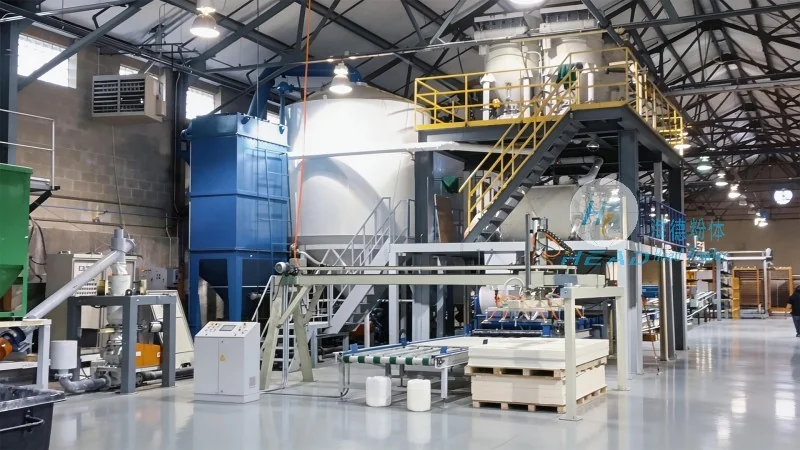
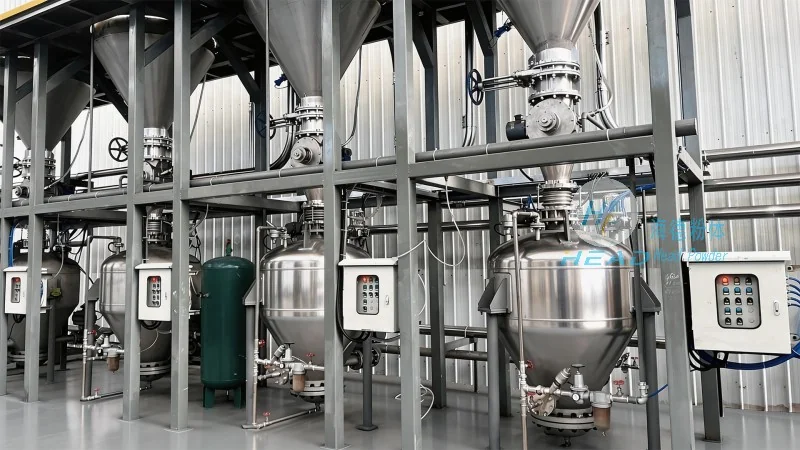
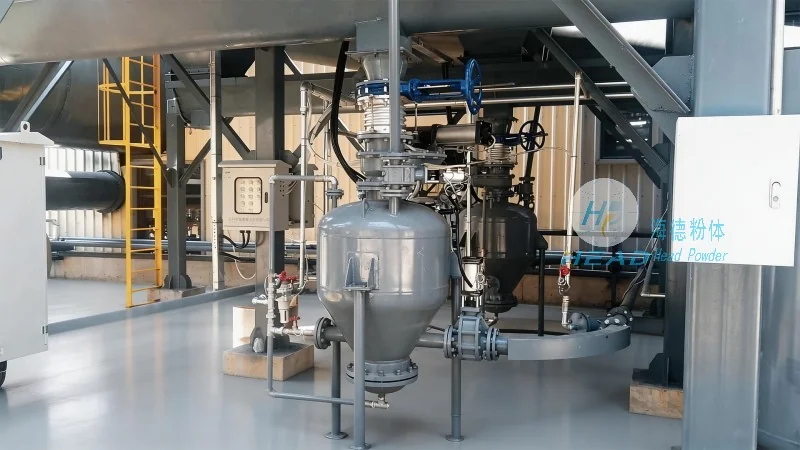
The design of the calcium powder filler conveying system typically involves a combination of dilute phase or dense phase pneumatic conveying, depending on the particle size, moisture content, and distance of transport. For calcium powder fillers, which are often abrasive and hygroscopic, the system must incorporate wear-resistant components, effective moisture control, and filtration to protect both the product and the environment. A typical system includes a feed hopper, rotary airlock valve, blower or compressor, conveying pipeline, cyclone separator, baghouse filter, and control panel. The engineering team at the supplier ensures that every component is matched to the material properties and the site layout.
The calcium powder filler conveying engineering design phase is the backbone of any successful project. It begins with a thorough analysis of the customer's raw material characteristics, including bulk density, particle size distribution, angle of repose, and abrasiveness. For calcium powder, the bulk density typically ranges from 0.4 to 0.8 g/cm³, and the particle size can be as fine as 325 mesh or even finer. These physical properties directly influence the choice of conveying velocity, pipeline diameter, and air-to-material ratio. The engineering team uses computational fluid dynamics (CFD) simulations and past project data to optimize the system pressure drop, ensuring energy efficiency and minimizing wear.
Another critical aspect of the engineering design is the layout of the conveying route. The system must navigate around existing structures, equipment, and obstacles while maintaining the shortest possible distance to reduce energy consumption and pipe wear. The design also includes provisions for future expansion, such as additional injection points or storage silos. The engineering team at Shandong Haide Powder Engineering Co., Ltd. (referred to as Haide Powder for short) has extensive experience in designing systems for calcium powder filler applications, from simple single-line conveyors to complex multi-line networks with automated switching. The company, located in Shandong, China, has delivered hundreds of projects across various industries, including plastics, rubber, paints, and building materials.
As a leading calcium powder filler pneumatic conveying manufacturer, Haide Powder specializes in the design, fabrication, and installation of complete pneumatic conveying systems for powder and granular materials. The company's full name is Shandong Haide Powder Engineering Co., Ltd., and it is headquartered in Shandong, China. With a strong R&D team and advanced manufacturing facilities, Haide Powder offers customized solutions that meet the exact requirements of each client. The company's product portfolio includes not only pneumatic conveying systems but also associated equipment such as dust collectors, silos, feeders, and control systems.
For any inquiries regarding calcium powder filler pneumatic conveying systems, you can contact Mr. Zhang, the designated sales manager. Mr. Zhang can be reached by phone at 15662777102. He will provide detailed technical information, quotations, and project consultation. The company takes pride in its after-sales service, offering on-site installation supervision, commissioning, and training for operators. Whether you need a small-scale conveying line for a laboratory or a large-scale system for a production plant, Haide Powder has the capability to deliver.
Adopting a calcium powder filler conveying system from Haide Powder brings multiple advantages to your production process. First, it eliminates dust pollution. Calcium powder is extremely fine and can cause respiratory issues if released into the air. A pneumatic system operates in a closed loop, keeping the powder contained from the feed point to the destination. This not only improves workplace safety but also complies with strict environmental regulations. Second, the system offers high flexibility in routing. Unlike mechanical conveyors that require straight lines and floor space, pneumatic pipelines can be installed overhead, underground, or along walls, saving valuable floor area for other equipment.
Third, the system reduces maintenance costs. With no moving parts in contact with the material (except for the airlock), wear is concentrated on replaceable components such as bends and pipe sections. The airlock and blower require periodic inspection but are generally robust. Fourth, the system can be fully automated. By integrating sensors, PLC controllers, and variable frequency drives, the conveying rate can be adjusted in real time to match downstream demand. This leads to consistent product quality and reduced manual intervention. Finally, the system is scalable. If production volume increases, the conveying line can be upgraded by adding a booster or increasing the air supply, without replacing the entire system.
Calcium powder filler pneumatic conveying systems are widely used in industries such as plastic compounding, rubber manufacturing, paint and coating production, and building materials. For example, in a PVC pipe production plant, calcium powder is used as a filler to improve stiffness and reduce cost. The pneumatic system delivers the powder directly to the mixer or extruder hopper, eliminating the need for manual bag dumping. In another case, a rubber seal manufacturer uses a dense phase conveying system to transport calcium carbonate from storage silos to the kneader, maintaining a low velocity to prevent particle breakage. These applications demonstrate the versatility and reliability of the systems designed by Haide Powder.
If you are interested in learning more about how a calcium powder filler pneumatic conveying system can benefit your operation, feel free to contact Mr. Zhang at 15662777102. He will be happy to discuss your specific requirements, arrange a site visit, or provide a preliminary design proposal. The team at Shandong Haide Powder Engineering Co., Ltd. is committed to delivering high-quality, energy-efficient, and durable pneumatic conveying solutions for calcium powder and other bulk materials. With a proven track record and a customer-centric approach, Haide Powder is your trusted partner in material handling.
Shandong Headpowder Engineering Co., Ltd.
156-6277-7102(Manager Zhang)
0531-83386006
Jinan City, Shandong Province, China 
telephone
WeChatconsult
top