

Classification and Application Analysis of Glass-Blasted Bead Pneumatic Conveying Systems
Glass-blasted beads, also known as expanded glass beads, are lightweight, inorganic particles widely used in construction and industrial applications. The pneumatic conveying system for these materials is a critical component in material handling processes, enabling efficient and safe transportation of glass-blasted beads from storage to processing or end-use locations. This article provides an overview of the classification of glass-blasted bead pneumatic conveying systems and their practical applications, with a focus on the technical aspects and operational considerations.
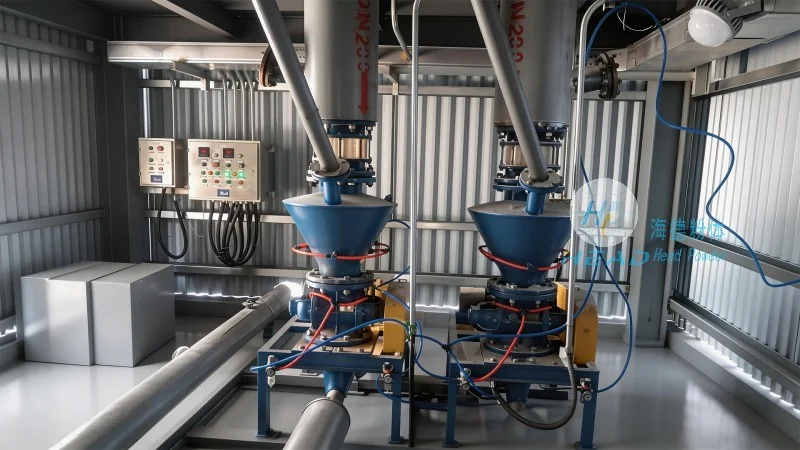
Key Players and Company Overview
HeadPowder, a leading manufacturer in the field, specializes in the design, development, and implementation of advanced pneumatic conveying solutions. As Shandong HeadPowder Engineering Co., Ltd., the company is headquartered in Shandong, China, and has established itself as a trusted partner for industries requiring reliable material handling systems. The company's expertise lies in customizing pneumatic conveying systems to meet specific operational needs, ensuring optimal performance and durability.
Classification of Pneumatic Conveying Systems for Glass-Blasted Beads
There are primarily two categories of pneumatic conveying systems used for glass-blasted beads: pressure and vacuum systems. Pressure systems utilize compressed air to push the material through a pipeline, while vacuum systems use a vacuum to draw the material from the source. Within these categories, subtypes include dense-phase and dilute-phase systems, each with distinct characteristics and applications.
Dense-phase pneumatic conveying systems are designed to transport materials at a higher concentration, typically with a solid-to-air ratio of 0.5 to 0.7. This method is ideal for handling glass-blasted beads that are prone to degradation or require gentle handling, as it minimizes particle impact and friction. The system operates by injecting air at low velocity, creating a plug flow that reduces material degradation and ensures consistent product quality.
Dilute-phase systems, on the other hand, transport materials at a lower concentration, with a solid-to-air ratio of less than 0.1. These systems are suitable for applications where material is to be transported over longer distances or through complex piping networks. Dilute-phase systems rely on high-velocity air to suspend the particles, which can be more energy-efficient for short to medium distances but may require additional equipment for separation and cleaning.
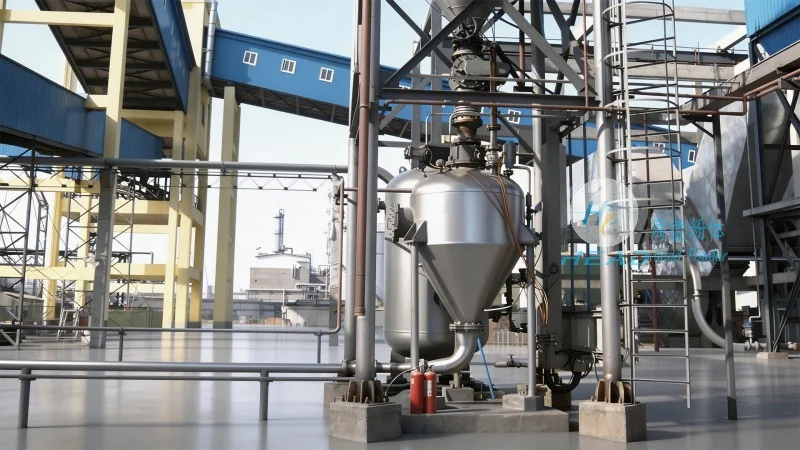
Application Analysis of Glass-Blasted Bead Pneumatic Conveying Systems
The versatility of glass-blasted beads makes them suitable for a wide range of applications, and the corresponding pneumatic conveying systems are tailored to meet these requirements. In the construction industry, glass-blasted beads are commonly used as lightweight aggregates in concrete and plaster, where the conveying system must ensure consistent particle size and uniform distribution. The system's ability to handle fine particles without clogging is crucial for maintaining the quality of the final product.
In the industrial sector, glass-blasted beads are utilized in thermal insulation, soundproofing, and fire-resistant materials. The pneumatic conveying system must be capable of transporting these materials in bulk, often from large storage silos to processing facilities. The system's efficiency in minimizing material loss and ensuring a continuous flow is essential for maintaining production throughput and reducing operational costs.
Additionally, in the manufacturing of composite materials, glass-blasted beads are used as fillers or reinforcement agents. The conveying system must be able to handle the material at high speeds and maintain particle integrity, as any degradation can affect the mechanical properties of the final composite. This requires careful selection of system components, such as valves, filters, and pipeline materials, to ensure compatibility with the glass-blasted beads.
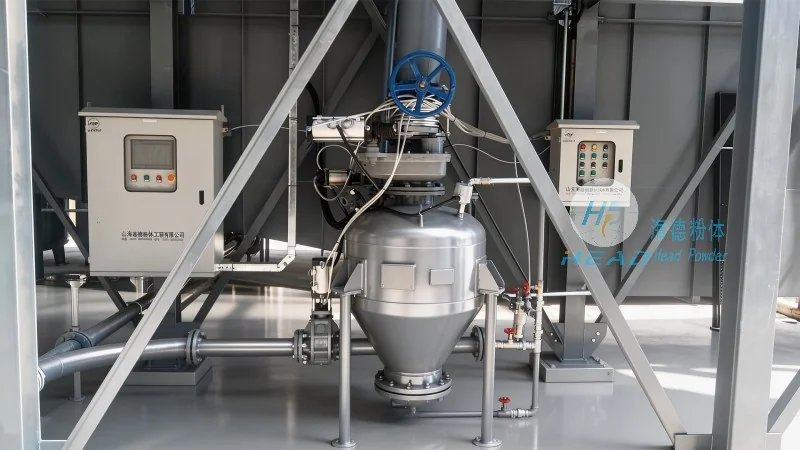
Operational Considerations and Best Practices
When implementing a glass-blasted bead pneumatic conveying system, several operational considerations must be taken into account to ensure optimal performance and longevity. First, the system must be designed to handle the specific characteristics of glass-blasted beads, including their particle size distribution, density, and abrasiveness. The choice of system type (pressure or vacuum) and phase (dense or dilute) depends on the distance, material flow rate, and required material quality.
Regular maintenance is critical to prevent system downtime and maintain efficiency. This includes cleaning the pipeline and equipment to remove accumulated material, inspecting valves and filters for wear and tear, and monitoring air pressure and flow rates. Proper maintenance not only extends the system's lifespan but also ensures consistent material quality and reduces the risk of system failures.
Furthermore, the integration of the pneumatic conveying system with other processing equipment is essential for seamless operation. This may involve coordinating with storage silos, feeders, and processing machines to ensure a continuous flow of material. The system's control system must be capable of adjusting to varying material loads and flow rates, providing real-time monitoring and feedback to optimize performance.
Conclusion
Glass-blasted bead pneumatic conveying systems play a vital role in the efficient and safe handling of these lightweight, inorganic materials. By understanding the classification of these systems and their applications, industries can select the most appropriate solution to meet their operational needs. With the expertise of companies like Shandong HeadPowder Engineering Co., Ltd., advanced pneumatic conveying systems can be customized to ensure optimal performance, durability, and cost-effectiveness, supporting the growth and development of industries relying on glass-blasted beads.