

What is a Corn Starch Pneumatic Conveying System? And What Are Its Design Principles?
Corn starch, as a common industrial raw material, is widely used in industries such as food, pharmaceuticals, and chemicals. However, due to its characteristics like easy flowability, tendency to agglomerate, or generation of dust, traditional gravity or mechanical conveying methods may face issues like low efficiency, equipment wear, or dust pollution. For this reason, pneumatic conveying technology becomes an ideal choice for efficient and clean transportation of corn starch. This article will delve into the basic concepts of corn starch pneumatic conveying systems and their core design principles.

What is a Corn Starch Pneumatic Conveying System?
A corn starch pneumatic conveying system is a device that uses gas (usually compressed air or inert gas) as a driving force to transport solid materials (such as corn starch) from one place to another through pipelines. Compared with traditional mechanical conveying methods (like belt conveyors or screw conveyors), pneumatic conveying has advantages such as no mechanical contact, long transportation distance, multiple inlet and outlet points, and adaptability to complex terrain. For corn starch, which is prone to dust generation, pneumatic conveying can also effectively control dust dispersion and reduce environmental pollution.
Core Design Principles of Corn Starch Pneumatic Conveying Systems
The design of a corn starch pneumatic conveying system is based on the principles of fluid mechanics and material handling. The system typically consists of several key components: feeding devices, conveying pipelines, air source systems, separation equipment, and control devices. The design of each component directly affects the overall performance and efficiency of the system.
First, the design of the feeding device is crucial. Since corn starch may have agglomerating or poor flowability issues, feeding devices usually employ vibratory feeders or star unloaders to ensure uniform and continuous material entry into the conveying pipelines. These devices can overcome the internal friction of the material, avoid blockages, and ensure stable conveying.
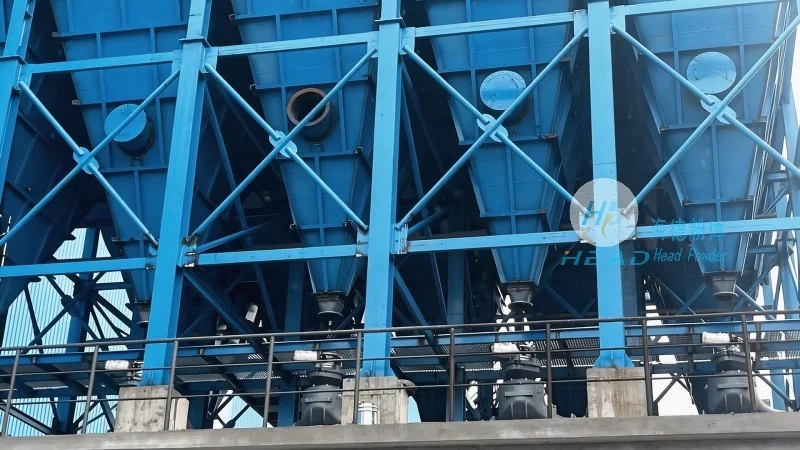
Second, the layout and material selection of the conveying pipelines. Pipelines are typically made of metal (such as stainless steel or carbon steel) or plastic (such as polyethylene), chosen based on factors like transportation distance, pressure requirements, and material characteristics. The diameter and design of bends in the pipelines affect the gas flow rate and pressure loss. A reasonable pipeline layout can reduce pressure loss and improve conveying efficiency. For example, for long-distance transportation, variable diameter pipelines or increased air source pressure are often used to compensate for pressure loss.
Third, the air source system is the power source of the pneumatic conveying system. It usually uses an air compressor to generate compressed air, which is then stabilized in a storage tank and filtered for pressure and cleanliness. The parameters of the air source system, such as pressure and flow rate, need to be precisely calculated based on the transportation volume, pipeline resistance, and material characteristics. Excessive pressure may lead to pipeline wear or material breakage, while insufficient pressure may fail to effectively transport the material. Therefore, the parameters of the air source system must be matched with the entire conveying system.
Fourth, the separation equipment is used to separate the transported material from the gas and recover the conveying medium. For corn starch pneumatic conveying, common separation equipment includes cyclone separators, bag filters, or bag-type dust collectors. These devices can efficiently separate solid materials and gas, ensuring the purity of the transported material while the recovered gas can be recycled to improve system efficiency. The design of the separation equipment needs to consider the material's particle size, density, and gas flow rate to achieve optimal separation effects.
Finally, the control devices are used to monitor and regulate the system's operating parameters, such as pressure, flow rate, and temperature. Through sensors and controllers, the air source pressure, feeding speed, or pipeline valves can be adjusted in real-time to respond to material fluctuations or system failures, ensuring stable operation. Modern pneumatic conveying systems are often equipped with automated control systems, enabling remote monitoring and fault diagnosis, which improves operational convenience and system reliability.
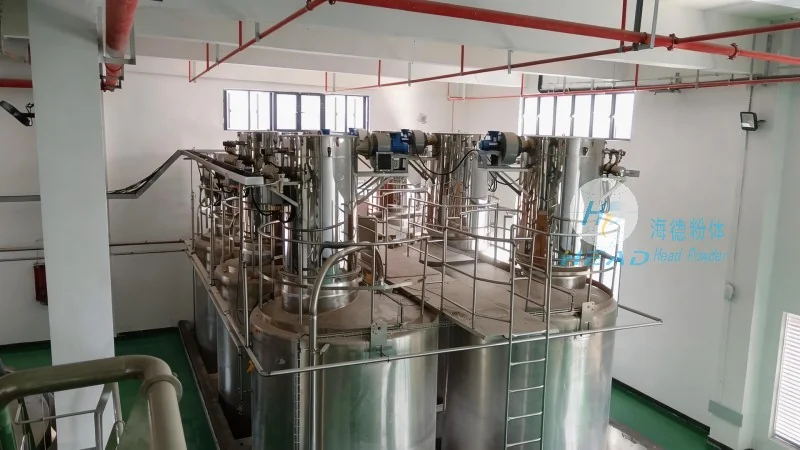
HeadPowder's Solutions for Corn Starch Pneumatic Conveying Systems
Shandong HeadPowder Engineering Co., Ltd. (HeadPowder), as a professional engineering company, specializes in providing customized pneumatic conveying system solutions for corn starch and other powdery materials. HeadPowder, with its rich experience in powder engineering, combines advanced fluid mechanics theory with practical application cases to design efficient and reliable pneumatic conveying systems for users. The company's team consists of experienced engineers who deeply understand the properties of corn starch (such as density, flowability, and dust characteristics) and, based on user-specific requirements (such as transportation distance, handling capacity, and site constraints), design the system.
HeadPowder's design process typically includes demand analysis, process calculation, system selection, equipment selection, and on-site installation and commissioning. In the demand analysis phase, engineers communicate with users to clarify the material properties, transportation requirements, and site conditions. The process calculation phase involves calculating the required air source pressure, flow rate, and pipeline dimensions based on parameters like material flow rate, pipeline length, and number of bends. The system selection phase involves choosing appropriate feeding, pipeline, air source, and separation equipment. Equipment selection is based on the calculated results and practical application experience, selecting equipment with stable performance and wear resistance. The on-site installation and commissioning phase ensures that the system is installed according to design requirements and is commissioned to achieve optimal operating conditions.
HeadPowder's pneumatic conveying systems not only meet basic material transportation needs but also focus on long-term system stability and maintenance convenience. For example, in pipeline design, wear-resistant materials or internal liners are used to extend the pipeline's service life; in separation equipment, efficient filter media are used to reduce clogging risks; and in the control system, integrated fault alarm and diagnosis functions are incorporated for timely problem handling. In addition, HeadPowder provides maintenance and maintenance services for the system, ensuring users can use the pneumatic conveying system for a long time, efficiently, and at low operating costs.