

Principle and Working Scene Characteristics of Phosphate Sodium Powder Pneumatic Conveying Lines
Phosphate sodium, a crucial chemical compound widely used in various industrial applications, often requires efficient and reliable material handling solutions for its transportation. Pneumatic conveying lines, particularly those designed for powder materials like phosphate sodium, offer a sophisticated method to transport such substances with precision and minimal loss. This article, presented by Shandong HeadPowder Engineering Co., Ltd. (headpowder), delves into the fundamental principles of phosphate sodium powder pneumatic conveying systems, alongside an exploration of their typical working scenarios and key characteristics.
Understanding the Core Principle of Pneumatic Conveying
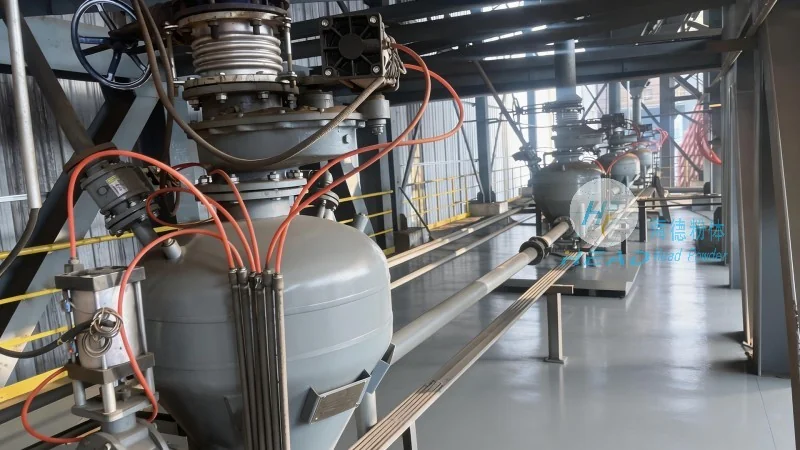
The operation of phosphate sodium powder pneumatic conveying lines is rooted in the principles of fluid dynamics and particle transport. At its essence, the system utilizes a pressurized or vacuum environment to move powder particles through a pipeline. By creating a differential pressure between the inlet and outlet, the conveying medium—typically air or a gas mixture—propels the powder along the pipeline. This method eliminates the need for mechanical components like belts or buckets, reducing maintenance requirements and enhancing safety in handling potentially hazardous powders. The core principle involves generating sufficient airflow to overcome the gravitational and frictional forces acting on the powder particles, ensuring stable and continuous transport.
Key Components and Their Functions in the System
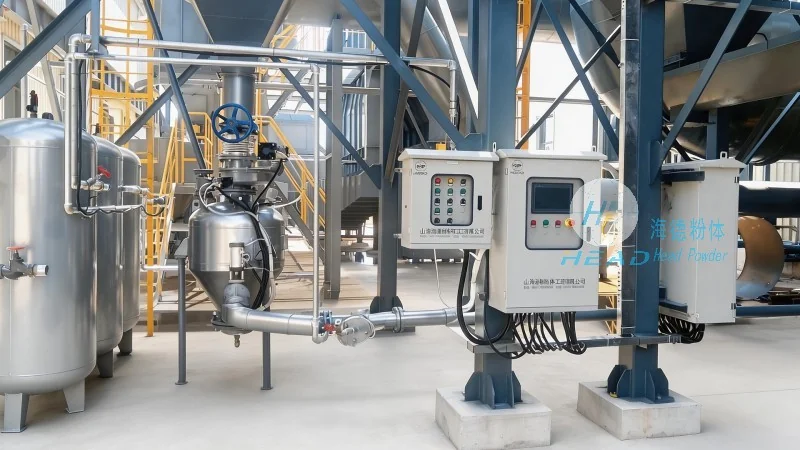
A phosphate sodium powder pneumatic conveying line comprises several critical components that work in tandem to achieve efficient material transport. The primary components include a feeding device, a conveying pipeline, a pressure or vacuum source, a separation and collection system, and a control unit. The feeding device, such as a rotary valve or a screw feeder, ensures a consistent and controlled feed of phosphate sodium powder into the pipeline. The conveying pipeline, often made of materials like stainless steel or plastic, is designed to withstand the pressure and abrasion from the powder. The pressure or vacuum source, which can be a blower or a vacuum pump, generates the necessary airflow to move the powder. The separation and collection system, including cyclones or filters, separates the powder from the air at the end of the pipeline, preventing dust emissions and ensuring product purity. The control unit monitors and regulates the system parameters, such as pressure, flow rate, and feed rate, to maintain optimal performance.
Working Scene Characteristics: Applications and Operational Environments
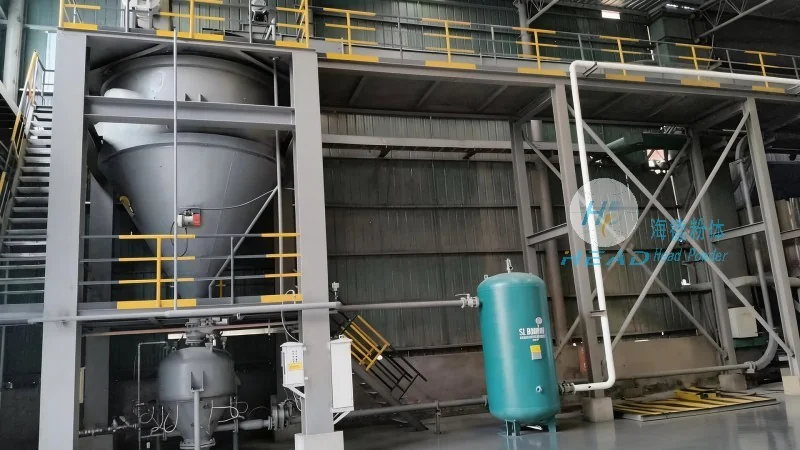
The working scene characteristics of phosphate sodium powder pneumatic conveying lines are defined by their diverse applications and the operational environments they serve. These systems are commonly employed in industries such as chemical manufacturing, food processing, and pharmaceuticals, where the handling of fine powders is essential. In chemical plants, for instance, phosphate sodium is used as a raw material in the production of detergents, fertilizers, and water treatment chemicals. The pneumatic conveying lines facilitate the transfer of this powder from storage silos to processing units, ensuring a continuous supply without the risk of contamination or material degradation. In food processing facilities, the system is used to transport phosphate sodium used as a food additive, maintaining hygiene and preventing cross-contamination with other ingredients. The operational environments vary from indoor industrial settings to outdoor storage and processing areas, with the system designed to adapt to different temperature and humidity conditions. The key characteristics include high efficiency in material transport, low maintenance costs, and the ability to handle powders with varying particle sizes and moisture content. Additionally, the system offers flexibility in pipeline layout, allowing for complex routes that accommodate the spatial constraints of industrial facilities.
Advantages and Considerations for Phosphate Sodium Powder Pneumatic Conveying
Implementing phosphate sodium powder pneumatic conveying lines offers several advantages that make them a preferred choice for many industries. One of the primary benefits is the elimination of mechanical wear and tear, as the system relies on air flow rather than moving parts. This reduces maintenance costs and extends the service life of the equipment. Another advantage is the ability to handle powders with high moisture content or abrasive properties, as the system’s design minimizes particle degradation. The system also provides a hygienic and dust-free environment, which is critical in food and pharmaceutical industries. However, there are considerations to keep in mind, such as the need for proper air filtration to prevent dust accumulation and the potential for pressure drops in long pipelines, which may affect the conveying capacity. Additionally, the initial investment cost for the system can be higher compared to traditional mechanical conveying methods, though the long-term operational savings often outweigh this initial expense.
Conclusion: The Role of Pneumatic Conveying in Phosphate Sodium Handling
In conclusion, phosphate sodium powder pneumatic conveying lines represent a sophisticated and efficient solution for the transportation of fine powders in various industrial applications. By leveraging the principles of fluid dynamics, these systems offer reliable, low-maintenance, and hygienic material handling capabilities. The working scene characteristics, including diverse industrial applications and operational environments, highlight the adaptability and versatility of the technology. As industries continue to demand higher efficiency and safety in material handling, pneumatic conveying systems remain a key component in the processing of phosphate sodium and other similar powders. The integration of advanced control systems and material-specific design further enhances the performance and reliability of these lines, ensuring they meet the evolving needs of modern industrial operations.