

Principle and Working Scene Characteristics of Clay Ash Material Pneumatic Conveying Systems
HeadPowder, a leading provider of industrial material handling solutions, specializes in advanced pneumatic conveying systems designed for efficient transportation of clay ash materials. With a focus on innovation and reliability, the company's systems are engineered to meet the demanding requirements of various industrial applications.
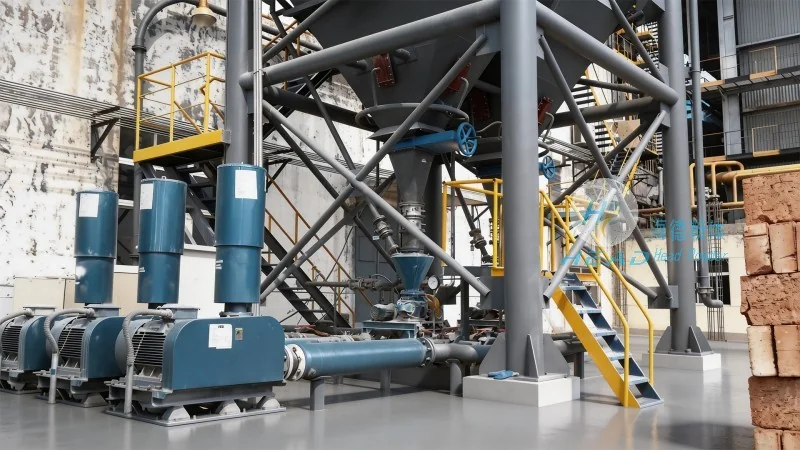
Company Overview
HeadPowder, or Shandong HeadPowder Engineering Co., Ltd., is a professional manufacturer and supplier based in Shandong, China. The company has established itself as a trusted partner in the field of material handling technology, offering comprehensive solutions tailored to the needs of clients in different industries. Our commitment to quality and customer satisfaction drives our continuous improvement in product design and service delivery.
Principle of Pneumatic Conveying Systems for Clay Ash Materials
The core principle of a pneumatic conveying system for clay ash materials involves the use of air or gas to transport bulk materials through a pipeline network. This method, known as pneumatic conveying, eliminates the need for mechanical components such as belts or buckets, reducing maintenance costs and enhancing operational efficiency. The system typically operates by creating a pressure differential, either through suction or pressure, to move the material from the source to the destination. For clay ash, which often has fine particles and varying moisture content, specialized designs are employed to ensure stable and consistent flow. The system may include components like feeders, cyclones, filters, and control valves to manage the material's movement and prevent blockages or degradation.
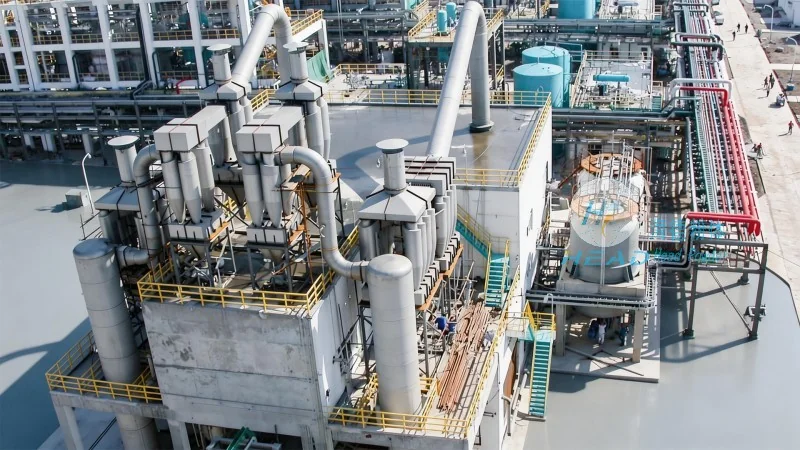
Working Scene Characteristics of the Systems
The working scene characteristics of clay ash pneumatic conveying systems are influenced by several factors, including the material's physical properties, the system's design, and the operational environment. Clay ash, being a fine, powdery material, requires systems that can handle high dust loads and maintain particle integrity. The systems are often designed with robust filtration and separation mechanisms to prevent dust accumulation and ensure clean air discharge. In industrial settings, these systems are commonly used in power plants, cement factories, and waste management facilities where clay ash is generated as a byproduct. The working environment may involve high temperatures, corrosive conditions, or high humidity, which necessitates the use of materials and components that can withstand such challenges. The systems are also designed to be flexible, allowing for adjustments in flow rates and pressure to accommodate varying production demands. This adaptability makes them suitable for both continuous and intermittent operation, providing a reliable solution for material transport in diverse industrial scenarios.
Advantages of the Pneumatic Conveying System
Implementing a pneumatic conveying system for clay ash materials offers several advantages over traditional mechanical conveying methods. Firstly, it provides a dust-free and clean operation, which is crucial for maintaining a safe and healthy working environment. The enclosed system prevents dust emissions, reducing the risk of respiratory issues and environmental contamination. Secondly, the system offers high efficiency in material transport, with minimal energy consumption and low maintenance requirements. The absence of moving parts reduces the likelihood of mechanical failures and extends the service life of the equipment. Additionally, the system allows for precise control over the material flow, enabling accurate dosing and processing. This precision is particularly important in applications where the quality of the clay ash is critical, such as in the production of cement or other building materials. The flexibility of the system also allows for easy integration with existing industrial processes, minimizing downtime and installation costs. Overall, the pneumatic conveying system provides a cost-effective and sustainable solution for handling clay ash materials, aligning with modern industrial standards for efficiency and environmental responsibility.
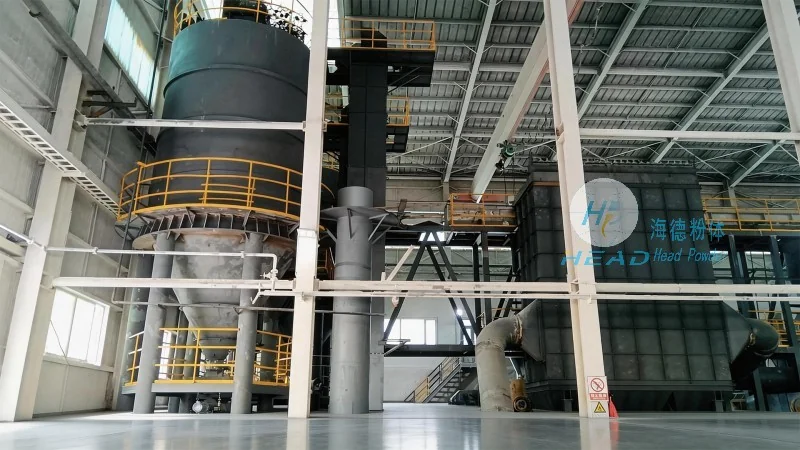
System Components and Design Considerations
The effectiveness of a clay ash pneumatic conveying system depends on the proper selection and integration of its components. Key components include the material feeder, which ensures a consistent feed rate; the conveying pipeline, which may be made of stainless steel or other corrosion-resistant materials to handle the material's properties; and the separation and filtration equipment, such as cyclones and bag filters, which remove fine particles and ensure clean air discharge. The system's design must consider the material's particle size distribution, moisture content, and flow characteristics to optimize performance. For clay ash, which may have a wide range of particle sizes, the system may include multiple stages of conveying, such as dilute phase and dense phase, to ensure stable transport. The control system plays a vital role in managing the pressure, flow rate, and temperature within the system, ensuring safe and efficient operation. Advanced control technologies, such as PLC (Programmable Logic Controllers), are often employed to monitor and adjust the system parameters in real-time, enhancing operational reliability. The design also considers the system's scalability, allowing for expansion as production needs grow. This flexibility ensures that the system can adapt to changing production requirements without significant modifications.
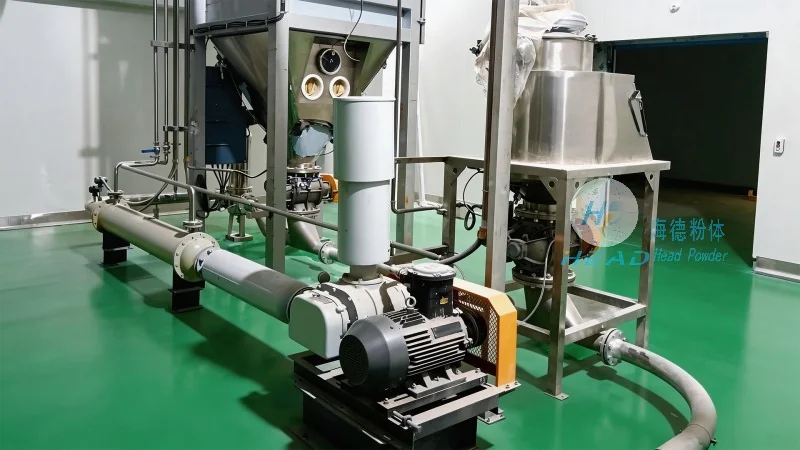
Application Examples and Case Studies
HeadPowder's pneumatic conveying systems for clay ash have been successfully implemented in various industrial applications. For instance, in a power plant, the system was used to transport clay ash from the boiler to the storage silo, replacing an older mechanical conveyor that was prone to blockages and maintenance issues. The new system provided a smooth, continuous flow with minimal dust emissions, improving the plant's operational efficiency and safety. In another case, a cement factory utilized the system to convey clay ash as an alternative raw material, reducing the need for natural clay and lowering production costs. The system's ability to handle the material's fine particles and maintain consistent quality ensured that the cement production process was not disrupted. These examples highlight the versatility and effectiveness of the pneumatic conveying system in different industrial settings, demonstrating its ability to meet the specific needs of clients while delivering reliable performance.
Future Developments and Innovations
As technology advances, HeadPowder continues to innovate in the design and application of pneumatic conveying systems for clay ash materials. Research and development efforts focus on improving system efficiency, reducing energy consumption, and enhancing environmental performance. New materials and components are being explored to increase the system's durability and resistance to corrosion. Advanced control systems and automation technologies are being integrated to provide more precise and reliable operation. The company is also exploring the use of sustainable materials and energy sources to further reduce the environmental impact of the systems. These developments aim to provide clients with even more efficient and cost-effective solutions for material handling, aligning with global trends towards sustainability and industrial efficiency. By staying at the forefront of technological advancements, HeadPowder remains committed to delivering cutting-edge solutions that meet the evolving needs of the industrial sector.