

Operation Process and Working Principle of River Sand Pneumatic Conveying Line
HeadPowder, a leading manufacturer in the field of material handling solutions, specializes in the design, production, and installation of pneumatic conveying systems. Our company, Shandong HeadPowder Engineering Co., Ltd., is headquartered in Shandong, China, and has established a strong reputation for delivering high-quality and efficient equipment tailored to the needs of various industries.
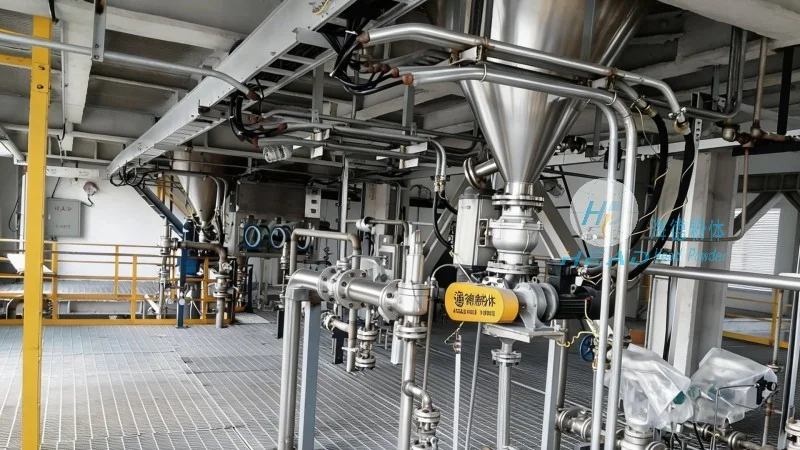
Introduction to River Sand Pneumatic Conveying Lines
A pneumatic conveying line for river sand is a sophisticated system designed to transport sand particles through a pipeline using air pressure. This technology offers a dust-free, efficient, and flexible method for moving bulk materials, making it an ideal solution for construction sites, sand processing plants, and other applications where traditional conveyor belts may not be suitable. The system combines advanced engineering with robust components to ensure reliable operation and minimal maintenance.
Key Components of the Pneumatic Conveying System
The river sand pneumatic conveying line consists of several critical components that work in tandem to achieve effective material transport. These include the hopper, which stores the sand and feeds it into the system; the feeder, which controls the flow rate of the sand into the pipeline; the air compressor, which generates the necessary air pressure to move the material; the pipeline network, which transports the sand from the source to the destination; and the receiver, which collects the sand at the end of the line. Each component is carefully selected and engineered to ensure optimal performance and durability.
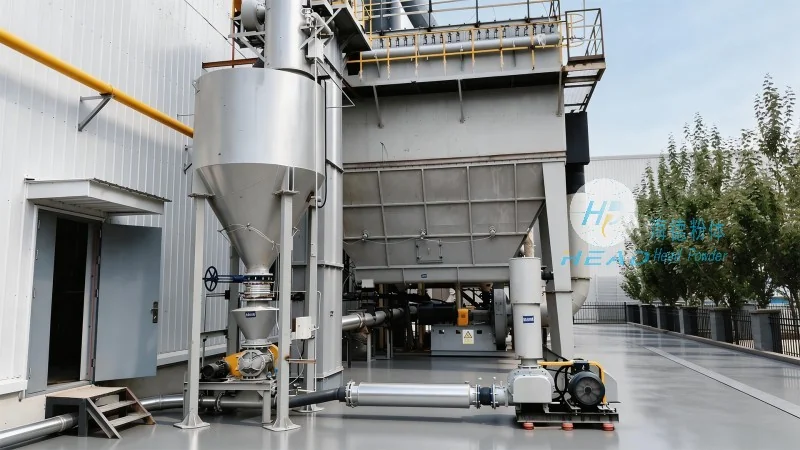
The Working Principle of the Pneumatic Conveying Process
The operation of the river sand pneumatic conveying line is based on the principle of air suspension, where the sand particles are suspended in a stream of air and carried through the pipeline. The process begins when the sand is discharged from the hopper into the feeder. The feeder then meters the sand at a consistent rate, ensuring a steady flow into the pipeline. Simultaneously, the air compressor generates high-pressure air, which is introduced into the pipeline at the inlet. As the air flows through the pipeline, it creates a low-pressure zone that draws the sand particles into the air stream. The combination of air and sand forms a dense mixture, which is then transported to the receiver at the end of the line. The air is then separated from the sand in the receiver, and the sand is collected for further use.
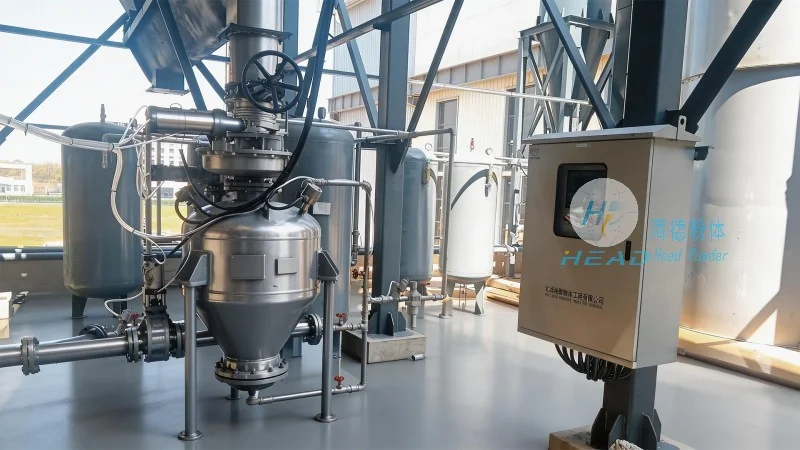
Operation Process of the Pneumatic Conveying Line
The operation of the river sand pneumatic conveying line involves several steps that ensure smooth and continuous material transport. First, the system is started by activating the air compressor and the feeder. The hopper is filled with river sand, and the feeder begins to discharge the sand into the pipeline. The air compressor then increases the air pressure to the required level, and the sand particles are drawn into the air stream. The mixture of air and sand travels through the pipeline to the receiver. At the receiver, the air is released, and the sand is collected in a container. The system continues to operate until the hopper is empty or the desired amount of sand has been transported. The process is controlled by a series of sensors and controls that monitor the flow rate, air pressure, and material level, ensuring that the system operates within safe and efficient parameters.
Advantages of Using a Pneumatic Conveying Line for River Sand
There are several advantages to using a pneumatic conveying line for river sand transport. First, the system is dust-free, which reduces the risk of respiratory problems and improves workplace safety. Second, the system is flexible and can be easily adjusted to accommodate changes in the volume or flow rate of the sand. Third, the system is efficient, as it can transport large quantities of sand over long distances with minimal energy consumption. Fourth, the system is low-maintenance, as it has fewer moving parts than traditional conveyor belts, reducing the need for frequent repairs and replacements. Finally, the system is cost-effective, as it can reduce labor costs and improve productivity in the sand processing industry.