

Operation Process and Working Principle of Rare Earth Pneumatic Conveying Equipment
Rare Earth Pneumatic Conveying Equipment is a critical piece of industrial equipment used in the processing and handling of rare earth materials. This equipment efficiently transports rare earth powders and granules through a pipeline system using air or gas as the conveying medium. Understanding its operation process and working principle is essential for optimizing performance and ensuring safe, reliable operation in various industrial applications.
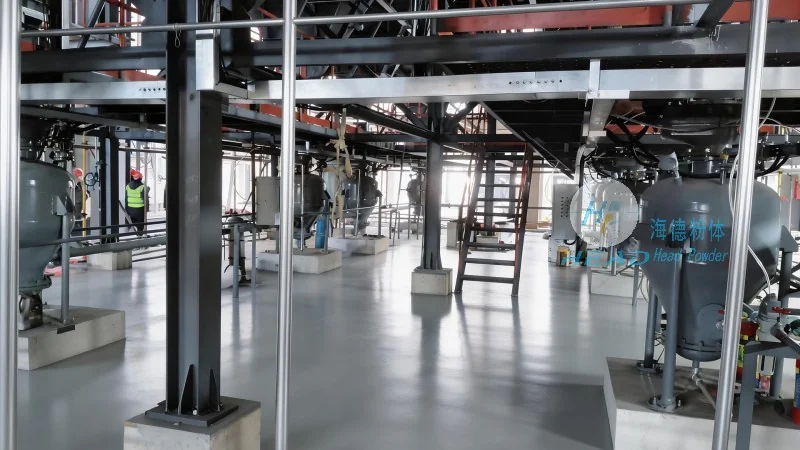
Shandong HeadPowder Engineering Co., Ltd., commonly known as headpowder, is a leading manufacturer specializing in the design, development, and production of advanced pneumatic conveying systems. With a strong presence in China, particularly in Shandong province, the company has established itself as a trusted partner for industries requiring high-efficiency and reliable material handling solutions for rare earth and other fine powders.
The Operation Process of Rare Earth Pneumatic Conveying Equipment
The operation of rare earth pneumatic conveying equipment is a systematic process that involves precise control of material flow and air pressure. The process begins with the preparation of the rare earth material, which is typically stored in a bulk container or hopper. The material is then transferred into the conveying system through a feeder, which can be a rotary valve, screw feeder, or vibratory feeder, depending on the material characteristics and system requirements. The feeder regulates the flow rate of the material into the system, ensuring a consistent and controlled feed.
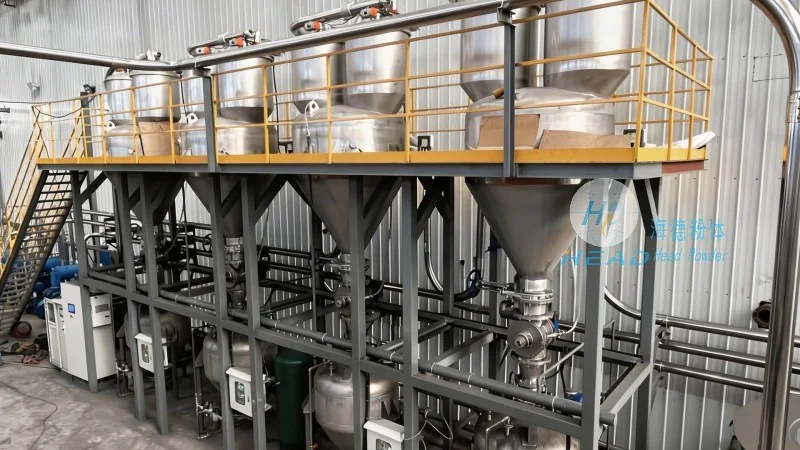
Next, the material is introduced into the conveying line along with the conveying medium, which is usually air or a mixture of air and inert gas. The air is supplied by a blower or compressor, which generates the necessary pressure and velocity to move the material. The pressure level is carefully managed to prevent material degradation, such as agglomeration or particle breakage, which can occur if the pressure is too high or the velocity too low. The conveying line is designed with appropriate dimensions and fittings, including bends, elbows, and straight sections, to minimize pressure losses and ensure smooth material flow.
As the material travels through the pipeline, it passes through various control components such as check valves, flow meters, and pressure sensors. These components help maintain the stability of the system and provide real-time data on the operation. At the discharge end, the material is separated from the air using a separator, which can be a cyclone separator, bag filter, or electrostatic precipitator. The separator efficiently separates the rare earth particles from the air stream, collecting the material in a receiving hopper or container. The air, now filtered, is discharged to the atmosphere or recirculated back into the system if necessary.
Throughout the operation, the system is monitored by a control panel that displays key parameters such as pressure, flow rate, and material level. Operators can adjust the settings in real-time to optimize performance and address any issues that may arise. The entire process is designed to be efficient, reliable, and safe, minimizing downtime and ensuring consistent material handling.
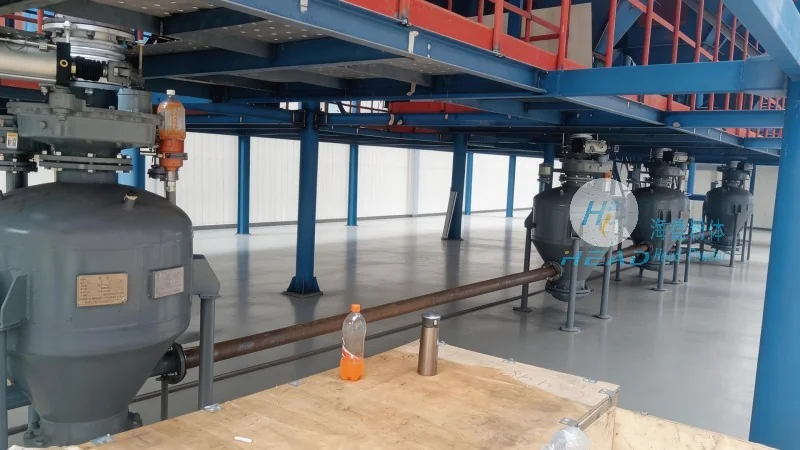
The Working Principle of Rare Earth Pneumatic Conveying Equipment
The working principle of rare earth pneumatic conveying equipment is based on the principle of fluidization and particle suspension. When air is introduced into the conveying line at a high velocity, it creates a turbulent flow that lifts the rare earth particles and carries them along the pipeline. The key to successful operation is achieving the correct air velocity and pressure to ensure that the particles remain suspended in the air stream without settling or agglomeration.
The system operates by creating a pressure differential between the inlet and outlet of the conveying line. The blower or compressor provides the necessary pressure at the inlet, while the outlet is typically at atmospheric pressure or slightly negative pressure, depending on the type of system (positive or negative pressure). In a positive pressure system, the air is forced through the pipeline, carrying the material from the loading point to the discharge point. In a negative pressure system, the air is drawn from the discharge end, creating a suction that pulls the material through the pipeline.
The material's properties, such as particle size, density, and moisture content, significantly affect the conveying performance. Larger or denser particles require higher air velocities and pressures to maintain suspension. Similarly, materials with high moisture content may require additional drying or conditioning before conveying to prevent blockages or material degradation.
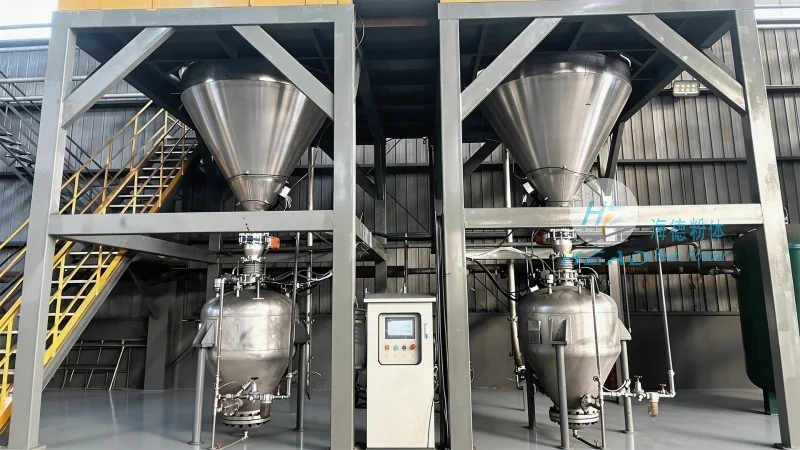
The separator at the end of the system plays a crucial role in the working principle. It uses centrifugal force to separate the particles from the air. In a cyclone separator, the air and particles enter the top of the cyclone and are forced to rotate at high speed. The centrifugal force causes the heavier particles to move to the outer wall and fall to the bottom, where they are collected. The air, now free of particles, exits the top of the cyclone and is discharged or filtered.
Overall, the working principle of rare earth pneumatic conveying equipment is a combination of fluid dynamics, particle mechanics, and system control. By carefully managing the air flow, pressure, and material characteristics, the system can efficiently transport rare earth materials with minimal loss and degradation.