

Operation Process and Working Principle of Desulfurization and Dust Removal Fly Ash Powder Pneumatic
The desulfurization and dust removal fly ash powder pneumatic conveying system is a critical component in modern industrial processes, particularly in power plants and other facilities that generate large volumes of fly ash. This system is designed to efficiently transport fly ash from collection points to storage or disposal locations, ensuring compliance with environmental regulations and optimizing operational efficiency. The system combines advanced pneumatic conveying technology with robust engineering to handle the unique properties of fly ash, such as its fine particle size and potential for dust generation.
Company Overview: Shandong HeadPowder Engineering Co., Ltd.
HeadPowder, the manufacturer of this advanced system, is a leading provider of engineering solutions for powder handling and material transport. With headquarters in Shandong, China, HeadPowder has established itself as a trusted name in the industry, specializing in the design, manufacturing, and installation of high-performance pneumatic conveying systems. The company's commitment to quality, innovation, and customer satisfaction has enabled it to serve a wide range of clients across various sectors, including power generation, cement production, and chemical processing.
System Components and Their Functions
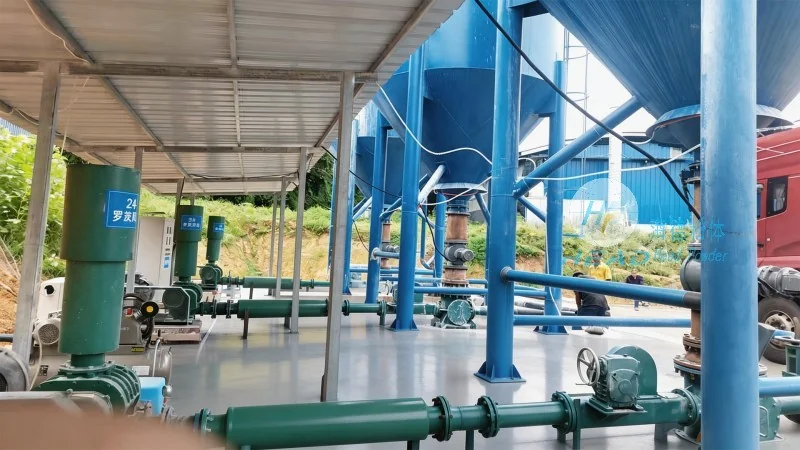
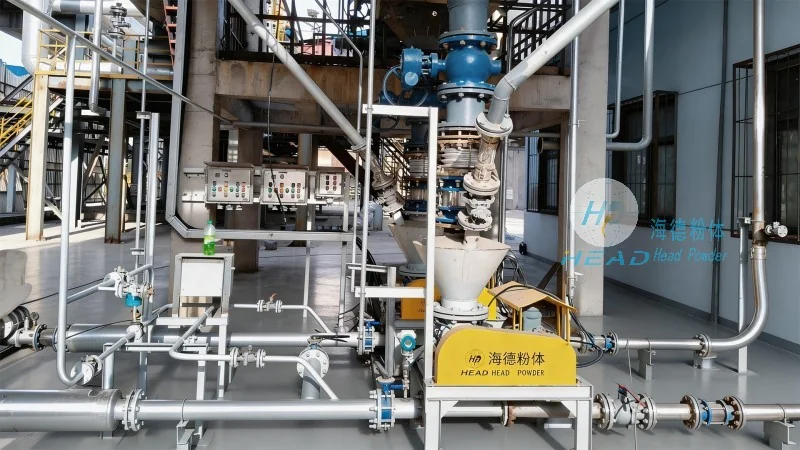
The desulfurization and dust removal fly ash powder pneumatic conveying system consists of several key components, each playing a vital role in the overall operation. The primary components include the feed hopper, air supply unit, conveying pipeline, separation and filtration system, and discharge unit. The feed hopper is responsible for collecting and storing the fly ash, ensuring a consistent feed rate to the system. The air supply unit generates the necessary airflow, typically using a blower or compressor, to create the pressure or vacuum required for conveying. The conveying pipeline transports the fly ash and air mixture from the source to the destination. The separation and filtration system removes the fly ash from the air stream, preventing dust emissions and ensuring compliance with environmental standards. Finally, the discharge unit delivers the fly ash to its final storage or disposal location.
Operation Process of the Pneumatic Conveying System
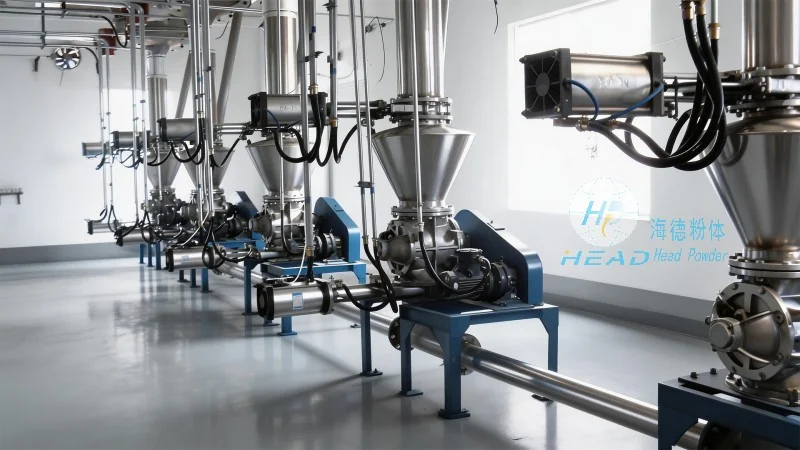
The operation of the desulfurization and dust removal fly ash powder pneumatic conveying system follows a systematic process. Initially, the fly ash is collected from the desulfurization and dust removal equipment and transferred to the feed hopper. The system then activates the air supply unit, which generates a controlled airflow. The feed hopper releases the fly ash into the conveying pipeline, where it is mixed with the air stream. The mixture is then transported through the pipeline to the separation and filtration system. In the separation system, the fly ash particles are separated from the air, typically using cyclones or bag filters. The purified air is released back into the environment, while the separated fly ash is collected and directed to the discharge unit. The discharge unit then transfers the fly ash to a storage silo or other designated location. Throughout the process, the system monitors key parameters such as airflow rate, pressure, and particle concentration to ensure optimal performance and prevent system failures.
Working Principle of the Pneumatic Conveying System
The working principle of the desulfurization and dust removal fly ash powder pneumatic conveying system is based on the fundamental concept of pneumatic transport, which involves the movement of solid particles suspended in a gas stream. There are two main types of pneumatic conveying systems: suction (or vacuum) systems and pressure systems. The choice of system depends on the distance, height, and material properties of the fly ash. In a suction system, the air supply unit creates a vacuum at the inlet, drawing the fly ash and air mixture into the pipeline. The pressure system, on the other hand, uses compressed air to push the mixture through the pipeline. For fly ash, a combination of both suction and pressure stages may be used to achieve efficient transport over long distances. The system utilizes a series of valves, bends, and expansions to control the flow and prevent particle deposition or blockages. The separation and filtration system employs centrifugal force to separate the fly ash from the air, with the air being filtered to remove any residual dust particles before release. This principle ensures that the fly ash is transported safely and efficiently, minimizing environmental impact and maximizing operational reliability.

Advantages and Technical Features
The desulfurization and dust removal fly ash powder pneumatic conveying system offers several advantages over traditional methods of fly ash transport, such as bucket elevators or belt conveyors. One of the key advantages is its ability to handle fine particles and prevent dust generation, which is critical for maintaining air quality and compliance with environmental regulations. The system is also highly efficient, with low energy consumption and minimal material loss. Additionally, the system is flexible and can be adapted to various operational requirements, including different distances, heights, and material volumes. The use of advanced materials and components ensures durability and long service life, reducing maintenance costs and downtime. The system is also equipped with safety features, such as pressure relief valves and emergency shut-off mechanisms, to prevent accidents and ensure safe operation.