

Operation Process and Working Principle of Powder Bin Material Pneumatic Conveying
Pneumatic conveying systems for powder bins are essential in industrial applications, facilitating the efficient transfer of bulk materials from storage silos to processing units. The technology involves using air pressure to move dry powders, granules, or fine particles through a pipeline network. This method is widely adopted due to its ability to handle various materials, including those that are dusty, corrosive, or sensitive to moisture. The operation of such systems is critical for maintaining production efficiency and ensuring material integrity throughout the conveying process. Developed by companies like Shandong HeadPowder Engineering Co., Ltd., these systems integrate advanced engineering principles to optimize material handling in diverse industrial settings.
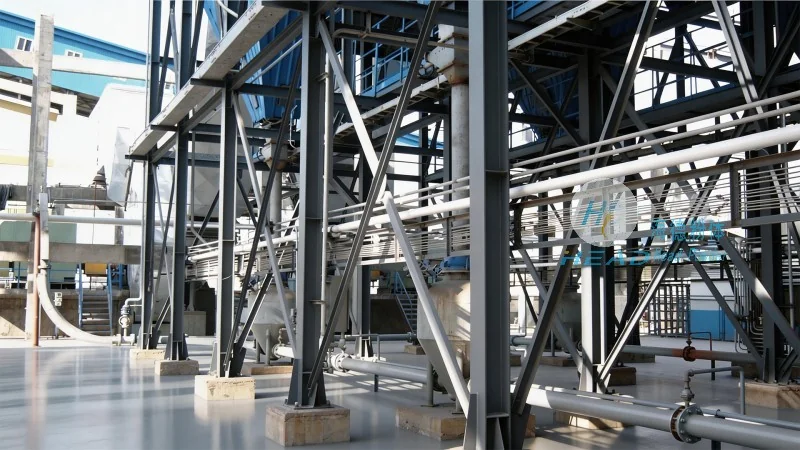
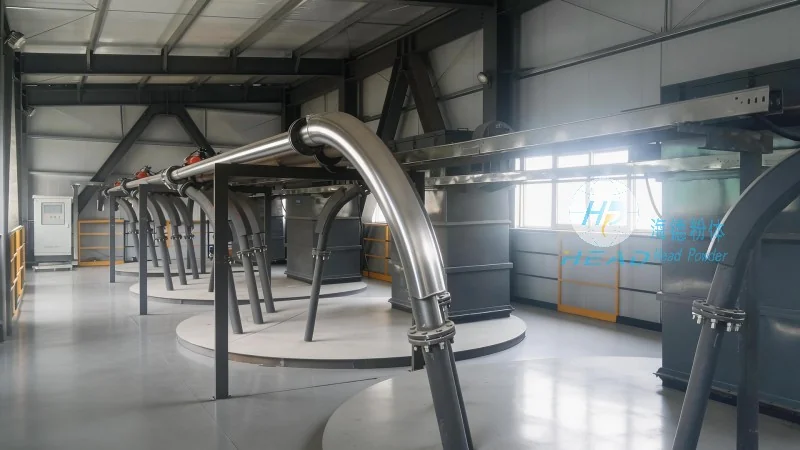
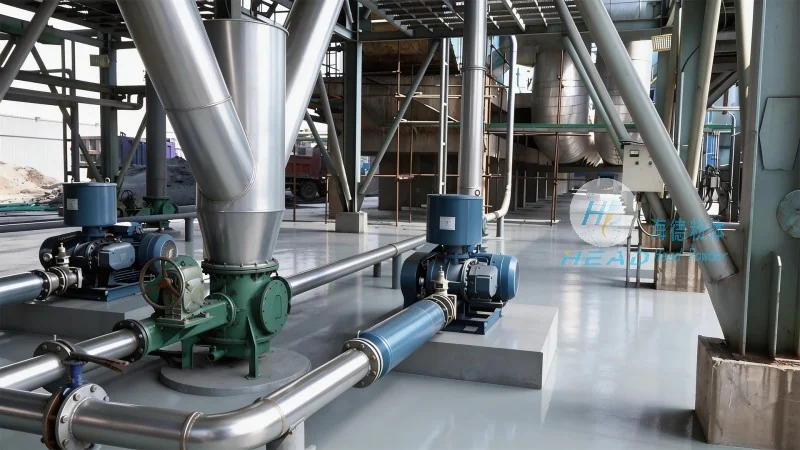
Key Components of Pneumatic Conveying Systems
The core components of a powder bin pneumatic conveying system include the storage bin (or silo), a conveying line, a blower or air compressor, a control system, and a discharge unit. The storage bin is typically made of stainless steel or other corrosion-resistant materials to protect the material from contamination and environmental factors. It is designed with a hopper at the bottom to facilitate material discharge and may include a level indicator to monitor the material level. The conveying line is made of materials such as stainless steel, PVC, or polyethylene, chosen based on the material's properties and the system's operating conditions. The line is equipped with bends, elbows, and expansion joints to accommodate changes in direction and minimize pressure loss. The blower or air compressor is the power source, providing the necessary air pressure and volume. It can be a positive displacement blower or a centrifugal fan, selected based on the system's requirements. The control system includes sensors for pressure, flow, and level, as well as a control panel to regulate the blower speed and air volume. The discharge unit, such as a rotary valve or a metering pump, controls the output of the material, ensuring a consistent flow rate.
Working Principle of Pneumatic Conveying
The working principle of pneumatic conveying relies on the creation of a pressure differential between the inlet and outlet of the conveying line. When the blower operates, it generates a high-pressure air stream that draws material from the storage bin into the pipeline. The material is then carried along the line by the air flow, forming a suspension of particles in the air. The velocity of the air and the size of the particles determine the conveying velocity and the required air volume. The system can operate in either positive pressure or negative pressure modes. In positive pressure systems, the conveying line is pressurized above atmospheric pressure, while in negative pressure systems, the line is maintained at a lower pressure than the surrounding environment. Both modes have their advantages and are selected based on the specific application requirements. The positive pressure mode is often preferred for long-distance conveying or when the material is sensitive to contamination, as it prevents external air from entering the system. The negative pressure mode is suitable for short-distance conveying or when the material is dusty and needs to be contained within the system.