

Operation Process and Working Principle of Molybdenum Trioxide Material Pneumatic Conveying System
HeadPowder, a leading engineering company based in Shandong, China, specializes in the design, manufacturing, and installation of advanced material handling systems. This article focuses on the operation process and working principle of a pneumatic conveying system specifically designed for transporting molybdenum trioxide (MoO₃) material. The system is engineered to ensure efficient, reliable, and safe material transfer, addressing the unique challenges associated with handling this high-value chemical compound.
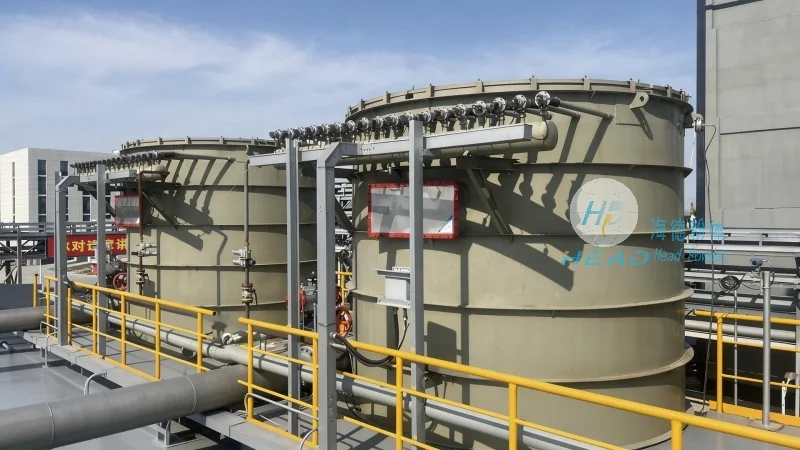
System Overview
The pneumatic conveying system for molybdenum trioxide material is a sophisticated piece of industrial equipment that utilizes air or gas as the conveying medium to transport solid particles. This system is particularly suitable for MoO₃ due to its fine particle size and the need for a dust-free, controlled environment during transportation. The system typically consists of several key components, including a feeding hopper, a rotary valve, a conveying line, a filter unit, and a receiving hopper. Each component plays a crucial role in the overall operation, ensuring that the material is transferred smoothly and without degradation.
Key Components and Their Functions
The system's performance is dependent on the proper functioning of its core components. The feeding hopper is responsible for storing the molybdenum trioxide material and regulating the flow rate into the system. The rotary valve acts as a controlled gate, preventing backflow and ensuring that the material is fed into the conveying line at a consistent rate. The conveying line, often made of stainless steel or other corrosion-resistant materials, is designed to withstand the chemical properties of MoO₃ and maintain a clean, dust-free environment. The filter unit is critical for capturing any fine particles that may escape during the conveying process, protecting the system and the environment from contamination. Finally, the receiving hopper collects the material at the destination point, completing the transfer cycle.
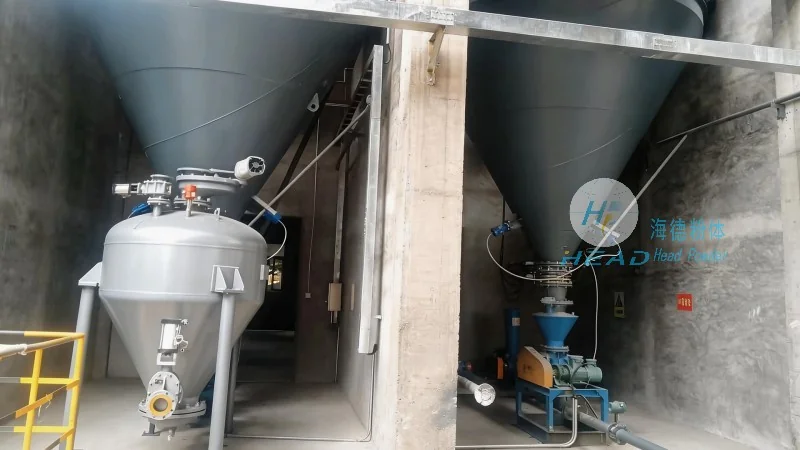
Operation Process
The operation of the molybdenum trioxide pneumatic conveying system follows a systematic sequence to ensure efficient material transfer. The process begins with the material being loaded into the feeding hopper. The rotary valve then opens to allow a controlled amount of MoO₃ to enter the conveying line. Simultaneously, the conveying medium (air or gas) is introduced into the line, creating a flow that propels the material particles forward. As the material travels through the line, it is suspended and transported by the moving air stream. The filter unit continuously monitors and captures any particles that may be carried along, ensuring that the system remains clean and operational. Upon reaching the receiving hopper, the material is deposited and can be further processed or stored. The system operates continuously, with the feeding and conveying rates adjusted as needed to maintain optimal performance and material flow.
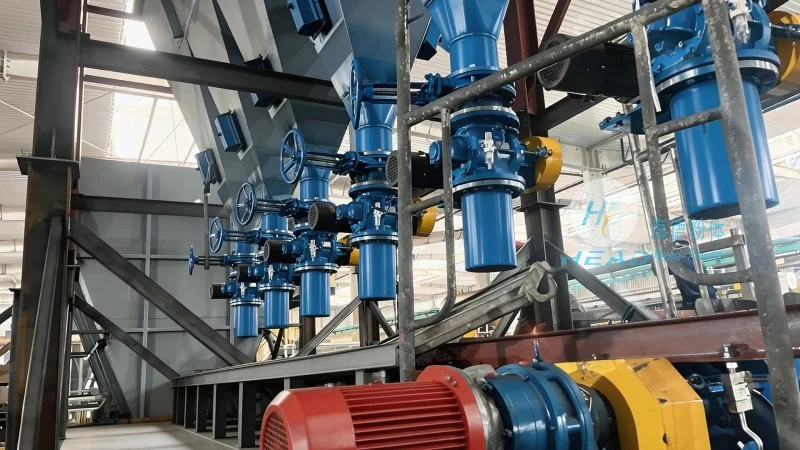
Working Principle
The working principle of the pneumatic conveying system is based on the fundamental physics of fluid dynamics and particle suspension. The system relies on the creation of a pressure differential between the feeding and receiving points to generate the necessary force for material transport. When the conveying medium is introduced into the line, it creates a low-pressure zone at the receiving end and a high-pressure zone at the feeding end. This pressure difference causes the air to flow through the line, carrying the molybdenum trioxide particles with it. The particles are suspended in the air stream due to the drag force exerted by the moving air, allowing them to be transported over long distances without the need for mechanical conveyors. The system's efficiency is enhanced by the use of appropriate air velocities and line diameters, which are carefully selected to ensure that the particles remain suspended and do not settle or cause blockages. The filter unit plays a vital role in maintaining the system's integrity by removing any fine particles that may escape, preventing clogging and ensuring consistent performance.
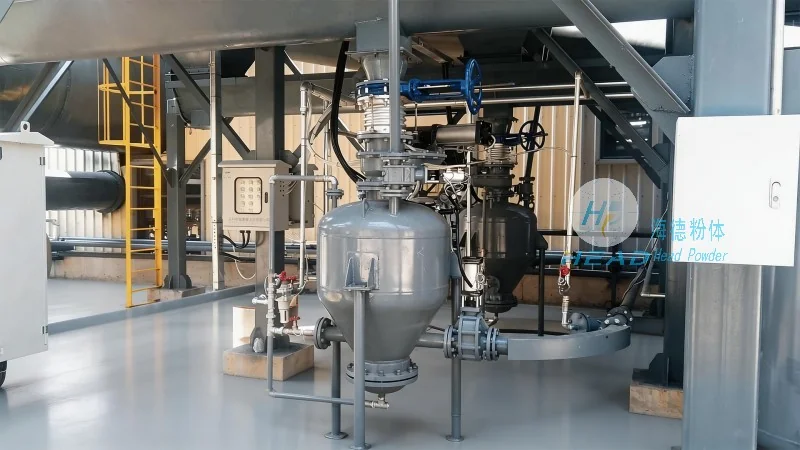
Advantages and Applications
The pneumatic conveying system for molybdenum trioxide material offers several advantages over traditional mechanical conveying methods. These include reduced material degradation due to minimal contact with equipment, improved safety by eliminating the need for manual handling of fine powders, and enhanced environmental protection through the use of dust collection systems. The system is particularly well-suited for applications in the chemical and pharmaceutical industries, where the purity and quality of MoO₃ are critical. It is also suitable for use in high-purity manufacturing environments, where contamination control is paramount. The system's flexibility allows it to be adapted to various production scales and operational requirements, making it a versatile solution for material handling in the molybdenum trioxide processing industry.
Conclusion
HeadPowder's pneumatic conveying system for molybdenum trioxide material is a reliable and efficient solution for material handling in industrial applications. By understanding the operation process and working principle of this system, users can appreciate the importance of each component and the role it plays in ensuring optimal performance. The system's design and construction are tailored to meet the specific requirements of MoO₃ handling, providing a safe, clean, and effective method for transporting this valuable chemical compound. With its advanced engineering and robust construction, this system is an essential asset for any facility involved in the processing and handling of molybdenum trioxide.