

Operation Process and Working Principle of High-Pressure Material Pneumatic Conveying Equipment
High-pressure material pneumatic conveying equipment is a critical component in modern industrial material handling systems, designed to efficiently transport bulk materials over long distances with high pressure and minimal loss. This equipment is widely used in various industries, including chemical, food, pharmaceutical, and mining, where reliable and efficient material transport is essential for operational efficiency and product quality.
Company Overview
HeadPowder, formally known as Shandong HeadPowder Engineering Co., Ltd., is a leading manufacturer of advanced material handling solutions based in Shandong, China. With a strong commitment to innovation and quality, HeadPowder specializes in designing and manufacturing high-pressure pneumatic conveying systems tailored to meet the diverse needs of global industries. The company's headquarters is located in Shandong, China, where it leverages state-of-the-art technology and experienced engineering teams to develop cutting-edge solutions for material transport challenges.
Understanding High-Pressure Pneumatic Conveying
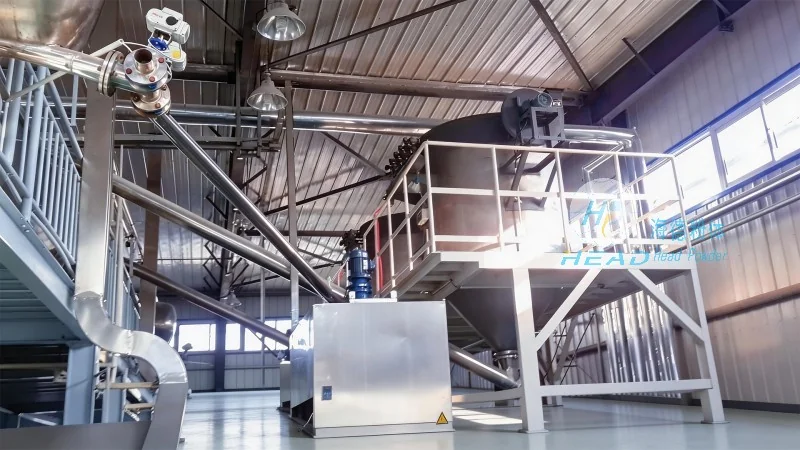
High-pressure pneumatic conveying systems operate by using compressed air or other gases to transport bulk materials through a pipeline network. Unlike low-pressure systems, high-pressure systems utilize higher air pressures (typically ranging from 5 to 15 bar) to achieve greater conveying distances and higher material velocities, making them suitable for long-distance transport and challenging material characteristics. The core components of a high-pressure pneumatic conveying system include a compressor, a material feed hopper, a conveying line, a control valve, and a discharge unit.

The Operation Process
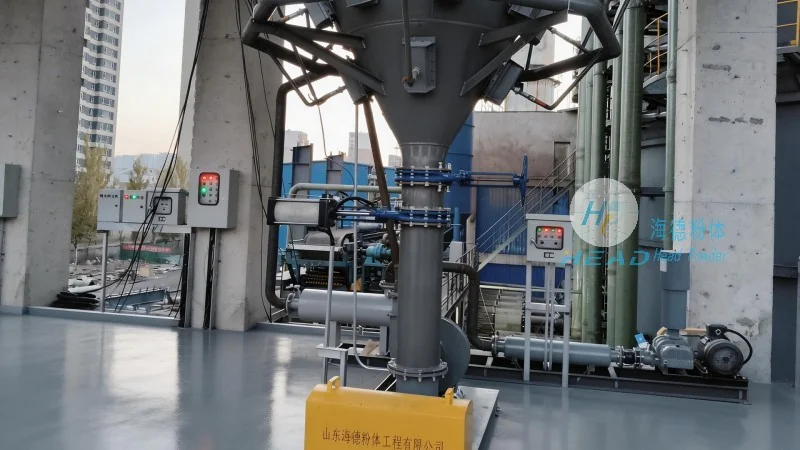
The operation process of high-pressure material pneumatic conveying equipment involves several key steps that ensure efficient and reliable material transport. First, the bulk material is fed into the material hopper from a storage silo or hopper. The material is then metered into the conveying line using a rotary valve or a feeder, which controls the flow rate to maintain consistent pressure and velocity within the system. Next, the compressor generates high-pressure air, which is introduced into the conveying line through a pressure regulator and a filter to remove contaminants. The high-pressure air and material mixture travels through the pipeline, with the air providing the necessary force to move the material particles. At the receiving end, the material is discharged into a collection bin or processing unit, while the air is typically filtered and recycled back to the compressor to minimize energy consumption.
Working Principle
The working principle of high-pressure pneumatic conveying is based on the principles of fluid dynamics and particle motion. When high-pressure air is introduced into the conveying line, it creates a high-velocity flow that entrains the material particles, lifting them from the hopper and transporting them through the pipeline. The air velocity is carefully controlled to ensure that the material particles are fully suspended and carried along the pipeline without settling or causing blockages. The pressure differential between the inlet and outlet of the system provides the driving force for material transport, while the design of the conveying line, including bends, expansions, and reductions, is optimized to minimize pressure loss and maintain consistent flow. The system also incorporates control mechanisms, such as pressure sensors and flow meters, to monitor and adjust the operation in real-time, ensuring optimal performance and preventing system failures.
Key Features and Benefits
High-pressure material pneumatic conveying equipment offers several advantages over traditional material handling methods, including reduced labor costs, improved safety, and increased operational efficiency. The enclosed system design minimizes dust emissions and environmental contamination, making it suitable for applications where material purity and environmental compliance are critical. Additionally, the ability to transport materials over long distances without the need for intermediate storage or handling reduces the risk of material degradation and loss. HeadPowder's high-pressure pneumatic conveying systems are designed with user-friendly controls and maintenance-friendly components, ensuring low operational costs and high reliability over the equipment's service life.