

Copper Powder Pneumatic Conveying Technology: Principles, Applications, and Development Trends
Copper powder is a critical material in various industrial sectors, including electronics, aerospace, and manufacturing. The efficient and reliable transportation of copper powder from one processing stage to another is essential for maintaining production efficiency and product quality. Pneumatic conveying technology offers a solution to this challenge by utilizing air or other gases to transport powders through a pipeline system. This method is particularly advantageous for copper powders due to their fine particle size and potential for dust generation during handling.
Company Profile: Shandong HeadPowder Engineering Co., Ltd.
HeadPowder, formally known as Shandong HeadPowder Engineering Co., Ltd., is a leading provider of specialized engineering solutions for powder handling and material processing. With a strong presence in China, specifically in Shandong province, the company has established itself as a trusted partner in the development and implementation of advanced pneumatic conveying systems. HeadPowder's expertise lies in designing, manufacturing, and installing customized solutions tailored to the unique requirements of copper powder applications.
Principles of Pneumatic Conveying for Copper Powders
The core principle of pneumatic conveying involves the use of a pressure differential to move copper powder particles through a pipeline. There are two primary methods: pressure conveying and vacuum conveying. In pressure conveying, compressed air is introduced at the material inlet, creating a positive pressure that propels the powder forward. This method is suitable for long-distance and high-volume transport. Vacuum conveying, on the other hand, uses a vacuum at the receiving end to draw the powder into the system, which is ideal for shorter distances and when handling materials that are sensitive to pressure changes.

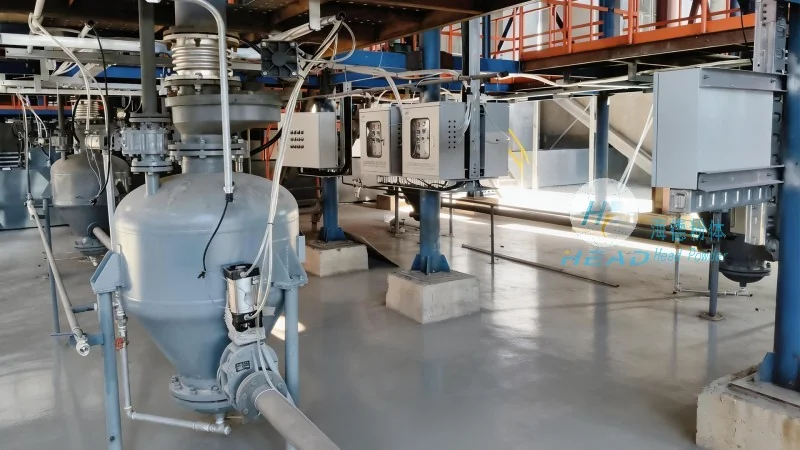
The design of a copper powder pneumatic conveying system involves careful consideration of factors such as particle size, moisture content, and flow characteristics. The system typically includes components like a hopper, feeder, pipeline, and receiver. The hopper stores the copper powder, while the feeder controls the flow rate to ensure consistent material delivery. The pipeline is designed to minimize friction and particle degradation, often using smooth, corrosion-resistant materials to prevent contamination and clogging. The receiver collects the conveyed powder and may include filtration systems to capture any fines that escape during transport.
Applications of Copper Powder Pneumatic Conveying Systems
Copper powder pneumatic conveying systems are widely used in several key applications within the copper processing industry. In the production of copper alloys, these systems efficiently transport copper powder to mixing and compounding equipment, ensuring uniform blending of the material. The electronics industry utilizes copper powder for the manufacturing of printed circuit boards (PCBs) and other components, where precise powder handling is critical to prevent contamination and maintain electrical conductivity. Aerospace applications also benefit from copper powder pneumatic conveying, particularly in the production of high-performance alloys and components that require strict quality control.

In addition to industrial manufacturing, copper powder pneumatic conveying is employed in research and development laboratories for material testing and formulation. The ability to transport fine copper powders with minimal loss and contamination makes this technology invaluable for scientific studies and product development. Furthermore, in recycling operations, pneumatic conveying systems help in the recovery and reprocessing of copper from scrap materials, contributing to sustainable practices in the industry.
Development Trends and Future Prospects
The field of copper powder pneumatic conveying technology is continuously evolving to meet the demands of modern industrial applications. One key trend is the integration of advanced automation and control systems, which enhance the precision and reliability of powder handling processes. Smart sensors and real-time monitoring allow operators to adjust system parameters dynamically, optimizing performance and reducing downtime. This technological advancement ensures that copper powder is transported with minimal variation in flow rate and particle distribution.
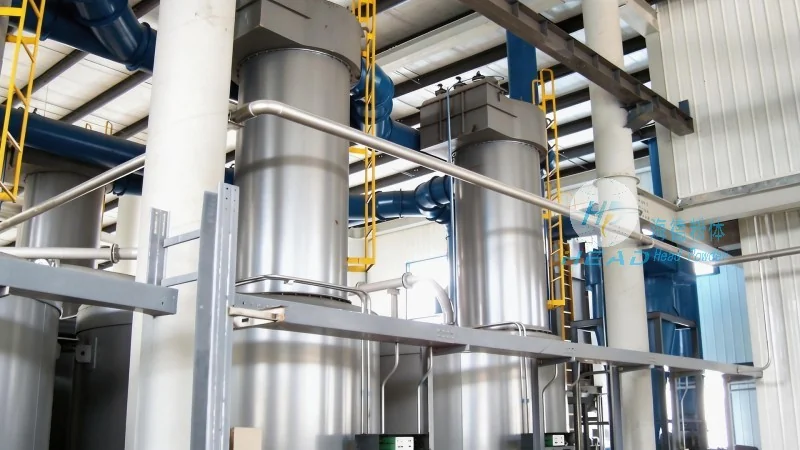
Another significant development is the focus on energy efficiency and environmental sustainability. Modern pneumatic conveying systems incorporate energy-saving designs, such as variable frequency drives (VFDs) and optimized air flow management, to reduce operational costs and environmental impact. The use of eco-friendly materials in pipeline construction and the implementation of dust collection systems further support sustainable practices in copper powder handling.
Looking ahead, the future of copper powder pneumatic conveying technology is likely to involve the adoption of more sophisticated materials and designs. For instance, the use of advanced polymers and composites in pipeline construction can improve durability and resistance to corrosion, extending the lifespan of the system. Additionally, the integration of artificial intelligence (AI) and machine learning (ML) algorithms may enable predictive maintenance, allowing for proactive system maintenance and reducing unexpected failures.
In summary, copper powder pneumatic conveying technology plays a vital role in the efficient and safe handling of copper powders across various industries. With ongoing advancements in automation, energy efficiency, and material science, the technology continues to evolve, ensuring that it remains a reliable and essential component of modern industrial operations.