

Principle and Working Scene Characteristics of Organic Salt Powder Conveyors
Organic salt powder conveying machines represent a critical component in modern industrial material handling, particularly for processes involving bulk organic salt materials. These systems are engineered to efficiently transport organic salt powders from storage silos or hoppers to processing units, packaging lines, or storage areas, ensuring seamless and reliable material flow. The technology behind these machines integrates mechanical engineering principles with material science expertise to address the unique challenges of organic salt powder transportation, such as particle size variability, flowability, and potential hygroscopicity. By leveraging advanced design and manufacturing techniques, organic salt powder conveyors provide industries with a robust solution for handling these materials safely and efficiently.
Core Principles of Organic Salt Powder Conveying
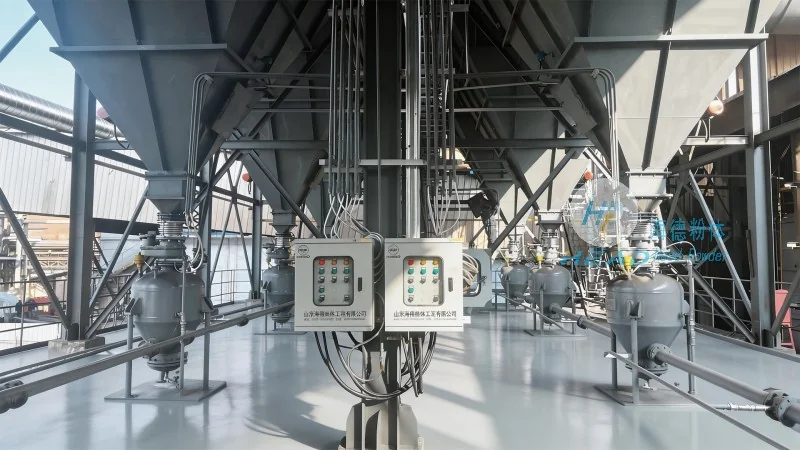
The operation of organic salt powder conveyors is grounded in several fundamental principles that ensure optimal performance and reliability. A primary principle is the use of low-friction, corrosion-resistant components to prevent material buildup and contamination. This is particularly important for organic salts, which may have specific chemical properties that require careful handling to avoid degradation or safety hazards. The conveyor systems typically incorporate specialized sealing mechanisms, such as double-seal or positive-seal designs, to minimize dust leakage and maintain material purity. Additionally, adjustable speed controls and variable pressure systems are integrated to accommodate different powder characteristics, including particle size distribution, density, and flowability. For instance, fine organic salt powders may require lower conveying speeds to prevent segregation, while coarser materials can be handled at higher speeds. The design also considers the material's hygroscopic nature, incorporating moisture-resistant materials and enclosed systems to prevent clumping or caking during transport.
Working Scene Characteristics and Application Scenarios
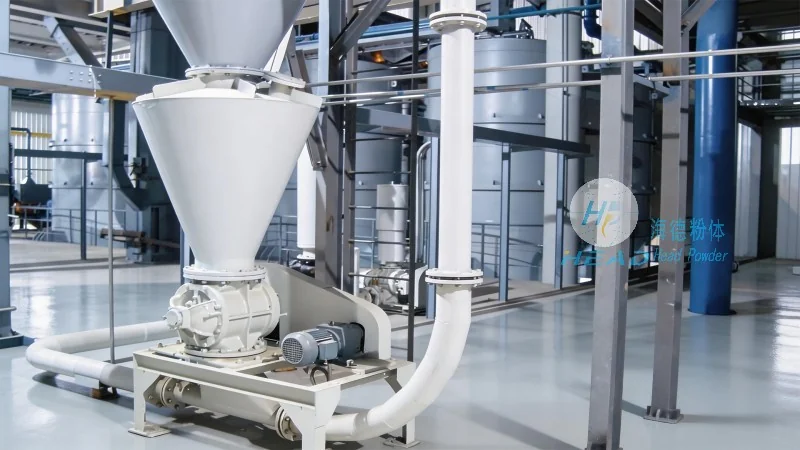
Organic salt powder conveying machines are deployed across diverse industrial sectors, each with distinct working scene characteristics that influence equipment selection and integration. In the chemical industry, these machines are widely used in the production of fertilizers, where organic salts like ammonium nitrate, potassium nitrate, or urea are processed. The working environment in such facilities is characterized by high production volumes, stringent safety protocols, and the need for dust explosion prevention. The conveyor systems are often equipped with explosion-proof controls, dust collection systems, and material flow monitoring to ensure compliance with industrial safety standards. For example, in a fertilizer plant, organic salt powder conveyors may be integrated with rotary valves and feeders to regulate material flow to reactors or granulators. The working scene also involves continuous operation and high throughput, requiring conveyor systems with high capacity and durability. In the food processing industry, organic salt powders such as sodium bicarbonate, citric acid, or sodium chloride are conveyed to ensure consistent quality in product manufacturing. Here, the working environment emphasizes hygiene, sanitation, and contamination control. The conveyor systems are typically constructed from stainless steel and feature sanitary design elements, such as smooth surfaces and easy-to-clean components. The pharmaceutical industry also relies on organic salt powder conveyors for handling active pharmaceutical ingredients (APIs), where precision, purity, and regulatory compliance are paramount. The working environment in pharmaceutical facilities is highly controlled, with temperature and humidity monitoring integrated into the conveyor system to maintain material integrity and prevent degradation. The conveyor systems in this sector are often designed with closed-loop systems and sterile components to meet cGMP (current Good Manufacturing Practices) requirements.
Company Profile: Shandong HeadPowder Engineering Co., Ltd.
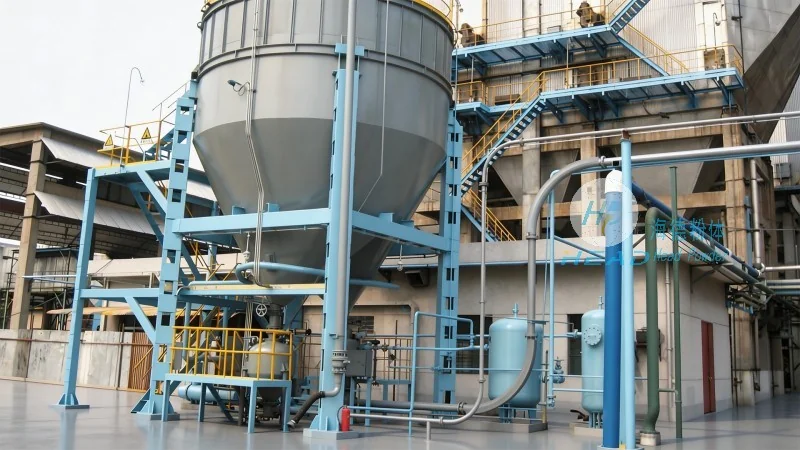
HeadPowder, a prominent manufacturer of industrial powder handling equipment, specializes in the design, development, and production of organic salt powder conveying machines. With a strong commitment to innovation and customer satisfaction, HeadPowder has built a reputation as a trusted partner in the chemical, food, and pharmaceutical industries. The company's headquarters is situated in Shandong, China, where its advanced manufacturing facilities and research and development centers are located. HeadPowder's team of experienced engineers and technicians work closely with clients to understand their specific material handling challenges and develop customized conveyor solutions that meet their operational requirements. The company adheres to international quality standards, such as ISO 9001, ensuring that all products are manufactured with precision, reliability, and durability. HeadPowder's organic salt powder conveying systems are engineered to handle a wide range of organic salt materials, including but not limited to ammonium nitrate, potassium nitrate, urea, and various food-grade salts. The company's product line includes both positive displacement and pneumatic conveying systems, allowing clients to choose the most suitable technology based on their material characteristics and application needs. By leveraging advanced manufacturing techniques and rigorous quality control processes, HeadPowder delivers high-performance organic salt powder conveying systems that enhance productivity, safety, and efficiency in industrial applications. The company's dedication to customer support and after-sales service ensures that clients receive comprehensive assistance throughout the equipment lifecycle, from installation to maintenance and troubleshooting.