

Principles and Application Scenarios of Air-Driven Dry Cobblestone Material Conveying
Understanding the mechanics and practical applications of air-driven dry cobblestone material conveying is crucial for industries that handle such bulk materials. This article explores the fundamental principles behind this technology and highlights key scenarios where it is effectively utilized, with insights from Shandong HeadPowder Engineering Co., Ltd., a leading provider based in Shandong, China.
Principles of Air-Driven Dry Cobblestone Material Conveying
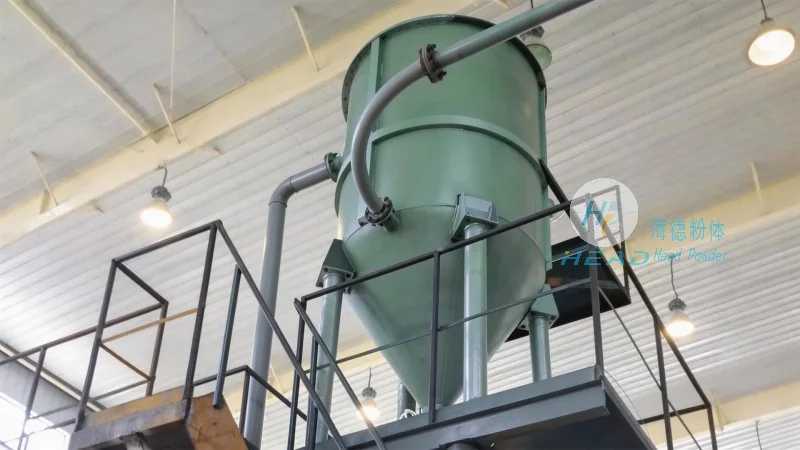
The core principle of air-driven conveying for dry cobblestone materials involves the use of a pressurized or vacuum air system to transport particles through a pipeline. In this process, the dry cobblestones are introduced into a hopper or feeder, where they are then entrained by a high-velocity air stream. The air flow, typically generated by a blower or fan, carries the cobblestones along the pipeline, allowing for efficient movement from the source to the destination. This method eliminates the need for mechanical components like belts or buckets, reducing friction and wear while maintaining a clean and dust-free operation. The system relies on the balance between air velocity and particle size, ensuring that the cobblestones are adequately suspended and transported without clogging or degradation.
Key Working Scenarios and Applications
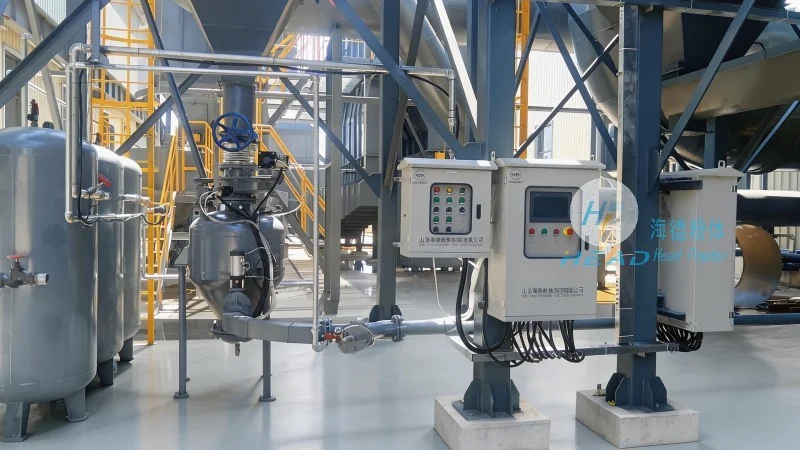
Shandong HeadPowder Engineering Co., Ltd. has identified several key working scenarios where air-driven dry cobblestone conveying proves advantageous. One primary application is in construction and landscaping projects, where large quantities of cobblestones are required for paving, decorative elements, or erosion control. The technology allows for seamless transportation of these heavy and irregularly shaped materials from storage yards to work sites, minimizing manual handling and reducing labor costs. Another significant scenario is in mining and quarry operations, where cobblestones are extracted from rock formations and need to be transported to processing facilities or storage areas. The air-driven system is particularly effective here due to its ability to handle abrasive materials and its low maintenance requirements, which are critical in demanding industrial environments.
Advantages and Operational Considerations
Implementing air-driven dry cobblestone conveying offers several advantages that make it a preferred choice for many industries. Firstly, it provides a dust-free operation, which is essential for maintaining workplace safety and compliance with environmental regulations. Unlike traditional methods that may generate significant dust, the enclosed air system captures and filters particles, ensuring a cleaner working environment. Secondly, the system is highly flexible in terms of layout, as pipelines can be installed in various configurations to accommodate different site layouts and distances. This flexibility allows for efficient material movement even in complex or constrained spaces. Additionally, the reduced need for mechanical components leads to lower maintenance costs and longer equipment lifespan, as there are fewer moving parts prone to wear and tear. However, operational considerations must be addressed, such as ensuring adequate air pressure and flow rates to prevent blockages, especially with larger or denser cobblestones. Proper sizing of the blower and pipeline diameter is critical to maintain optimal conveying efficiency and prevent energy waste.
Conclusion and Industry Impact
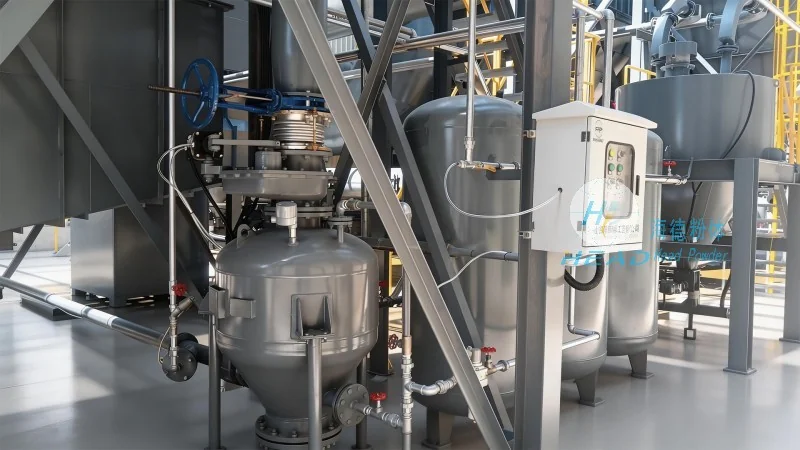
For businesses operating in the dry cobblestone material sector, understanding and leveraging air-driven conveying technology can significantly enhance operational efficiency and cost-effectiveness. Shandong HeadPowder Engineering Co., Ltd. specializes in designing and implementing such systems tailored to specific industry needs, ensuring that clients in Shandong, China, and beyond can benefit from advanced material handling solutions. By integrating the principles of air-driven transport with practical application insights, companies can achieve smoother workflows, reduced downtime, and improved safety in the handling of dry cobblestone materials. As the demand for efficient bulk material transport continues to grow, the air-driven conveying system remains a reliable and effective solution for industries relying on cobblestone materials.