

Operation Process and Working Principle of Desulfurization Fly Ash Powder Conveying Line
Desulfurization fly ash, a byproduct from coal-fired power plants, is a valuable resource that requires efficient handling and transportation. The desulfurization fly ash powder conveying line is a specialized system designed to transport this fine powder safely and effectively. This article provides an in-depth look at the operation process and working principle of such a conveying line, highlighting the key components, operational steps, and technical aspects that ensure optimal performance.
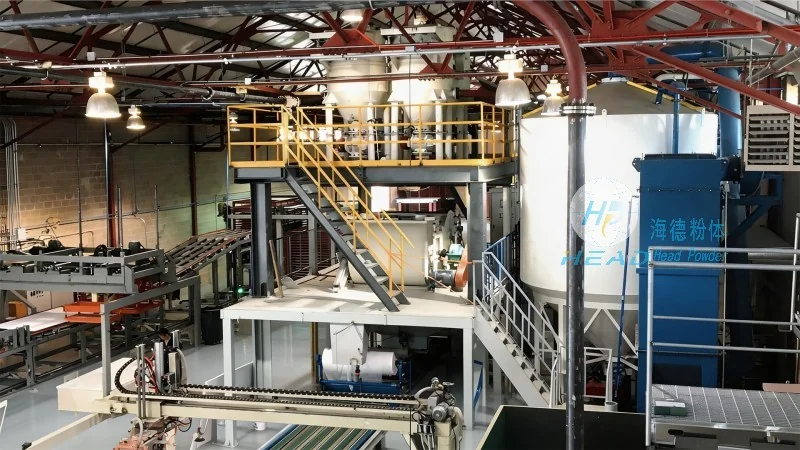
Overview of Desulfurization Fly Ash Powder Conveying Line
The desulfurization fly ash powder conveying line is a critical infrastructure in power plant operations, responsible for moving the fine, dry ash from the desulfurization unit to storage or disposal sites. The system is engineered to handle the unique properties of fly ash, including its high moisture content (when wet) or fine particle size, which can affect flow characteristics and system efficiency. Shandong HeadPowder Engineering Co., Ltd., a leading manufacturer in this field, specializes in designing and supplying customized conveying solutions tailored to the specific needs of power plants.
Key Components of the Conveying System
The conveying line typically consists of several key components that work in tandem to ensure smooth operation. These include: (1) a feeding hopper to collect and store the fly ash, (2) a conveyor system (such as a screw conveyor or pneumatic conveyor) to transport the material, (3) a control panel to monitor and regulate the system, and (4) a dust collection system to manage airborne particles and ensure environmental compliance. Each component is selected based on the characteristics of the fly ash, such as particle size distribution, moisture content, and bulk density, to optimize performance and minimize operational issues.
Operation Process of the Conveying Line
The operation of the desulfurization fly ash powder conveying line follows a systematic process to ensure consistent and reliable transport. The steps are as follows:
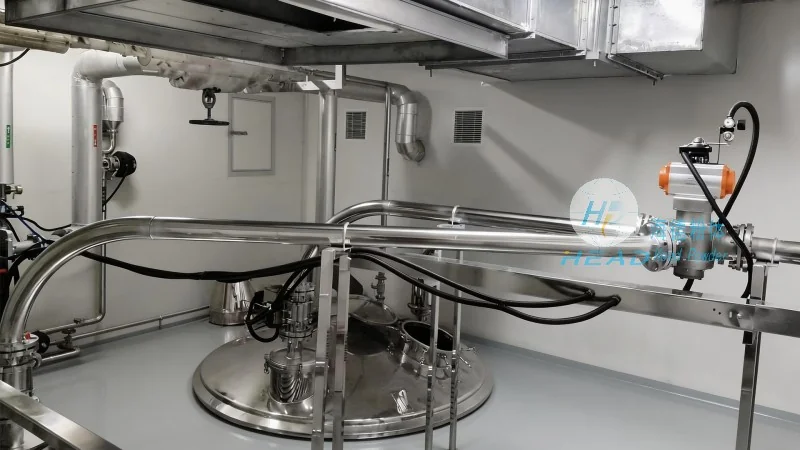
Material Collection: The fly ash is collected from the desulfurization unit and transferred into the feeding hopper. The hopper is designed with a sloped bottom to facilitate the flow of material into the conveyor system.
Conveyor Activation: Once the hopper is filled to a certain level, the conveyor system is activated. For screw conveyors, the rotating screw pushes the material forward; for pneumatic conveyors, air pressure is used to move the ash through a pipeline.
Transport to Destination: The material is transported from the hopper to the storage silo or disposal site. The system is equipped with sensors to monitor the flow rate and level in the hopper and silo, ensuring that the process runs smoothly without overfilling or underflowing.
Control and Monitoring: The control panel continuously monitors parameters such as pressure, flow rate, and temperature. Operators can adjust the system settings in real-time to address any deviations and maintain optimal performance.
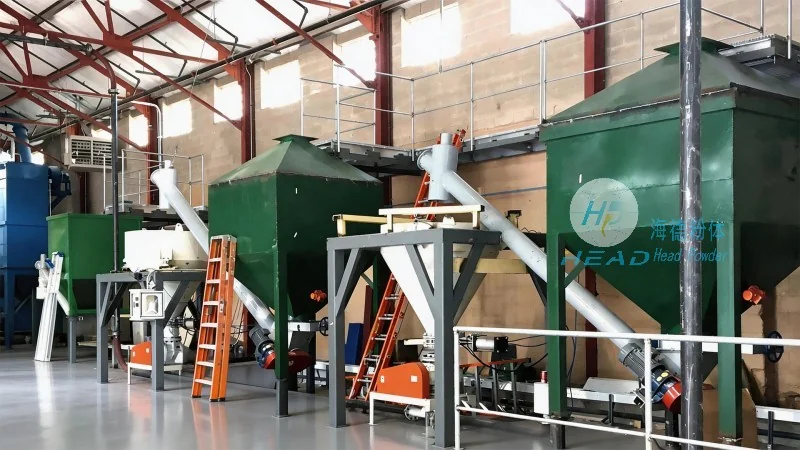
Working Principle of the Conveying System
The working principle of the desulfurization fly ash powder conveying line is based on the principles of fluidization and mechanical transport. For mechanical conveyors like screw conveyors, the rotating screw creates a helical motion that lifts and moves the material forward. The slope of the conveyor is designed to provide the necessary gravitational force to assist in material movement, reducing the power required for operation. For pneumatic conveyors, the system uses compressed air to create a flow of air and ash particles through the pipeline. The air pressure is carefully controlled to ensure that the ash is transported without clogging or excessive pressure buildup.
Technical Advantages and Considerations
The desulfurization fly ash powder conveying line offers several technical advantages that make it an effective solution for power plant operations. These include: (1) high efficiency in transporting fine powders, (2) low maintenance requirements due to the robust design of components, (3) environmental compliance through integrated dust collection systems, and (4) customization options to accommodate varying fly ash characteristics. However, operators must consider factors such as the moisture content of the ash, as high moisture can lead to clogging in mechanical conveyors, and the particle size distribution, as finer particles may require additional filtration to prevent dust emissions.
Conclusion
The desulfurization fly ash powder conveying line is a vital component of modern power plant operations, enabling the efficient handling and transportation of fly ash. By understanding the operation process and working principle of such a system, power plant operators can optimize performance, reduce downtime, and ensure compliance with environmental regulations. Shandong HeadPowder Engineering Co., Ltd. continues to innovate in this field, providing advanced conveying solutions that meet the evolving needs of the power industry.