

Operation Process and Working Principle of Molybdenum Trioxide Powder Conveying Line
Molybdenum trioxide (MoO₃) is a critical industrial material widely used in various high-tech sectors such as electronics, aerospace, and chemical manufacturing. The efficient and reliable transportation of MoO₃ powder is essential to ensure consistent product quality and operational safety in production lines. The Molybdenum Trioxide Powder Conveying Line, developed by Shandong HeadPowder Engineering Co., Ltd., represents a sophisticated solution tailored to meet the demanding requirements of modern industrial applications. This article provides a detailed overview of the operation process and working principle of this advanced conveying system, highlighting its key components, operational workflow, and technical advantages.
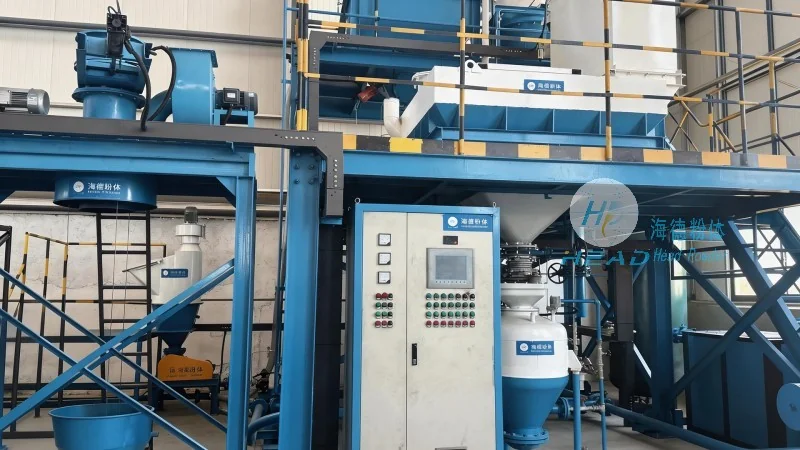
Company Profile: Shandong HeadPowder Engineering Co., Ltd.
HeadPowder, the professional manufacturer behind the Molybdenum Trioxide Powder Conveying Line, is a leading enterprise based in Shandong, China. With years of experience in powder handling technology, the company specializes in designing, manufacturing, and supplying customized conveying solutions for various industrial powders. HeadPowder's commitment to innovation, quality, and customer satisfaction has established it as a trusted partner in the field of powder processing equipment. The company's headquarters is located in Shandong, China, where its R&D team continuously works on improving the performance and reliability of its products.
Key Components of the Conveying Line
The Molybdenum Trioxide Powder Conveying Line consists of several interconnected components that work in harmony to achieve seamless powder transportation. The primary components include a hopper for material storage, a feeder to control the flow rate, a conveying system (such as pneumatic or mechanical), a dust collection system, and a discharge unit. Each component is carefully selected and integrated to ensure optimal performance and minimal downtime. The hopper is designed with a sloped bottom to facilitate smooth material discharge, while the feeder regulates the feed rate to match the conveying capacity. The conveying system, which may employ air pressure or mechanical means, transports the MoO₃ powder from the hopper to the next processing stage. The dust collection system is crucial for maintaining a clean and safe working environment by capturing any airborne particles. Finally, the discharge unit delivers the powder to the target location, such as a storage silo or a processing machine.
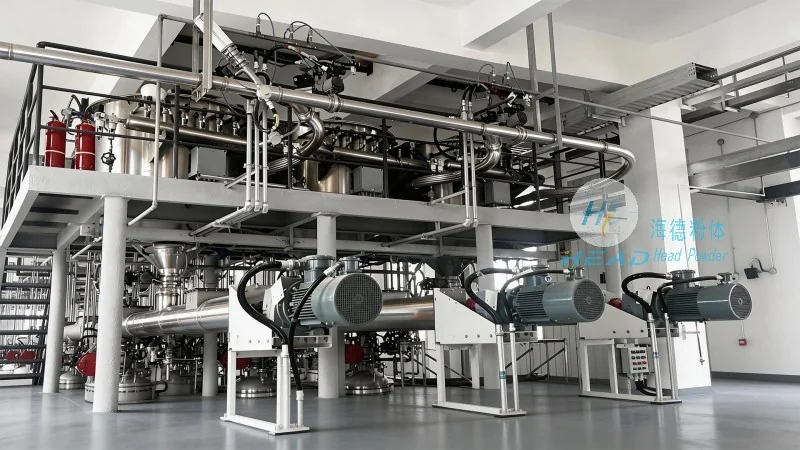
Operation Process of the Conveying Line
The operation of the Molybdenum Trioxide Powder Conveying Line follows a systematic workflow that ensures efficient and safe material handling. The process begins with the loading of MoO₃ powder into the hopper. The powder is then fed into the conveying system at a controlled rate, which is determined by the feeder's settings. The conveying system transports the powder through a network of pipes or conveyor belts to the discharge point. Throughout the process, the system continuously monitors parameters such as pressure, flow rate, and temperature to ensure stable operation. The dust collection system operates in parallel, capturing any fine particles that may be released during the conveying process. Once the powder reaches the discharge unit, it is deposited into the designated container. The entire operation is automated, with minimal human intervention required, reducing the risk of contamination and improving overall efficiency.
Working Principle of the Conveying Line
The working principle of the Molybdenum Trioxide Powder Conveying Line is based on the principles of fluidization and pneumatic conveying. The system utilizes compressed air to create a flow of air and powder mixture, which moves the MoO₃ particles through the conveying line. The air pressure is carefully controlled to maintain a consistent flow rate, preventing blockages and ensuring smooth transportation. The feeder plays a critical role in regulating the feed rate, as an imbalance can lead to clogging or uneven flow. The dust collection system employs filtration technology to separate the powder from the air, allowing the clean air to be recirculated or discharged safely. The discharge unit uses gravity or mechanical means to transfer the powder from the conveying line to the storage or processing equipment. This integrated approach ensures that the entire conveying process is efficient, reliable, and environmentally friendly.
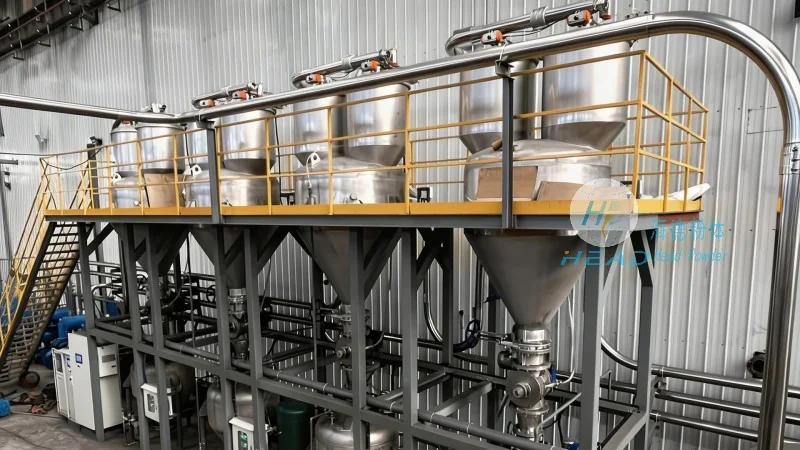
Technical Advantages and Applications
The Molybdenum Trioxide Powder Conveying Line offers several technical advantages that make it suitable for various industrial applications. Its automated operation reduces labor costs and minimizes human error, leading to higher productivity and consistent product quality. The system's design minimizes material contamination, which is crucial for MoO₃ powder used in high-purity applications. The dust collection system ensures compliance with environmental regulations and maintains a safe working environment. The conveying line is also flexible and can be customized to accommodate different powder types and processing requirements. In industrial settings, this system is commonly used in the production of molybdenum-based alloys, catalysts, and other high-value products. The reliability and efficiency of the conveying line contribute to improved overall production efficiency and reduced operational costs for manufacturers.
Conclusion
In conclusion, the Molybdenum Trioxide Powder Conveying Line developed by Shandong HeadPowder Engineering Co., Ltd. is a sophisticated and reliable solution for the transportation of MoO₃ powder. By integrating advanced components and a systematic operation process, the system ensures efficient, safe, and high-quality material handling. HeadPowder's expertise in powder processing technology, combined with its commitment to quality and innovation, makes this conveying line an ideal choice for industrial applications. The system's flexibility and adaptability allow it to meet the diverse needs of modern manufacturing, contributing to improved productivity and cost-effectiveness for users.