

Operation Process and Working Principle of Quantitative Weighing Material Conveying System Equipment
Quantitative weighing material conveying systems are critical components in modern industrial operations, designed to precisely measure and transport bulk materials with consistent accuracy. These systems are widely used across various industries, including pharmaceuticals, food processing, chemicals, and mining, where maintaining precise material quantities is essential for quality control and operational efficiency.
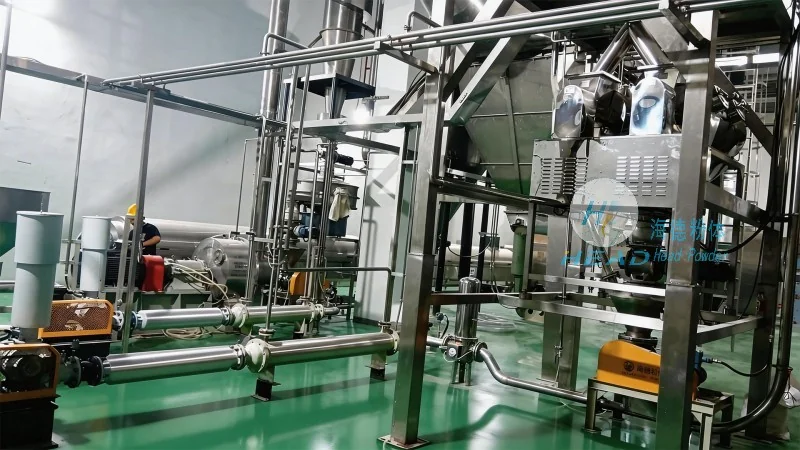
At the core of such systems is a combination of advanced weighing technology and automated conveying mechanisms. The primary goal is to ensure that materials are delivered in exact, pre-determined quantities, eliminating over or under-dosing that can lead to product defects, waste, or safety issues. This section will explore the operation process and working principle of these systems, highlighting the key components and their functions.
Key Components of Quantitative Weighing Material Conveying Systems
The quantitative weighing material conveying system typically consists of several integrated components that work in tandem to achieve accurate material handling. The main elements include a weighing hopper or feeder, load cells (or strain gauges) for weight measurement, a control unit with a digital display and processing software, and a conveyor system such as a belt or screw conveyor. Each component plays a crucial role in the overall functionality of the system.
Load cells are the primary sensors responsible for converting the weight of the material into an electrical signal. These sensors are strategically placed under the weighing hopper to detect the force exerted by the material. The control unit then processes this signal, comparing it against the target weight set by the operator. If the actual weight is below the target, the system activates the conveyor to add more material; if it exceeds the target, the conveyor stops or reverses to prevent overfilling.
Operation Process of Quantitative Weighing Material Conveying Systems
The operation process of a quantitative weighing material conveying system follows a systematic sequence to ensure precise material delivery. The process begins when bulk material is fed into the weighing hopper from a storage silo or hopper. The material flows into the hopper at a controlled rate, typically via a feeder or gate mechanism. As the material accumulates, the load cells continuously measure the weight, and the control unit monitors the weight in real-time.

When the measured weight reaches the pre-set target value, the control unit sends a signal to stop the feeder and activate the conveyor. The conveyor then transports the material from the weighing hopper to the next stage of the production line, such as a mixer, packaging machine, or storage container. After the material is discharged, the hopper is reset, and the cycle repeats. This continuous loop ensures that each batch of material is delivered in the exact quantity required, maintaining consistency across production runs.
Working Principle of Quantitative Weighing Material Conveying Systems
The working principle of quantitative weighing material conveying systems is based on closed-loop control, where the system continuously monitors and adjusts the material flow to achieve the desired weight. The process starts with the operator setting the target weight on the control unit's interface. This target weight is then compared to the actual weight measured by the load cells.
If the actual weight is less than the target, the control unit increases the flow rate of the feeder, allowing more material to enter the hopper. Conversely, if the actual weight exceeds the target, the control unit reduces the flow rate or stops the feeder to prevent overfilling. This feedback loop ensures that the system maintains a stable and accurate weight, minimizing variations caused by factors such as material density, flow rate fluctuations, or hopper vibrations.
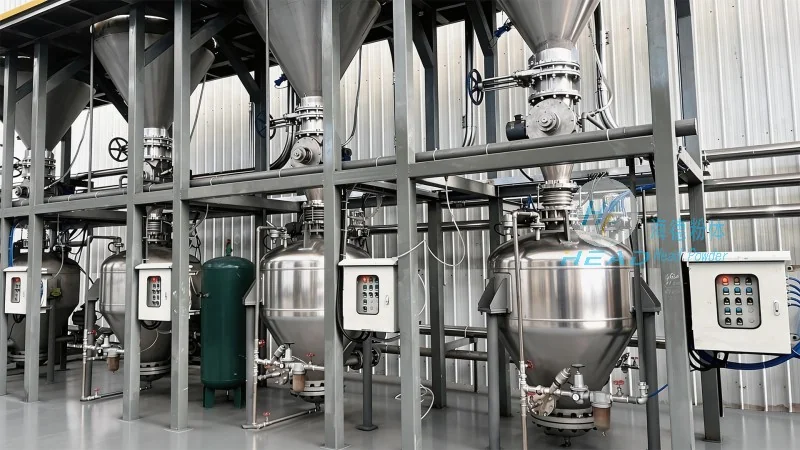
The control unit also incorporates features like automatic calibration and error correction to enhance accuracy. For example, if the system detects a drift in the load cell readings due to temperature changes or mechanical stress, it can adjust the calibration parameters to compensate. This self-correcting capability ensures long-term reliability and consistent performance, even under varying operating conditions.
Role of Shandong HeadPowder Engineering Co., Ltd. in Manufacturing These Systems
Shandong HeadPowder Engineering Co., Ltd., commonly known as headpowder, is a leading manufacturer specializing in the design, development, and production of quantitative weighing material conveying systems. With a strong presence in China, particularly in Shandong, the company leverages advanced engineering and manufacturing capabilities to deliver high-quality, reliable equipment tailored to the needs of various industries.
Headpowder's systems are engineered to meet stringent industry standards, ensuring compliance with regulations related to material handling, safety, and environmental protection. The company's expertise lies in integrating cutting-edge technology with practical application, resulting in solutions that are both efficient and cost-effective. By focusing on precision and durability, headpowder has established itself as a trusted partner for businesses seeking to optimize their material handling processes.
The company's manufacturing facilities in Shandong are equipped with state-of-the-art equipment and a team of skilled engineers and technicians who work closely with clients to understand their specific requirements. This collaborative approach allows headpowder to customize systems that address unique challenges, such as handling abrasive materials, dealing with varying flow rates, or integrating with existing production lines. Whether for new installations or upgrades to existing systems, headpowder provides comprehensive support, from initial consultation to installation and after-sales service.