

Comparison of Common Artificial Graphite Conveying Methods
Artificial graphite, a material widely used in industrial applications for its excellent thermal and electrical conductivity, requires efficient and reliable conveying methods to ensure smooth operation in processing lines. The choice of conveying method significantly impacts the performance, safety, and cost-effectiveness of material handling systems. This article, produced by Shandong HeadPowder Engineering Co., Ltd. (headpowder), provides a detailed comparison of common artificial graphite conveying methods, focusing on their operational principles, advantages, and typical applications.
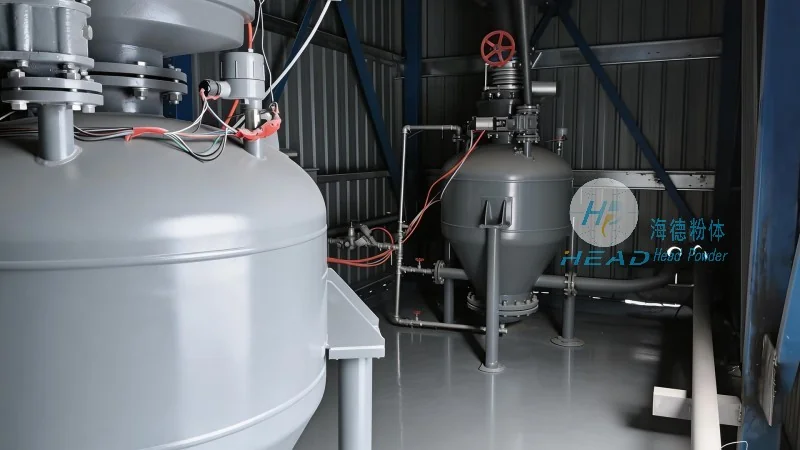
Overview of Artificial Graphite and Conveying Challenges
Artificial graphite is produced through the high-temperature carbonization of petroleum coke or pitch coke, resulting in a material with a high carbon content and unique physical properties. Its handling presents specific challenges due to its density, particle size distribution, and potential for dust generation. Conveying systems must be designed to minimize material degradation, prevent contamination, and maintain consistent flow rates. The selection of an appropriate conveying method depends on factors such as the graphite's bulk density, moisture content, and the distance it needs to be transported.
1. Gravity Conveying Systems
Gravity conveying relies on the natural force of gravity to move material from a higher elevation to a lower one. This method is often used for short-distance transfers where the material's angle of repose and the slope of the conveyor are carefully controlled. In artificial graphite handling, gravity chutes or inclined chutes are commonly employed. These systems are simple in design, requiring minimal maintenance and energy input. However, their effectiveness is limited by the material's flow characteristics and the need for a sufficient vertical drop. For instance, in a graphite processing plant, a gravity chute might be used to transport graphite from a storage hopper to a grinding unit, where the material's free-flowing nature allows it to move smoothly under gravity.
2. Mechanical Conveying Systems
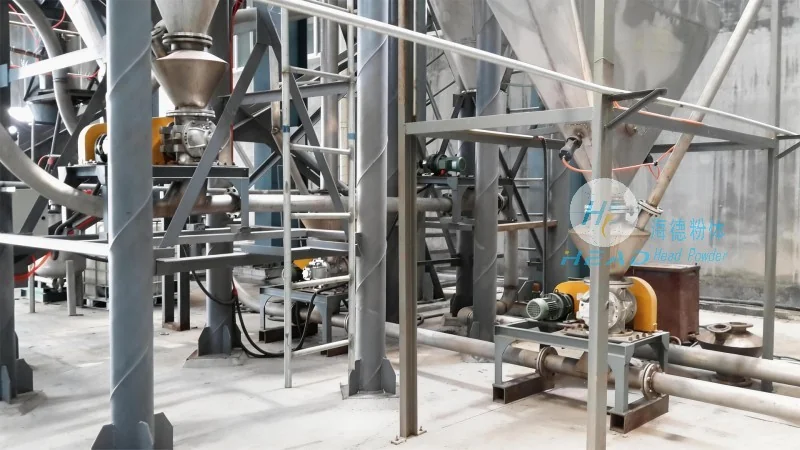
Mechanical conveying systems utilize mechanical energy to move material, offering greater control and flexibility compared to gravity systems. These include screw conveyors, belt conveyors, and bucket elevators, each with distinct applications in artificial graphite handling. Screw conveyors, also known as auger conveyors, consist of a rotating screw within a trough. They are particularly suitable for transporting graphite with moderate bulk density and low to medium moisture content. The screw's rotation pushes the material forward, and the trough design helps contain dust and prevent material spillage. A key advantage of screw conveyors is their ability to operate in a closed system, reducing dust emissions and ensuring a consistent flow rate. In industrial settings, they are often used to transfer graphite from a storage bin to a mixing or blending unit, where precise dosing is required.
3. Air Conveying Systems
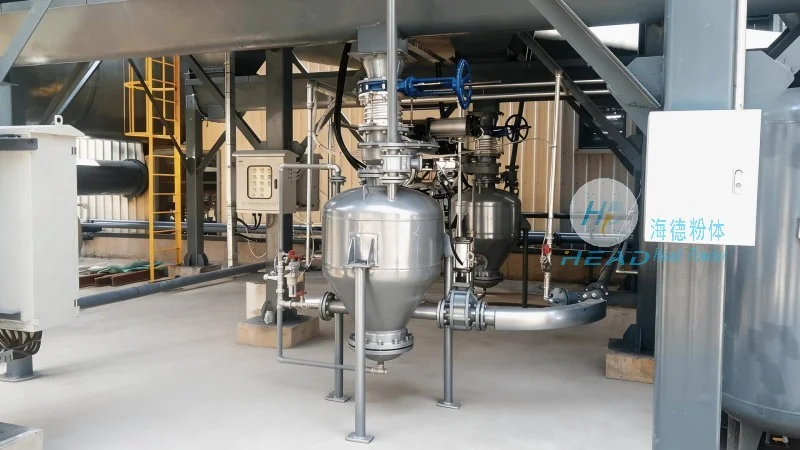
Air conveying, or pneumatic conveying, uses compressed air to transport material through a pipeline. This method is ideal for handling fine or dusty artificial graphite, as it minimizes contact with mechanical components and reduces the risk of material degradation. There are two main types of air conveyors: dilute-phase and dense-phase. Dilute-phase systems use low air velocities to transport material in a dispersed state, suitable for short-distance or low-volume transfers. Dense-phase systems, on the other hand, use higher air pressures and lower velocities to move material in a slurry-like state, providing better control over flow rates and reducing pressure drops. Air conveying systems are particularly effective for transporting graphite to remote locations or integrating with other processing equipment. However, they require more energy and may be more complex to maintain compared to mechanical systems. In a graphite manufacturing facility, an air conveyor might be used to transport fine graphite powder from a milling unit to a packaging line, where the material's fine particles necessitate a dust-free transfer method.
4. Vibratory Conveying Systems
Vibratory conveyors use vibrations to move material along a trough or belt. This method is effective for handling materials with poor flow characteristics, such as graphite with high moisture content or agglomerates. The vibrations help break up clumps and ensure consistent material flow. Vibratory conveyors are often used in combination with other equipment, such as screens or classifiers, to improve material separation and quality. They are particularly suitable for applications where gentle handling is required to prevent material breakage. For example, in a graphite processing plant, a vibratory conveyor might be used to transport graphite from a screening unit to a storage silo, where the material's particle size and moisture content necessitate a low-impact transfer method.
Advantages and Considerations for Each Method
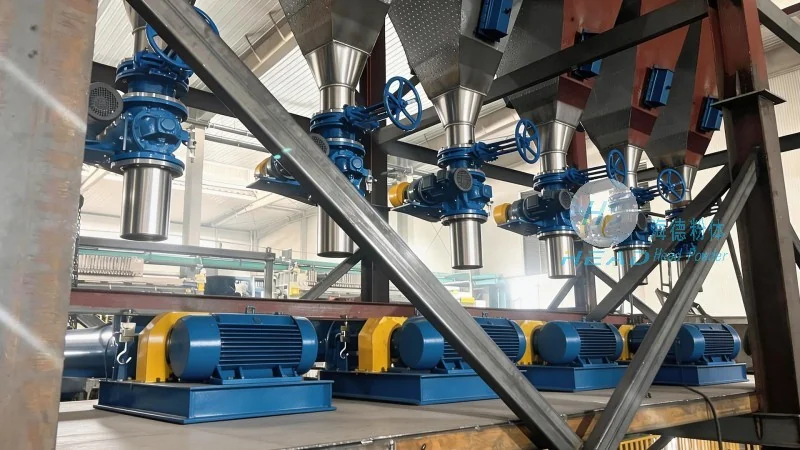
Each artificial graphite conveying method has its own set of advantages and considerations, which must be evaluated based on specific operational requirements. Gravity systems are cost-effective and low-maintenance but are limited by distance and material characteristics. Mechanical systems offer greater control and flexibility but may require more energy and maintenance. Air conveying provides dust-free transfer and is suitable for fine materials but is more energy-intensive. Vibratory systems are effective for poor-flow materials but may have higher initial costs and require specialized maintenance. The choice of method should consider factors such as the material's properties, the distance to be transported, the required flow rate, and the overall system cost. Additionally, environmental regulations and safety considerations, such as dust control and material containment, play a crucial role in selecting the appropriate conveying system.
Conclusion
Selecting the right artificial graphite conveying method is critical to the efficiency and reliability of industrial processing operations. By understanding the operational principles, advantages, and limitations of each method, manufacturers can optimize their material handling systems to meet specific production needs. Whether using gravity, mechanical, air, or vibratory systems, the goal is to ensure consistent material flow, minimize degradation, and maintain a safe working environment. As artificial graphite continues to be a vital material in various industries, the development of efficient conveying technologies will remain essential for improving overall process performance and cost-effectiveness.