

Comparison of Common Phenolic Resin Conveying Methods
Phenolic resin, a critical material in diverse industrial applications, demands efficient and reliable conveying systems to maintain smooth production workflows. The choice of conveying method directly impacts operational efficiency, material integrity, and overall system costs. This article provides a detailed comparison of common phenolic resin conveying methods, highlighting their advantages, limitations, and suitability for various industrial scenarios. The information is presented by Shandong HeadPowder Engineering Co., Ltd., a leading provider of specialized material handling solutions.
1. Pumping Systems for Phenolic Resin
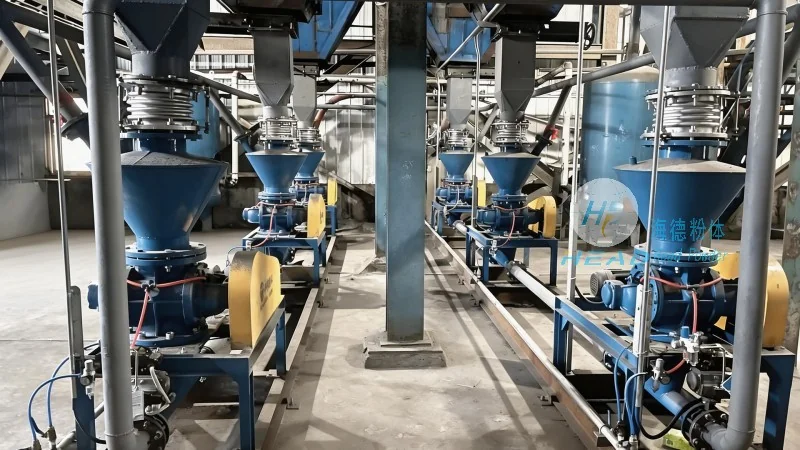
Pumping systems are among the most widely utilized methods for phenolic resin conveyance, especially in applications requiring high pressure and precise flow control. These systems typically employ positive displacement pumps or centrifugal pumps, depending on the resin's viscosity and required flow rate. Positive displacement pumps, such as rotary lobe or gear pumps, are ideal for handling viscous phenolic resins, as they maintain consistent pressure and flow even at low speeds. This method ensures minimal material degradation, making it suitable for applications where resin quality is paramount, like in the manufacturing of high-performance composites or adhesives. Shandong HeadPowder Engineering Co., Ltd. specializes in designing and manufacturing customized pumping solutions tailored to the specific needs of phenolic resin processing plants, ensuring optimal performance and durability.
2. Gravity Flow Conveying
Gravity flow conveying relies on the natural force of gravity to move phenolic resin from one point to another, often using inclined chutes or troughs. This method is cost-effective and straightforward to install, making it suitable for applications with minimal vertical or horizontal distance between the source and destination. However, it is limited by the need for a suitable slope and the risk of material buildup or clogging, particularly with resin that tends to adhere to surfaces. Gravity flow systems are commonly used in smaller-scale operations or for transporting resin in a semi-solid state, where the viscosity allows for controlled flow without excessive pressure. The simplicity of gravity flow makes it an attractive option for facilities with limited budgets or space constraints, though it may not be suitable for high-volume or long-distance conveying tasks.
3. Air-Driven Pneumatic Conveying
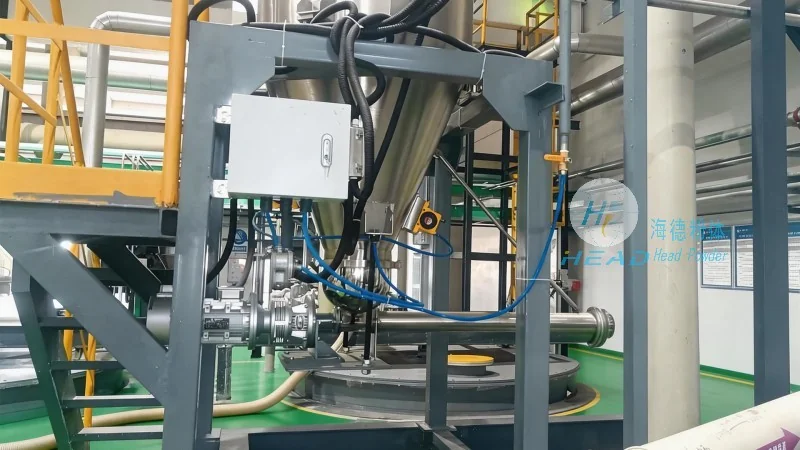
Air-driven pneumatic conveying systems use compressed air to transport phenolic resin particles or pellets through a pipeline. This method is highly flexible and can handle a wide range of resin types, from fine powders to larger pellets. Pneumatic conveying is particularly effective for applications requiring dust-free or contamination-free transport, as the resin is enclosed within the pipeline, preventing exposure to the environment. However, it is sensitive to variations in air pressure and flow rate, which can affect conveying efficiency and potentially cause material degradation if not properly controlled. Pneumatic systems are often integrated with other conveying methods, such as a pre-conveyance pump, to ensure consistent material flow. Shandong HeadPowder Engineering Co., Ltd. offers advanced pneumatic conveying solutions that optimize air usage and minimize energy consumption, making them an efficient choice for phenolic resin handling in various industrial settings.
4. Screw Conveyors for Phenolic Resin
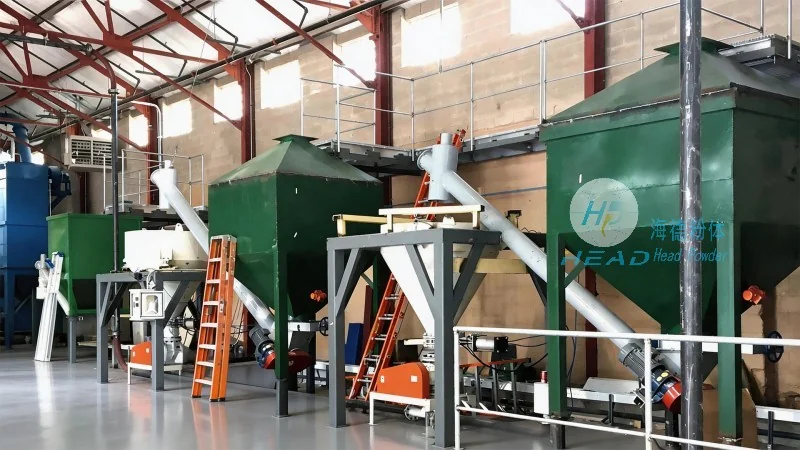
Screw conveyors are another common method for phenolic resin conveyance, utilizing a rotating screw (helix) to move material along a trough or tube. This method is suitable for both solid and semi-solid resin and can be used in horizontal, vertical, or inclined orientations. Screw conveyors provide consistent and controlled material flow, making them ideal for applications where precise dosing or uniform mixing is required. They are also relatively simple to maintain and operate, with minimal moving parts compared to other systems. However, screw conveyors may experience wear and tear due to the abrasive nature of phenolic resin and can be prone to clogging if the resin contains foreign particles or has a high viscosity. Proper material selection and regular maintenance are essential to ensure the longevity and efficiency of screw conveyor systems. Shandong HeadPowder Engineering Co., Ltd. manufactures high-quality screw conveyors designed to withstand the challenges of phenolic resin handling, featuring wear-resistant coatings and adjustable screw speeds to enhance performance.
5. Comparison and Selection Criteria
When selecting a phenolic resin conveying method, several factors must be considered to ensure the best fit for the application. These include the resin's physical properties (viscosity, particle size, moisture content), the required flow rate and pressure, the distance and elevation changes, and the budget constraints. Pumping systems offer the highest control and efficiency for high-viscosity resins, while gravity flow is the most economical for short distances. Pneumatic conveying provides flexibility and dust control, and screw conveyors are versatile for various orientations and material types. The choice often involves a trade-off between cost, efficiency, and operational complexity. Shandong HeadPowder Engineering Co., Ltd. assists clients in evaluating these factors and recommending the most suitable conveying solution, ensuring optimal performance and cost-effectiveness for their phenolic resin processing operations.