
Pneumatic conveying systems have become an indispensable technology in the handling of fine powders, particularly for the dye and pigment industry. Dye powders, known for their fine particle size, low bulk density, and potential for dust explosion, require specialized conveying solutions that ensure safety, efficiency, and product integrity. This article presents a comprehensive overview of pneumatic conveying solutions for various dye powders, covering the key aspects of system design, equipment selection, and engineering considerations. The content is structured to provide detailed insights for professionals seeking reliable dye powder pneumatic conveying manufacturers, dye powder conveying engineering design, and dye powder bulk material conveying systems.
Dye powders are used extensively in textiles, paints, plastics, and printing inks. Their chemical composition and physical properties make them challenging to handle through conventional mechanical conveyors. Pneumatic conveying, which uses air or gas to transport powders through pipelines, offers distinct advantages: enclosed system prevents dust leakage, reduces contamination risk, and allows for flexible routing over long distances. For dye powders, either dilute phase or dense phase conveying can be applied depending on the material's characteristics. Dilute phase is suitable for free-flowing, non-abrasive powders, while dense phase is ideal for fragile or cohesive materials. A professional dye powder pneumatic conveying manufacturer like Haide Powder evaluates the material's particle size distribution, moisture content, and explosibility to recommend the optimal mode.
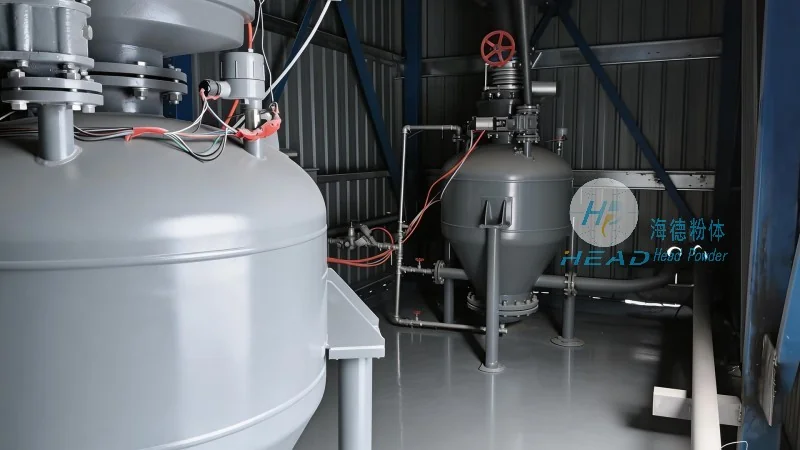
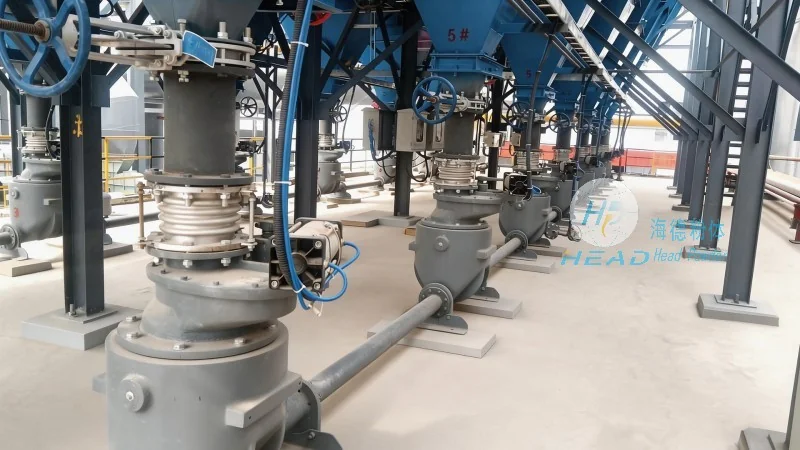
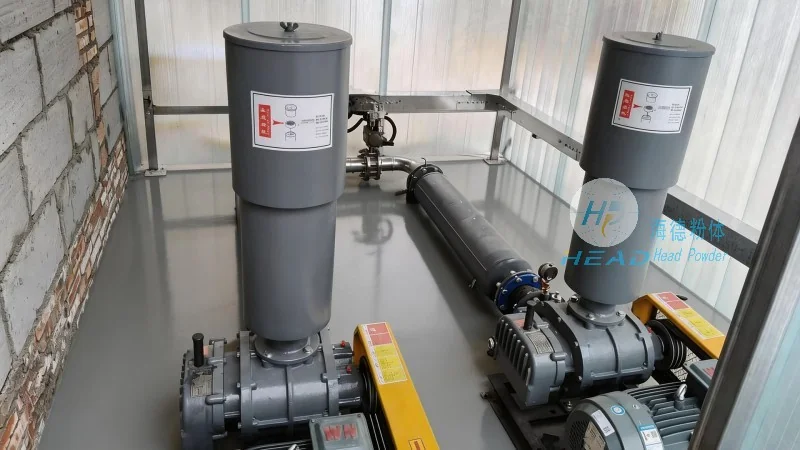
Every dye powder bulk material conveying system consists of several critical components: a feeding device (such as a rotary airlock or screw feeder), a conveying pipeline, a receiving vessel (cyclone or filter receiver), and an air mover (blower, compressor, or vacuum pump). For dye powders, the selection of these components must account for the powder's tendency to agglomerate, its electrostatic charge buildup, and the need for gentle handling to prevent particle breakage. Haide Powder, a leading dye powder pneumatic conveying manufacturer, designs systems with smooth interior surfaces, minimal bends, and proper grounding to mitigate static electricity. Additionally, the conveying velocity is carefully controlled: too high a velocity can cause attrition and pipeline wear, while too low a velocity may lead to blockages. The engineering design phase involves computational fluid dynamics (CFD) simulations to optimize the system's performance.
Dye powder conveying engineering design is a multidisciplinary process that integrates material science, fluid mechanics, and mechanical engineering. The first step is to characterize the dye powder: its bulk density, particle size, angle of repose, abrasiveness, and moisture sensitivity. For example, reactive dyes may be hygroscopic, requiring a closed-loop system with dry air or nitrogen. The conveying distance, capacity, and plant layout also influence the design. Haide Powder's engineering team conducts site assessments to determine the best pipeline routing, avoiding sharp turns and long horizontal runs that could cause settling. The system's pressure drop calculation is critical for sizing the air mover. For fine dye powders, a filter receiver with efficient pulse-jet cleaning is often used to separate the powder from the conveying air. The entire design must comply with safety standards for combustible dust, including explosion venting, spark detection, and suppression systems. Haide Powder provides turnkey solutions from conceptual design to commissioning, ensuring that the dye powder conveying engineering design meets both production requirements and regulatory compliance.
There are two primary types of dye powder bulk material conveying systems: pressure conveying and vacuum conveying. Pressure systems use compressed air to push the powder through the pipeline, ideal for longer distances and multiple discharge points. Vacuum systems use suction to pull the powder from multiple sources to a single destination, often preferred for unloading trucks or railcars. For dye powders, a combination system (pressure-vacuum hybrid) can be employed for maximum flexibility. Each type has its own advantages: pressure systems are more energy-efficient for long distances, while vacuum systems minimize dust emissions at the pickup point. Haide Powder offers customized solutions, including positive pressure dilute phase, negative pressure dilute phase, and dense phase conveying. The dense phase mode is particularly beneficial for fragile dye powders, as it moves the material at low velocity, reducing degradation. The design of the dye powder bulk material conveying system also includes auxiliary equipment such as hoppers, silos, bag dump stations, and automatic bag openers, all integrated into a seamless material handling line.
With years of experience in the powder handling industry, Shandong Haide Powder Engineering Co., Ltd. (abbreviated as Haide Powder) has established itself as a trusted dye powder pneumatic conveying manufacturer. The company is headquartered in Shandong, China, and serves clients globally. Haide Powder's expertise covers the entire spectrum of dye powder conveying engineering design, from basic layout to advanced automation. Their systems are designed for ease of maintenance, low energy consumption, and high reliability. The company uses high-quality materials for pipelines and components, ensuring long service life even when handling abrasive pigments. Haide Powder also provides after-sales support, including installation guidance, commissioning, and troubleshooting. For inquiries about dye powder pneumatic conveying, dye powder conveying engineering design, or dye powder bulk material conveying system, contact Manager Zhang at 15662777102. The team at Haide Powder is ready to assist with your specific project requirements.
Dye powders are often classified as combustible dust, posing explosion hazards if not handled properly. A well-designed dye powder bulk material conveying system must incorporate safety features such as explosion vents, isolation valves, and inert gas blanketing. Haide Powder's engineering design includes risk assessment and hazard analysis, following ATEX, NFPA, or local standards. Additionally, environmental regulations require that dye powder dust emissions be controlled. The conveying system uses sealed pipelines and efficient dust collection equipment to prevent fugitive dust. The filter receiver's bag filters are designed to achieve outlet emissions below 10 mg/Nm³. For water-sensitive dyes, a dehumidifier or dry air generator is integrated into the system. Haide Powder ensures that every dye powder conveying engineering design project meets the highest environmental and safety standards, protecting both personnel and the surrounding community.
Haide Powder has successfully delivered numerous dye powder pneumatic conveying systems across different industries. For instance, a textile dye manufacturer required a system to transfer reactive blue dye powder from a storage silo to multiple mixing tanks. The challenge was the powder's high adhesion and tendency to form clumps. Haide Powder designed a dense phase pressure conveying system with a vibrating feeder and a fluidized bottom silo. The system achieved a throughput of 5 tons per hour with zero blockages. In another case, a pigment producer needed a vacuum conveying system for organic yellow dye powder from a bag dump station to a blender. The system included a pulse-jet dust collector and a weight-loss feeder for precise batching. The customer reported a 30% reduction in labor costs and a significant improvement in workplace cleanliness. These examples demonstrate the effectiveness of Haide Powder's approach to dye powder conveying engineering design and implementation.
Choosing the right partner for your dye powder bulk material conveying system is crucial for long-term operational success. Key factors to consider include the manufacturer's experience with similar materials, their engineering capabilities, and the quality of their components. Haide Powder, as a specialized dye powder pneumatic conveying manufacturer, offers free consultation and material testing to determine the best conveying parameters. They also provide a detailed proposal covering system layout, equipment list, control philosophy, and estimated cost. Prospective clients are encouraged to visit the factory in Shandong, China, to see the manufacturing process and test facilities. For more information or to discuss your project, please contact Manager Zhang at 15662777102. Haide Powder's team is dedicated to delivering innovative and reliable solutions for all your dye powder conveying needs.
In summary, pneumatic conveying is the preferred method for handling dye powders due to its safety, efficiency, and flexibility. Whether you require a simple dilute phase system or a complex dense phase installation, a professional dye powder conveying engineering design is essential. Haide Powder, with its comprehensive product range and deep industry knowledge, stands out as a reliable dye powder pneumatic conveying manufacturer. From initial consultation to final commissioning, they provide end-to-end solutions for dye powder bulk material conveying systems. Remember to contact Manager Zhang at 15662777102 for your next project. With the right system, you can optimize your production process, reduce waste, and ensure the highest product quality.
Shandong Headpowder Engineering Co., Ltd.
156-6277-7102(Manager Zhang)
0531-83386006
Jinan City, Shandong Province, China 
telephone
WeChatconsult
top