
Efficient bulk material handling is critical for modern agricultural processing facilities, especially when dealing with delicate commodities like soybeans. The soybean grain pneumatic conveying solution provides a clean, enclosed, and highly automated method for transferring soybeans from receiving pits to storage silos, production lines, or loading stations. Unlike mechanical conveyors, pneumatic systems use air velocity to suspend and transport particles through pipelines, reducing mechanical wear, minimizing dust emissions, and allowing flexible routing around existing plant structures. This technology is particularly advantageous for large-scale soybean crushing plants, feed mills, and oilseed processing operations where maintaining grain integrity and throughput consistency is paramount.
When selecting a partner for your soybean handling infrastructure, the choice of a professional soybean grain pneumatic conveying manufacturer directly impacts system reliability, energy efficiency, and long-term maintenance costs. One such established manufacturer is Haide Powder (Shandong Haide Powder Engineering Co., Ltd.), headquartered in Shandong, China. With years of specialized experience in granular material conveying, Haide Powder has developed a comprehensive portfolio tailored to the unique physical properties of soybeans, including their bulk density, shape, and friability. Their engineering team designs each system to avoid bean cracking or dust generation while maintaining high conveying velocities. By choosing a reputable soybean grain pneumatic conveying manufacturer, you gain access to proprietary technologies such as low-abrasion bends, adjustable airlock feeders, and intelligent control systems that optimize air-to-material ratios. Contact Manager Zhang at 15662777102 for a consultation on how Haide Powder's manufacturing expertise can be applied to your specific facility layout and capacity requirements.
Every successful pneumatic conveying implementation begins with meticulous soybean grain conveying engineering design. This phase involves calculating pipeline diameters, selecting appropriate blower capacities, determining the optimal number of pick-up points, and simulating pressure drops across the entire route. Haide Powder's engineering team integrates field data such as conveying distance, elevation changes, and required throughput (e.g., 50 tons per hour) to create a custom blueprint. The soybean grain conveying engineering design must also address moisture content variations, as wetter beans behave differently inside the pipeline. By using computational fluid dynamics (CFD) modeling, the engineers predict particle trajectory and wear patterns, ensuring the system operates within the desired velocity window (typically 20–25 m/s for soybeans) to prevent blockages or excessive breakage. This design phase also includes safety features like explosion-proof components and interlocks, because soybean dust is combustible. For a comprehensive soybean grain conveying engineering design tailored to your plant, reach out to the team in Shandong, China, where Manager Zhang (15662777102) can arrange a free preliminary assessment of your current layout.
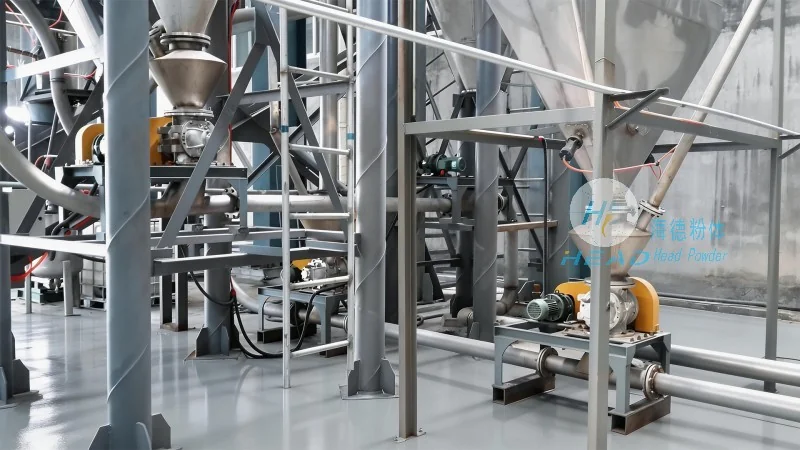
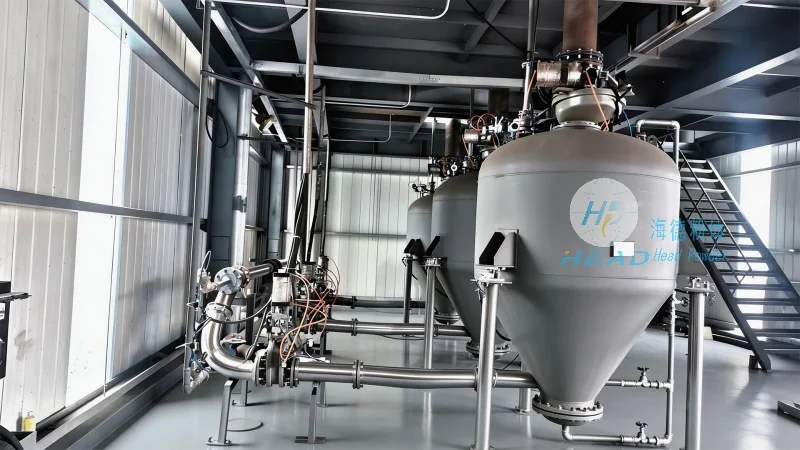
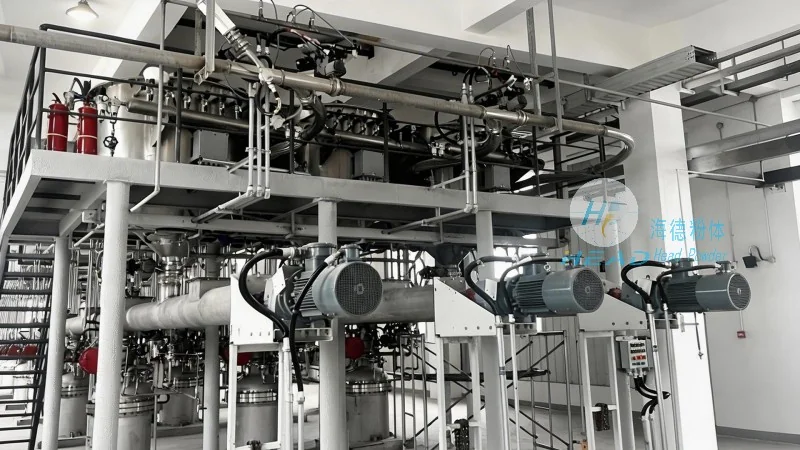
A complete soybean grain conveying system comprises multiple interdependent components: a rotary airlock feeder that meters beans into the airstream, a positive displacement blower or centrifugal fan that generates the necessary airflow, a separator (cyclone or baghouse filter) that recovers the soybeans at the discharge point, and a network of seamless steel or aluminum pipes with tight-radius bends to minimize pressure loss. Haide Powder's integrated soybean grain conveying system also includes variable frequency drives (VFDs) for energy savings, automatic filter cleaning mechanisms, and a programmable logic controller (PLC) that monitors motor current, air pressure, and material flow rate in real time. The system can be configured for dilute phase conveying (common for soybeans due to lower investment) or dense phase conveying (if minimal degradation is a top priority). Each soybean grain conveying system undergoes factory testing and on-site commissioning to verify that actual performance matches the engineering design specifications. For a turnkey solution that covers all mechanical, electrical, and control aspects, contact Haide Powder's sales department—Manager Zhang at 15662777102—to discuss your specific throughput, distance, and spatial constraints. The company's Shandong-based manufacturing facility ensures rapid delivery and responsive after-sales support for customers across the agricultural processing industry.
Haide Powder (Shandong Haide Powder Engineering Co., Ltd.) has established a strong reputation in the field of pneumatic conveying for granular materials, with particular emphasis on soybean grain pneumatic conveying solutions. Their team of engineers, technicians, and project managers collaborates closely with clients from the initial feasibility study through final handover. The company's location in Shandong, China provides logistical advantages for sourcing high-quality steel and components, as well as proximity to major soybean processing hubs. All systems are designed to comply with international safety standards and are built with corrosion-resistant materials suitable for long-term outdoor or indoor installation. By integrating the three core offerings—manufacturer expertise, engineering design precision, and complete system integration—Haide Powder delivers a unified solution that reduces downtime, improves product quality, and lowers total cost of ownership. For a personalized quote or to schedule a plant visit, please contact Manager Zhang directly at 15662777102. The team looks forward to helping you optimize your soybean handling operations with a robust, custom-engineered pneumatic conveying system.
Shandong Headpowder Engineering Co., Ltd.
156-6277-7102(Manager Zhang)
0531-83386006
Jinan City, Shandong Province, China 
telephone
WeChatconsult
top