

Long-Distance Pneumatic Conveying System for Ceramic Particles
Long-Distance Pneumatic Conveying System for Ceramic Particles is a specialized industrial solution designed to efficiently transport ceramic particles over extended distances. This system leverages advanced pneumatic technology to ensure reliable, low-maintenance, and high-efficiency material handling, making it an essential component in modern ceramic manufacturing and processing facilities. The system is engineered to handle various types of ceramic materials, including fine powders, granules, and irregularly shaped particles, while maintaining minimal product degradation and contamination. By integrating state-of-the-art components and robust engineering, the system delivers consistent performance and adaptability to diverse operational requirements.
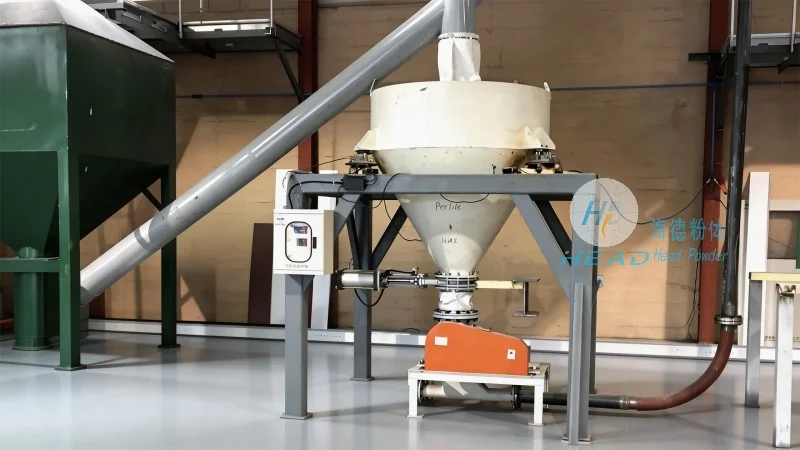
HeadPowder, a leading provider in the field, has developed this system with a focus on innovation and customer-centric solutions. As a subsidiary of Shandong HeadPowder Engineering Co., Ltd., based in Shandong, China, the company specializes in customizing and manufacturing pneumatic conveying systems tailored to the unique needs of ceramic industries. The system is built to meet stringent industry standards, ensuring compliance with safety, environmental, and operational guidelines. With decades of experience in material handling technology, HeadPowder offers comprehensive support, from system design and installation to ongoing maintenance and technical assistance.

System Design and Core Components
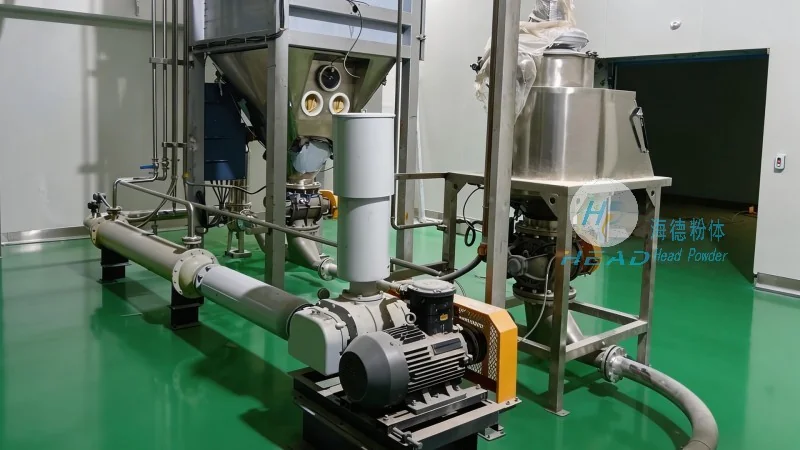
The Long-Distance Pneumatic Conveying System for Ceramic Particles incorporates several key components that work in tandem to achieve optimal performance. The system typically includes a material feed hopper, a rotary airlock valve, a positive displacement blower or high-pressure air compressor, a conveying pipeline network, and a receiving hopper or storage silo. The feed hopper is designed to accommodate bulk ceramic materials, ensuring uniform feeding and preventing material bridging or clogging. The rotary airlock valve acts as a critical isolation device, controlling the flow of particles into the pipeline while maintaining airtight sealing to prevent air leakage and product loss. The positive displacement blower or high-pressure compressor generates the necessary airflow and pressure to transport the ceramic particles through the pipeline. The conveying pipeline is constructed from durable materials, such as stainless steel or specialized plastic, to withstand the abrasive nature of ceramic particles and resist corrosion. The receiving hopper collects the conveyed material, allowing for smooth transfer to downstream processing equipment or storage.
Advantages of the Pneumatic Conveying System
One of the primary advantages of the Long-Distance Pneumatic Conveying System for Ceramic Particles is its ability to transport materials over long distances with minimal energy consumption and operational complexity. Unlike traditional mechanical conveying methods, such as belt conveyors or screw conveyors, pneumatic systems eliminate the need for multiple transfer points and reduce the risk of material degradation due to friction or impact. The system also offers high flexibility, allowing for changes in material flow direction or distance without significant modifications to the infrastructure. Additionally, the system provides excellent control over material flow rates, enabling precise dosing and batching for production processes. The low maintenance requirements and long service life of the components contribute to cost savings and increased operational efficiency. Furthermore, the system is designed to minimize dust generation and environmental impact, making it a sustainable choice for modern ceramic manufacturing.
Application Scenarios and Industrial Use Cases
The Long-Distance Pneumatic Conveying System for Ceramic Particles is widely used in various stages of ceramic production and processing. In raw material handling, the system efficiently transports raw ceramic powders from storage silos to mixing and blending equipment. During the production process, it conveys intermediate products, such as slurry or pre-fired ceramic bodies, between different processing stages. In finishing operations, the system transports finished ceramic products, such as tiles or sanitaryware, from the production line to packaging or storage areas. The system is also applicable in quality control and testing, where it transports samples of ceramic materials to laboratory analysis equipment. Its versatility makes it suitable for both small-scale and large-scale ceramic manufacturing facilities, accommodating varying production capacities and material volumes.