

What is a Rice Husk Ash Material Pneumatic Conveying Line? What Are Its Design Principles?
Understanding the rice husk ash material pneumatic conveying line and its design principles is crucial for industries dealing with agricultural byproducts and industrial waste management. This system is engineered to efficiently transport rice husk ash, a valuable resource derived from rice processing, through an air-driven mechanism. The following article provides a detailed overview of this technology, its operational principles, and the engineering considerations that define its effectiveness.
About the Company: Shandong HeadPowder Engineering Co., Ltd.
HeadPowder, a leading provider in the field of material handling and processing solutions, specializes in designing and manufacturing advanced pneumatic conveying systems. With a strong focus on innovation and customer-centric engineering, the company has established itself as a trusted partner for industries seeking reliable and efficient solutions for handling bulk materials like rice husk ash. HeadPowder's expertise lies in integrating cutting-edge technology with practical applications to meet the diverse needs of clients across various sectors.
What is a Rice Husk Ash Material Pneumatic Conveying Line?
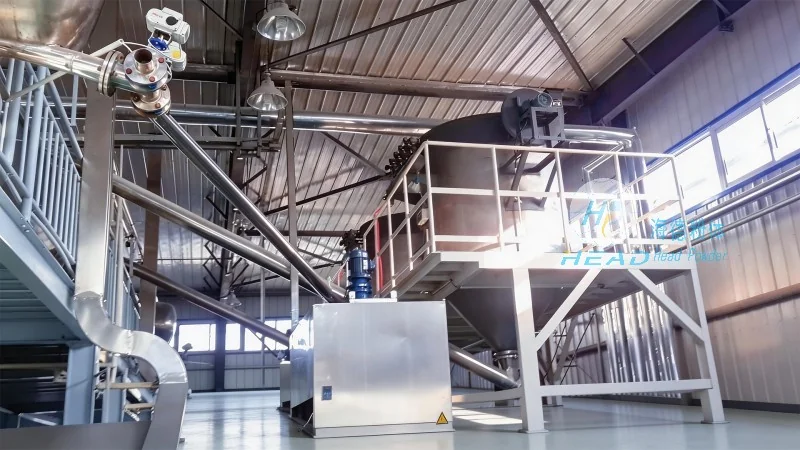
A rice husk ash material pneumatic conveying line is a specialized system designed to transport rice husk ash—a byproduct of rice milling—through a network of pipes using compressed air. This technology offers a dust-free, efficient, and low-maintenance method for moving bulk materials over short to medium distances. The system typically includes key components such as a feeder, air compressor, conveying pipes, separation equipment, and a control unit, all working in tandem to ensure smooth and continuous material transport. The primary goal of this line is to handle the unique characteristics of rice husk ash, which includes its lightweight, abrasive, and potentially fine particle size, while minimizing environmental impact and optimizing operational efficiency.
Design Principles of the Pneumatic Conveying Line
The design of a rice husk ash material pneumatic conveying line is based on several fundamental principles aimed at maximizing performance and reliability. First, the system must address the physical properties of rice husk ash, such as its density, particle size distribution, and moisture content. Engineers at HeadPowder carefully analyze these parameters to select appropriate equipment, including the type of feeder (e.g., rotary valve or screw feeder) and the air pressure required for effective transport. The conveying line’s layout is also critical, as it must minimize pressure drops and ensure uniform flow of material through the pipes. This involves selecting the right pipe diameter, bends, and fittings to maintain consistent air velocity and prevent blockages or material degradation.
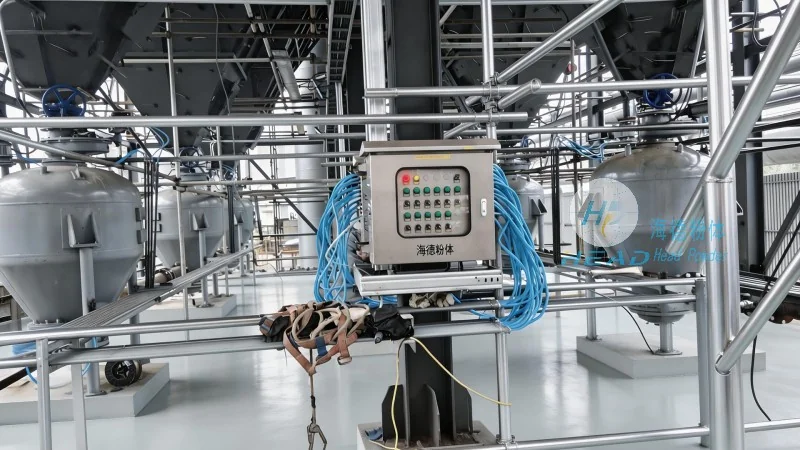
Second, the separation and collection components are integral to the design. After the material is conveyed, it needs to be separated from the air stream and collected in a storage or processing unit. This is achieved through cyclone separators or bag filters, which are designed to handle the fine particles of rice husk ash. The control system plays a vital role in regulating the air flow, pressure, and material feed rate, ensuring that the system operates within optimal parameters. Advanced control technologies, such as PLC (Programmable Logic Controller) systems, are often integrated to monitor and adjust the process in real-time, enhancing the line’s stability and efficiency.
Key Components and Their Functions
The pneumatic conveying line for rice husk ash consists of several key components, each with a specific function that contributes to the overall system performance. The feeder is responsible for delivering the material to the system at a controlled rate, preventing overloading or underfeeding. Common types include rotary valves, which are ideal for handling bulk materials with varying particle sizes, and screw feeders, which provide a more consistent flow for finer particles. The air compressor generates the necessary pressure to move the material through the pipes, and its capacity is determined based on the system’s length, pipe diameter, and material characteristics.
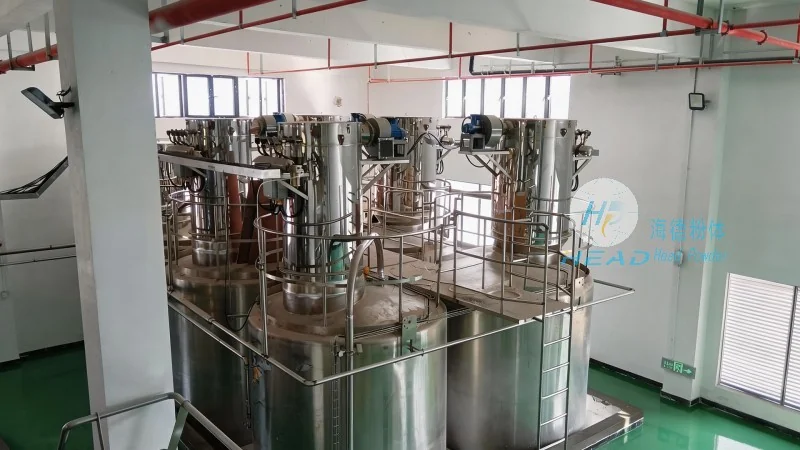
The conveying pipes are typically made of corrosion-resistant materials like stainless steel or PVC to withstand the abrasive nature of rice husk ash and prevent degradation over time. The system may include various fittings, such as elbows and tees, to direct the material and air flow. Separation equipment, such as cyclone separators, uses centrifugal force to separate the material from the air stream, while the collected ash is then directed to a storage silo or processing unit. The control unit, often equipped with sensors and a PLC system, monitors parameters like pressure, flow rate, and temperature, and adjusts the system as needed to maintain optimal operation.
Advantages of Using a Pneumatic Conveying Line for Rice Husk Ash
Implementing a pneumatic conveying line for rice husk ash offers several advantages over traditional methods like belt conveyors or manual handling. First, it provides a dust-free environment, which is crucial for maintaining workplace safety and compliance with environmental regulations. The enclosed system prevents the release of fine particles into the air, reducing the risk of respiratory issues and contamination. Second, the system is highly efficient, with the ability to transport material over longer distances with minimal energy consumption compared to other methods. This efficiency translates into lower operational costs and increased productivity.
Third, the pneumatic conveying line is low-maintenance, as it has fewer moving parts compared to mechanical systems. The absence of belts, chains, or rollers reduces the need for frequent repairs and replacements, resulting in lower maintenance costs over the system’s lifespan. Additionally, the system is flexible and can be easily adjusted to handle varying material loads or process changes, making it suitable for dynamic industrial environments. The use of compressed air also allows for the integration of other processing steps, such as drying or grinding, directly within the conveying line, streamlining the overall production process.
Application Scenarios and Industrial Use
Rice husk ash, also known as rice husk char or rice husk ash, is a valuable byproduct of rice processing that can be used in various applications, including as a fuel source, in construction materials, or as a soil amendment. The pneumatic conveying line is particularly useful in industries that process rice husk ash for these applications. For example, in a power plant or thermal energy facility, the ash is used as a fuel, and the conveying line ensures that it is transported safely and efficiently from the storage area to the boiler. In construction, the ash can be used as a raw material for cement or bricks, and the system helps in moving it to the production line. The line is also beneficial in agricultural settings, where the ash is used as a fertilizer or soil conditioner, ensuring that it is handled without contamination or loss.
HeadPowder’s pneumatic conveying lines are designed to meet the specific requirements of these applications, providing reliable and efficient transport of rice husk ash. The company’s engineering team works closely with clients to understand their process needs and tailor the system to their unique requirements. By leveraging advanced technology and practical design, HeadPowder ensures that the conveying line not only meets but exceeds industry standards for performance, safety, and sustainability.
Conclusion
In conclusion, a rice husk ash material pneumatic conveying line is a sophisticated and efficient system that addresses the challenges of handling this valuable agricultural byproduct. The design principles, components, and operational advantages of such a system make it an ideal solution for industries seeking to optimize their material handling processes. With its ability to provide a dust-free, low-maintenance, and energy-efficient method of transport, the pneumatic conveying line is a critical component in the processing and utilization of rice husk ash. HeadPowder, as a leading provider in this field, continues to innovate and deliver high-quality solutions that meet the evolving needs of its clients, ensuring that rice husk ash is handled responsibly and effectively for years to come.