

Principle and Working Scene Characteristics of Boron Nitride Material Pneumatic Conveying Equipment
Boron nitride (BN) is a versatile ceramic material widely used in high-tech industries due to its excellent thermal stability, electrical insulation properties, and chemical inertness. The efficient handling and transportation of BN powders and granules are critical for maintaining product quality and operational efficiency in manufacturing processes. Pneumatic conveying systems offer a non-contact, dust-free method to transport these materials, making them ideal for applications where contamination and material degradation must be minimized.
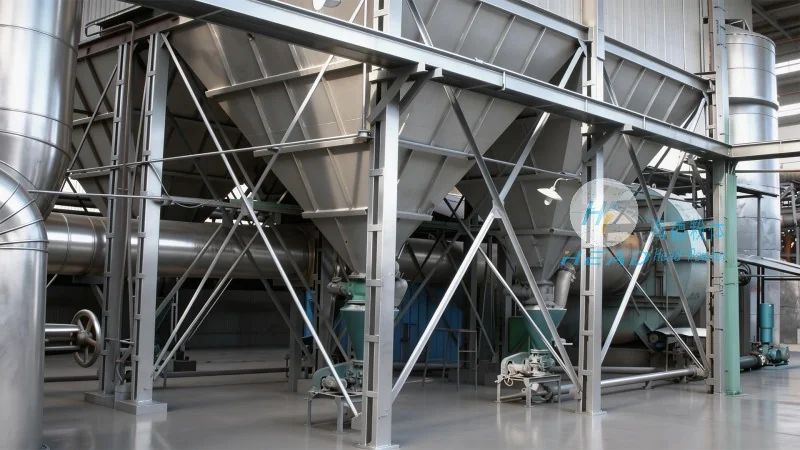
Company Overview: HeadPowder Engineering
HeadPowder Engineering, a leading provider of material handling solutions, specializes in designing and manufacturing advanced pneumatic conveying equipment tailored to the unique requirements of boron nitride and other high-purity materials. With a strong commitment to innovation and customer satisfaction, the company has established itself as a trusted partner in the powder processing industry. HeadPowder Engineering's facilities are located in Shandong, China, where state-of-the-art technology and rigorous quality control ensure the delivery of reliable and efficient conveying systems.
Principle of Pneumatic Conveying for Boron Nitride Materials
The core principle of pneumatic conveying involves the use of a gas stream (typically air or a controlled mixture) to transport solid particles through a pipeline. In the case of boron nitride materials, the system operates by creating a pressure differential that propels the material from the source to the destination. There are two primary types of pneumatic conveying: pressure and vacuum systems. Pressure systems use compressed air to push the material, while vacuum systems use a vacuum to pull the material. For boron nitride, which is often sensitive to moisture and contamination, pressure systems are commonly preferred as they minimize exposure to the environment.
Working Scene Characteristics and Applications
The working scene characteristics of boron nitride pneumatic conveying equipment are tailored to the specific demands of industrial applications. These systems are designed to handle fine powders and granules with high precision, ensuring minimal loss and consistent flow rates. Common working scenes include:
- High-Purity Manufacturing Facilities: In semiconductor and electronics manufacturing, where boron nitride is used as a dielectric material, the conveying system must maintain a clean environment to prevent contamination of sensitive components.
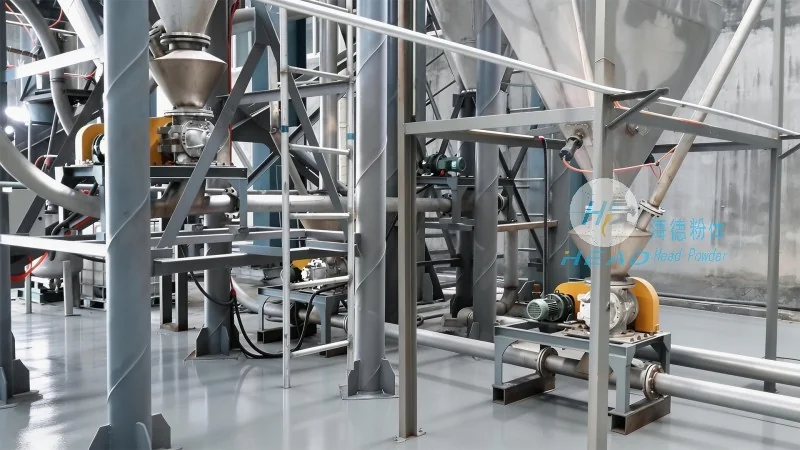
- Thermal Processing Plants: In industries such as aerospace and automotive, where boron nitride is used as a thermal barrier coating, the system must handle large volumes of material efficiently while maintaining temperature control.
- Research and Development Labs: In academic and industrial R&D settings, where small-scale experiments require precise material handling, the equipment provides flexibility and accuracy.
Technical Advantages and Operational Considerations
The adoption of pneumatic conveying for boron nitride materials offers several technical advantages. These include:
- Dust-Free Operation: Eliminates the risk of airborne dust, improving workplace safety and product quality.
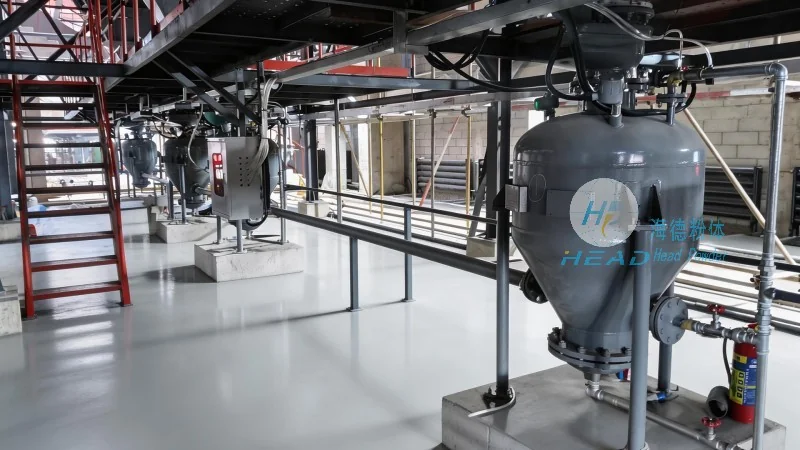
- Non-Contact Handling: Prevents material contamination and degradation, preserving the purity of boron nitride.
- Space Efficiency: Compact design allows for installation in limited spaces, making it suitable for modern manufacturing environments.
- Versatility: Can handle a wide range of particle sizes and flow rates, adapting to different production needs.
Operational considerations for these systems include maintaining proper air pressure, ensuring adequate filtration to prevent clogging, and regular maintenance to ensure optimal performance. HeadPowder Engineering's systems are engineered with these factors in mind, providing reliable operation and long service life.