HeadPowder, a leading manufacturer based in Shandong, China, specializes in the design and production of advanced pneumatic conveying systems tailored for handling nanopowders. This article provides an overview of the equipment used in such systems and explains the fundamental structural principles that enable efficient material transport.
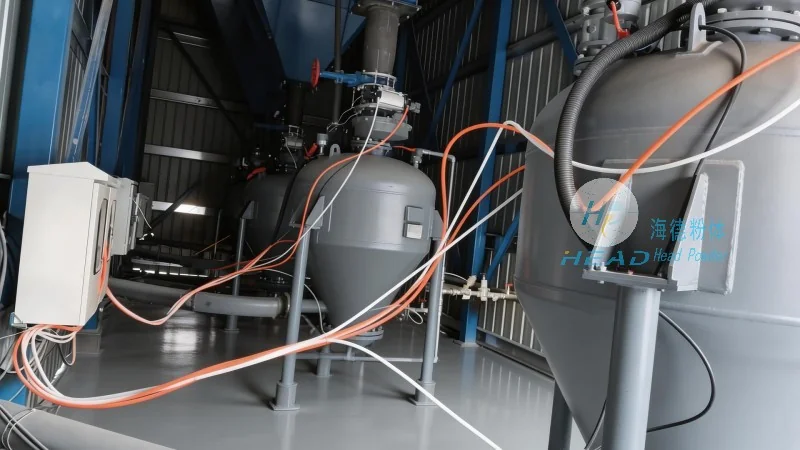
The core components of a nanopowder pneumatic conveying system typically include a hopper for material storage, a feeding device to control the flow rate, a conveying pipeline, a pressure vessel or receiver for product collection, and a dust collection system. Each component plays a critical role in ensuring the system operates safely and effectively.
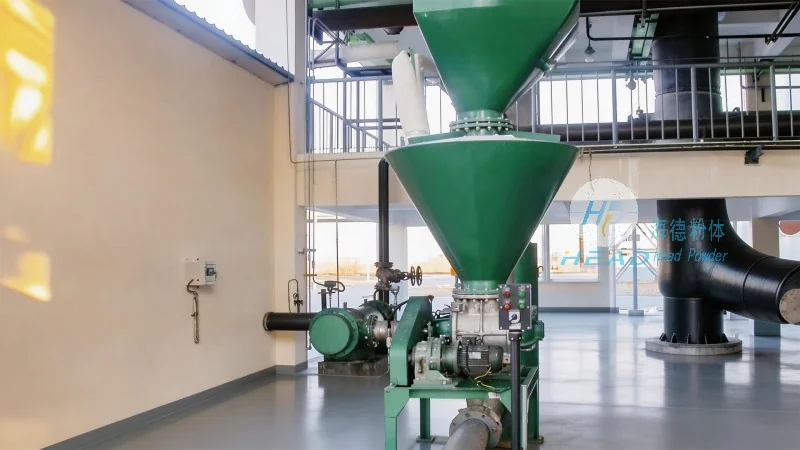
For nanopowders, which are characterized by their fine particle size and high surface area, the hopper is often equipped with a special design to prevent agglomeration and ensure uniform feeding. The feeding device, such as a rotary valve or a vibratory feeder, is crucial for maintaining a consistent flow rate, as fluctuations can lead to system instability or blockages in the pipeline.
The conveying pipeline is usually made of materials like stainless steel or polyethylene to resist corrosion and prevent contamination of the nanopowder. The choice of pipeline material is essential, as nanopowders can be sensitive to moisture or chemical reactions with certain metals. Additionally, the pipeline may include features like bends and elbows that are designed to minimize pressure loss and maintain the integrity of the powder stream.
The pressure vessel or receiver is where the conveyed nanopowder is collected. It is typically equipped with a dust filter or a baghouse to ensure that any fine particles are captured before the air is released, preventing environmental contamination and maintaining product purity. The receiver may also include a discharge valve to control the release of the material to downstream processes.
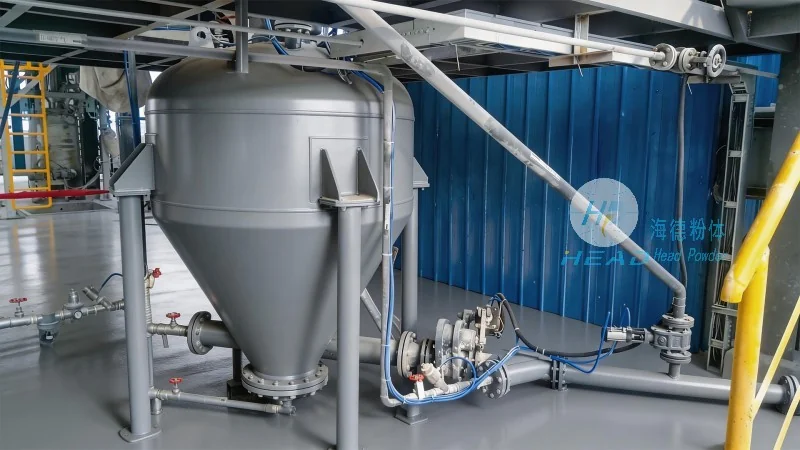
The dust collection system, often integrated with the receiver, uses filters or cyclones to separate the air from the powder. This system is vital for maintaining air quality and complying with environmental regulations. For nanopowders, which can be hazardous if inhaled, the dust collection system must be highly efficient to prevent any particles from escaping into the workplace environment.
The pneumatic conveying process for nanopowders operates on the principle of transporting material using a gas stream, typically air or a mixture of air and other gases. The system can be categorized into two main types: dilute-phase and dense-phase conveying, each with distinct characteristics and applications.
In dilute-phase conveying, the powder is suspended in the gas stream as a fine mist, similar to a cloud. This method is suitable for short-distance transport and low to medium flow rates. The pressure drop across the pipeline is relatively low, making it energy-efficient for certain applications. However, dilute-phase systems may require larger pipelines and more powerful air compressors to maintain the suspension of the fine particles.
Dense-phase conveying, on the other hand, involves transporting the powder in a more compact form, where the particles are closely packed together. This method is ideal for longer distances and higher flow rates, as it reduces the risk of particle degradation and blockages. Dense-phase systems typically use higher air pressures and may include a pressure booster to maintain the material's density within the pipeline.
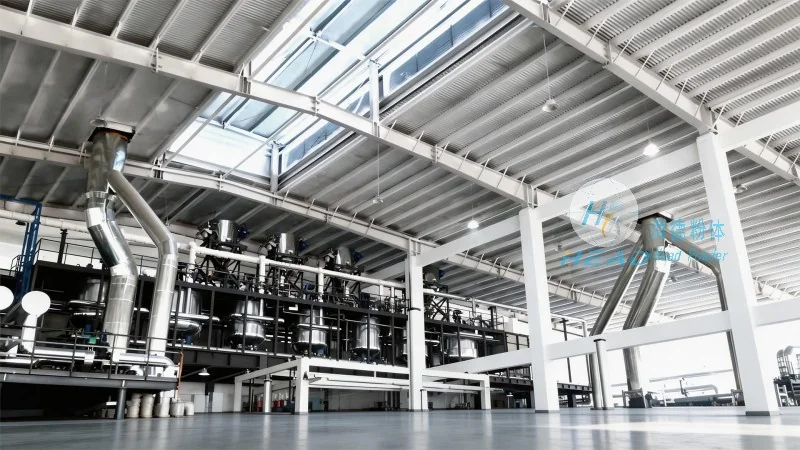
The operation of a pneumatic conveying system begins with the material being fed from the hopper into the pipeline. The feeding device ensures a steady flow, and the air is introduced at the inlet of the pipeline. The gas stream then carries the nanopowder particles through the pipeline to the receiver. The pressure difference between the inlet and outlet of the pipeline drives the material's movement. At the receiver, the air is separated from the powder, and the collected material is discharged for further processing.
Key factors that influence the efficiency of the pneumatic conveying system include the particle size distribution of the nanopowder, the air velocity, and the pipeline diameter. For nanopowders with very fine particles (e.g., below 10 microns), higher air velocities may be required to prevent settling and maintain suspension. Conversely, larger particles may settle more quickly, requiring adjustments to the system's design to ensure smooth transport.
Compared to traditional mechanical conveying methods, such as screw conveyors or belt conveyors, pneumatic conveying systems offer several advantages when handling nanopowders. One of the primary benefits is the ability to transport materials in a closed system, which minimizes exposure to the environment and prevents contamination from external sources. This is particularly important for nanopowders, which are often sensitive to moisture, oxygen, or other gases.
Another advantage is the flexibility of the system. Pneumatic conveying systems can be easily reconfigured to handle different materials or to adjust the flow rate, making them suitable for a wide range of applications. The system can also be integrated with other processes, such as mixing or drying, to create a comprehensive material handling solution.
Efficiency is another key benefit. Pneumatic conveying systems can transport materials over long distances with minimal energy consumption, especially when using dense-phase conveying. The absence of moving parts in the pipeline (except for the feeding device) reduces maintenance requirements and increases the system's reliability. Additionally, the system can operate continuously without the need for frequent stops or adjustments, improving overall productivity.
From a safety perspective, pneumatic conveying systems are generally safer than mechanical systems for handling nanopowders. The closed system prevents dust explosions and reduces the risk of particle inhalation by workers. The use of filtered air in the dust collection system further enhances safety by capturing any fine particles before they are released into the workplace.
Nanopowder pneumatic conveying systems are widely used in various industries where fine powders are processed. Some common applications include the pharmaceutical industry, where nanopowders are used in drug formulations and require strict contamination control. The food industry also utilizes these systems for handling food-grade powders, such as spices or flavorings, to maintain product quality and safety.
In the chemical industry, pneumatic conveying is used to transport reactive nanopowders, such as catalysts or pigments, to prevent premature reactions or contamination. The electronics industry benefits from these systems when handling materials for semiconductor manufacturing, where particle purity is critical for device performance.
Other applications include the cosmetics industry, where nanopowders are used in skincare products, and the coatings industry, where pigments are conveyed to mixing equipment. In each of these applications, the ability to transport nanopowders efficiently and safely is essential for maintaining product quality and meeting regulatory requirements.

 Shandong Headpowder Engineering Co., Ltd.
 156-6277-7102(Manager Zhang)
  0531-83386006
  Jinan City, Shandong Province, China
telephone
WeChatconsult
top