

Flake Graphite Powder Pneumatic Conveying: Working Principles and Classification Applications
Flake graphite powder, a form of natural graphite with distinct flaky structures, is widely used in various industrial applications due to its excellent lubricating, conductive, and thermal properties. The pneumatic conveying of such powders is a critical process in material handling, enabling efficient transport from source to destination. This article provides an overview of the working principles and classification of pneumatic conveying systems for flake graphite powder, along with practical applications.
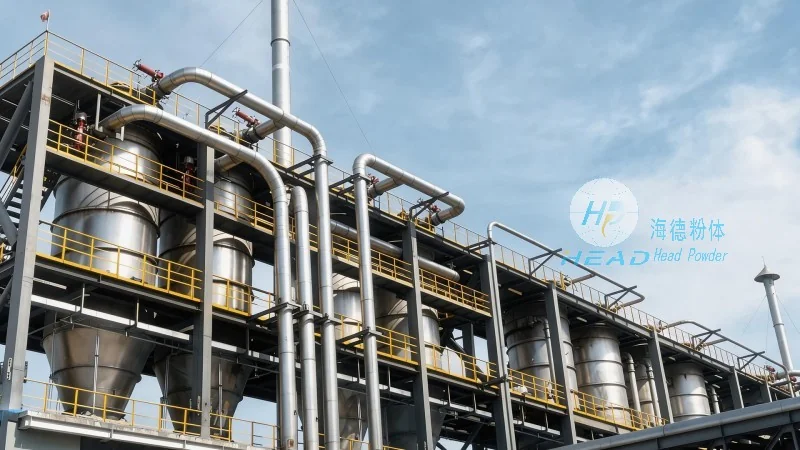
Working Principles of Pneumatic Conveying Systems
Pneumatic conveying systems utilize air or gas as the conveying medium to transport particulate materials like flake graphite powder. The core principle involves creating a pressure differential between the conveying line and the ambient environment. There are two primary types of pneumatic conveying based on the pressure differential: positive pressure and negative pressure systems.
In positive pressure systems, air is supplied under pressure at the material inlet, pushing the powder through the pipeline. This method is suitable for long-distance and high-capacity transport. Conversely, negative pressure systems create a vacuum at the material outlet, drawing the powder into the pipeline. These systems are often used for shorter distances and in applications where dust control is a priority.
The process typically involves several key components: a material feeder to introduce the powder into the system, a conveying line (often made of stainless steel or other corrosion-resistant materials to handle graphite's chemical properties), a gas source (such as a blower or compressor), and a receiver to collect the material at the destination. The selection of components depends on factors like the powder's properties (e.g., particle size, moisture content), the required conveying distance, and the desired flow rate.
Classification of Pneumatic Conveying Systems
Pneumatic conveying systems for flake graphite powder can be classified based on several criteria, including pressure, system design, and application. The most common classifications are:
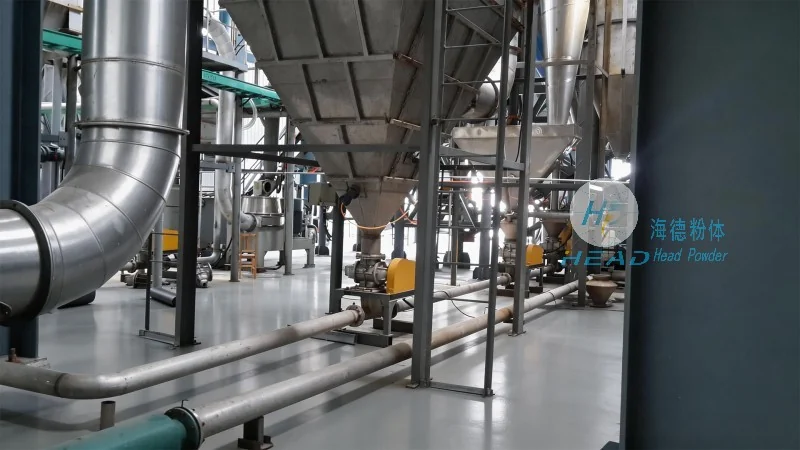
1. Positive Pressure Conveying - As mentioned, this system operates by pressurizing the conveying line. It is further divided into dense-phase and dilute-phase systems. Dense-phase conveying uses higher air velocities and lower material concentrations to minimize particle segregation and improve flow uniformity. Dilute-phase conveying, on the other hand, uses lower air velocities and higher material concentrations, suitable for shorter distances and less sensitive materials.
2. Negative Pressure (Vacuum) Conveying - This system creates a vacuum at the material outlet, drawing the powder into the pipeline. It is often preferred for applications requiring minimal dust emission and for handling materials that are sensitive to pressure changes.
3. Hybrid Systems - Some applications may combine elements of both positive and negative pressure systems. For example, a system might use positive pressure at the start of the line and negative pressure at the end to optimize energy efficiency and material handling.
Applications of Flake Graphite Powder Pneumatic Conveying
The efficient transport of flake graphite powder via pneumatic conveying is essential in several industries. Key applications include:
1. Metallurgical and Foundry Industry - Flake graphite is used as a refractory material and a mold release agent in metal casting processes. Pneumatic conveying ensures consistent supply of graphite powder to foundries, improving the quality and efficiency of casting operations.
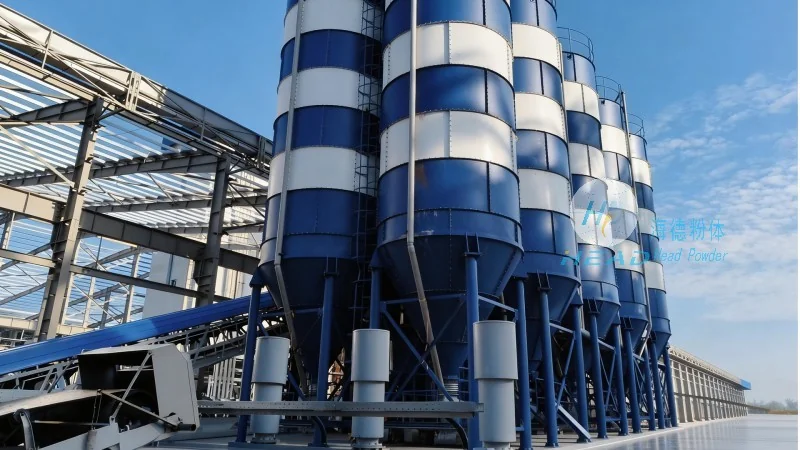
2. Battery Manufacturing - In lithium-ion battery production, flake graphite is a critical anode material. The precise and clean transport of graphite powder via pneumatic systems is vital to maintain the purity of the material, which directly impacts battery performance and lifespan.
3. Lubricant and Coating Industries - Flake graphite is used in the formulation of lubricants and coatings due to its lubricating properties. Pneumatic conveying allows for the uniform mixing of graphite with other components, ensuring the final product has consistent performance characteristics.
4. Chemical and Pharmaceutical Sectors - In some chemical processes, flake graphite is used as a catalyst or a filler. The controlled transport of graphite powder via pneumatic systems helps maintain product quality and safety in these sensitive applications.
About Shandong HeadPowder Engineering Co., Ltd.
Shandong HeadPowder Engineering Co., Ltd., operating under the brand name headpowder, specializes in the engineering and manufacturing of material handling systems, including pneumatic conveying solutions for various powders. With a focus on quality and innovation, the company provides customized solutions tailored to the specific needs of clients in the graphite and related industries. Headpowder's expertise in material flow technology ensures reliable and efficient transport of flake graphite powder, supporting the operational efficiency of its clients.