

Working Principle and Classification Application of Nanoparticle Calcium Carbonate Pneumatic Conveyi
HeadPowder, a leading manufacturer based in Shandong, China, specializes in the production and application of nanoparticle calcium carbonate. This article provides an in-depth exploration of the working principles and various classification applications of pneumatic conveying systems specifically designed for this material. Understanding the mechanics and practical implementations of such systems is crucial for optimizing material handling processes in industrial settings.
Working Principle of Pneumatic Conveying for Nanoparticle Calcium Carbonate
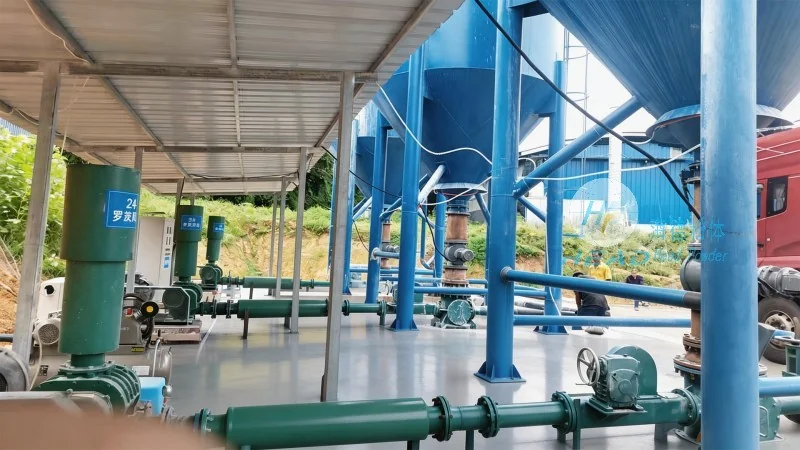
The core principle of pneumatic conveying involves transporting solid particles, such as nanoparticle calcium carbonate, through a pipeline using a gas stream. In this system, the material is introduced into a hopper or feeder, where it is then drawn into a pipeline by the moving air or gas. The gas flow creates a pressure differential that propels the particles forward. For nanoparticle calcium carbonate, which is typically fine and lightweight, specialized equipment is required to ensure efficient and reliable transport. The system often includes components like a rotary valve, a venturi or eductor, and a receiver or silo. The rotary valve controls the flow of the material into the pipeline, while the venturi or eductor generates the necessary airflow to move the particles. The receiver collects the material at the end of the conveying line, allowing for easy discharge and storage.

Classification of Pneumatic Conveying Systems for Nanoparticle Calcium Carbonate
Pneumatic conveying systems for nanoparticle calcium carbonate can be classified into several types based on the pressure and flow characteristics. The primary classifications include:
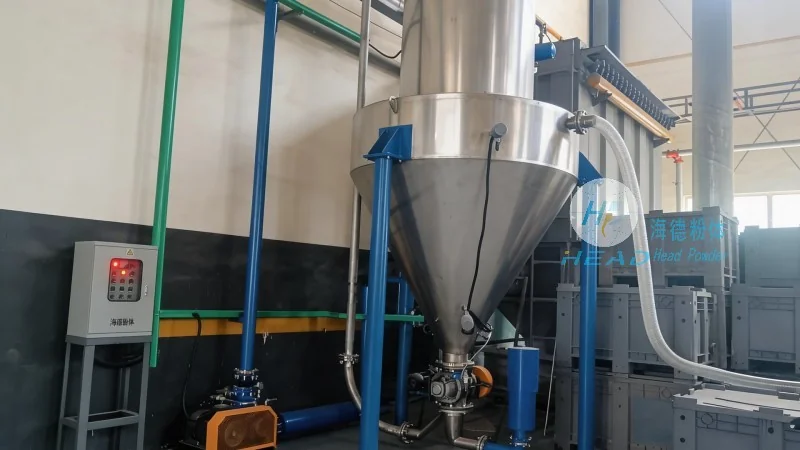
- Positive Pressure Systems: These systems operate by blowing air or gas into the pipeline, creating a positive pressure that pushes the material forward. They are commonly used for short to medium-distance conveying and are suitable for materials that are non-abrasive and free-flowing. For nanoparticle calcium carbonate, positive pressure systems can effectively handle the fine particles without causing excessive wear or blockages.
- Negative Pressure (Vacuum) Systems: In contrast, negative pressure systems use a vacuum to draw material from the source into the pipeline. This approach is ideal for applications where the material needs to be transported from a lower elevation or where the source is located in a confined space. Negative pressure systems are particularly useful when dealing with dust or fine powders, as they can maintain a clean and controlled environment. For nanoparticle calcium carbonate, vacuum systems can be optimized to handle the high surface area and low density of the particles, ensuring efficient and consistent transport.
- Combined Pressure-Vacuum Systems: Some applications may require a combination of both positive and negative pressure to achieve optimal performance. These systems are designed to handle varying distances and material characteristics, providing flexibility in material handling. For nanoparticle calcium carbonate, combined systems can be tailored to meet specific operational needs, such as long-distance conveying or handling of abrasive materials. The integration of pressure and vacuum components allows for better control over the flow rate and particle velocity, reducing the risk of clogging and improving overall system efficiency.
Application Scenarios and Benefits of Pneumatic Conveying for Nanoparticle Calcium Carbonate
The application of pneumatic conveying systems for nanoparticle calcium carbonate spans various industries, including plastics, paper, and coatings. The benefits of using such systems include improved safety, as the material is contained within a closed pipeline, reducing dust exposure and environmental contamination. Additionally, pneumatic conveying offers enhanced process control, allowing for precise dosing and consistent material flow. For manufacturers of nanoparticle calcium carbonate, these systems can lead to increased productivity and reduced operational costs. The ability to handle fine particles without the need for manual handling or bulk handling equipment makes pneumatic conveying a preferred choice in many industrial settings.
Conclusion and Company Overview
HeadPowder Engineering Co., Ltd., based in Shandong, China, is a trusted provider of pneumatic conveying solutions tailored to the unique needs of nanoparticle calcium carbonate. By understanding the working principles and classification applications of these systems, industries can optimize their material handling processes, enhance safety, and improve overall operational efficiency. With a focus on quality and innovation, HeadPowder continues to advance the technology and application of pneumatic conveying for nanoparticle calcium carbonate, supporting the growth and success of its clients in various sectors.