

Comparison of Advantages and Disadvantages of Negative Pressure and Positive Pressure Pneumatic Conv
When it comes to transporting aggregates such as sand and gravel, pneumatic conveying systems offer efficient and flexible solutions. Two primary methods dominate the industry: negative pressure (or vacuum) conveying and positive pressure conveying. This article provides a detailed comparison of the pros and cons of negative pressure versus positive pressure pneumatic conveying for aggregate transport, helping stakeholders make informed decisions based on operational needs and material characteristics. The information is presented by Shandong HeadPowder Engineering Co., Ltd., a leading provider of engineering solutions for material handling systems.
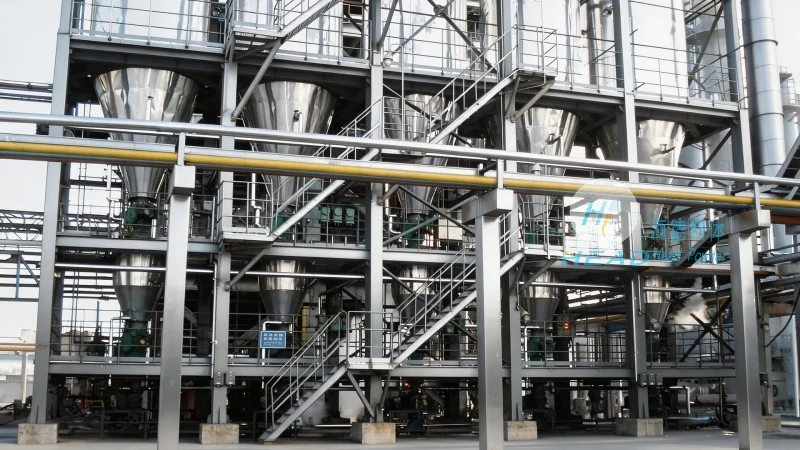
Understanding Negative Pressure (Vacuum) Pneumatic Conveying
Negative pressure conveying operates by creating a vacuum in the conveying line, which draws material from the source into the system. The material is then carried by the air flow to the destination point. This method is often preferred for applications where the material is to be transported from a central source to multiple destinations or where the material is sensitive to high pressure or friction.
Advantages of Negative Pressure Pneumatic Conveying
One of the key advantages of negative pressure systems is their ability to handle materials that are prone to dust generation or are sensitive to high pressure. The vacuum environment minimizes the risk of material degradation and reduces the likelihood of dust emissions, making it suitable for applications where air quality is a concern. Additionally, negative pressure systems are generally more energy-efficient for short to medium distances, as they require less power to maintain the vacuum compared to maintaining high pressure in the entire system.
Disadvantages of Negative Pressure Pneumatic Conveying
However, negative pressure conveying has several drawbacks. The main limitation is its lower capacity compared to positive pressure systems, as the vacuum can only pull material up to a certain height and distance. This makes it less suitable for long-distance or high-volume transport of aggregates. Another disadvantage is the potential for air leakage, which can reduce the system's efficiency and increase energy consumption. Furthermore, negative pressure systems may require more complex equipment, such as vacuum pumps and additional filtration, to maintain the vacuum and ensure material integrity.
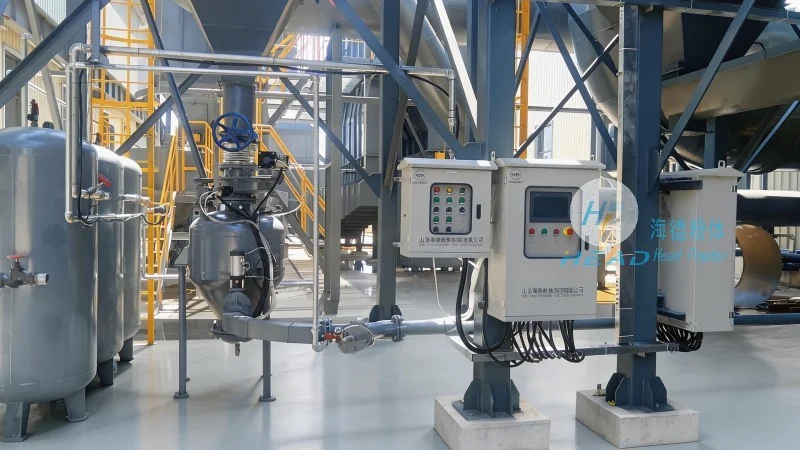
Understanding Positive Pressure Pneumatic Conveying
Positive pressure conveying, on the other hand, operates by blowing air or a mixture of air and material through the conveying line. The material is carried by the high-pressure air flow from the source to the destination. This method is typically used for long-distance or high-volume transport of aggregates, where the material needs to be moved over significant distances or through complex piping networks.
Advantages of Positive Pressure Pneumatic Conveying
The primary advantage of positive pressure systems is their high capacity and ability to transport materials over long distances. By maintaining high pressure throughout the system, positive pressure conveying can handle larger volumes of aggregates with less pressure drop, making it ideal for industrial-scale operations. Additionally, positive pressure systems are generally more straightforward in terms of equipment, as they rely on standard air compressors and less complex vacuum components.
Disadvantages of Positive Pressure Pneumatic Conveying
Despite its advantages, positive pressure conveying has notable disadvantages. The most significant drawback is the higher energy consumption compared to negative pressure systems, as maintaining high pressure requires more power. This can increase operational costs, especially for large-scale applications. Another disadvantage is the potential for material degradation due to high pressure and friction, which may affect the quality of the aggregates being transported. Furthermore, positive pressure systems may generate more dust and noise, requiring additional filtration and noise control measures.
Key Considerations for Choosing Between Negative and Positive Pressure Systems
When selecting a pneumatic conveying system for aggregate transport, several factors must be considered to determine which method is more suitable. The first consideration is the distance and volume of material to be transported. For short distances and low to medium volumes, negative pressure systems may be more efficient and cost-effective. For long distances and high volumes, positive pressure systems are generally preferred due to their higher capacity and ability to handle larger quantities.
Another critical factor is the material characteristics, such as particle size, moisture content, and abrasiveness. Materials that are fine, dusty, or sensitive to pressure may benefit from negative pressure systems, as they minimize the risk of degradation. Conversely, coarser or more abrasive materials may be better suited for positive pressure systems, as they can withstand higher pressure and friction without significant damage.
Operational costs and energy efficiency are also important considerations. Negative pressure systems are generally more energy-efficient for shorter distances, while positive pressure systems may be more cost-effective for longer distances due to their higher capacity. However, the total cost of ownership, including equipment maintenance and energy consumption, should be evaluated to make an informed decision.
Conclusion
In conclusion, both negative pressure and positive pressure pneumatic conveying systems offer viable solutions for aggregate transport, each with its own set of advantages and disadvantages. The choice between the two depends on specific operational requirements, material characteristics, and cost considerations. By understanding the pros and cons of each method, stakeholders can select the most appropriate pneumatic conveying system to ensure efficient, reliable, and cost-effective transport of aggregates.