

Positive Pressure vs. Negative Pressure Air Conveying for Loess: A Comparative Analysis
Loess, a fine-grained soil prevalent in arid and semi-arid regions, is integral to construction and industrial processes. The efficient transport of loess is critical for these applications, and air conveying systems provide a viable solution. Two primary methods exist for loess pneumatic transport: positive pressure and negative pressure systems. This article offers a detailed comparison of these approaches, highlighting their benefits, drawbacks, and practical applications, with a focus on the expertise of Shandong HeadPowder Engineering Co., Ltd., a leading provider in the field.
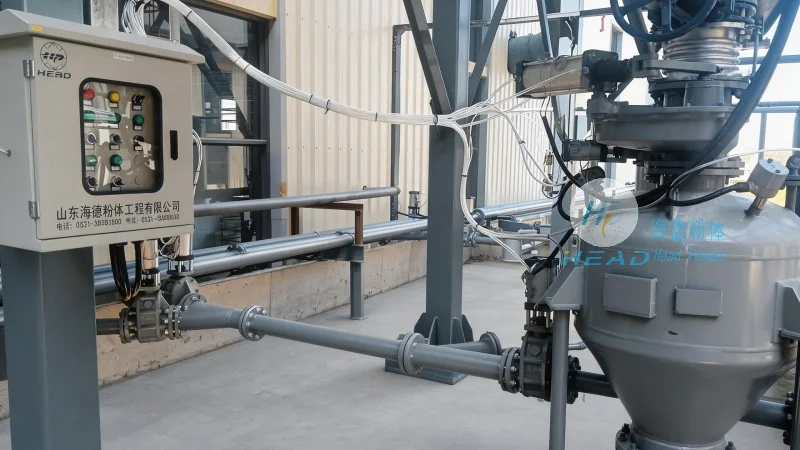
Introduction to Air Conveying Systems for Loess
Air conveying, or pneumatic conveying, transports bulk materials like loess using compressed air or vacuum. It outperforms traditional mechanical conveying by reducing equipment wear, lowering maintenance costs, and enabling long-distance transport without multiple transfer points. For loess, which poses health and environmental risks due to dust, air conveying offers a controlled solution. The choice between positive and negative pressure systems hinges on material properties, distance, and system complexity.
Positive Pressure Air Conveying
Positive pressure air conveying involves blowing air through a pipeline to move the material. The system operates by generating pressure above ambient levels, forcing loess through the pipeline. Effective for short to medium distances (up to several hundred meters), it includes a blower, material feeder, and pipeline network. The blower provides pressure, while the feeder ensures consistent material flow. Advantages include high material volume handling with minimal pressure drop, simple installation, and low maintenance. However, it can be noisy due to high-pressure blowers and cause wear from high air velocity. Energy consumption is higher than negative pressure systems, and dust emissions may require sealing and filtration.
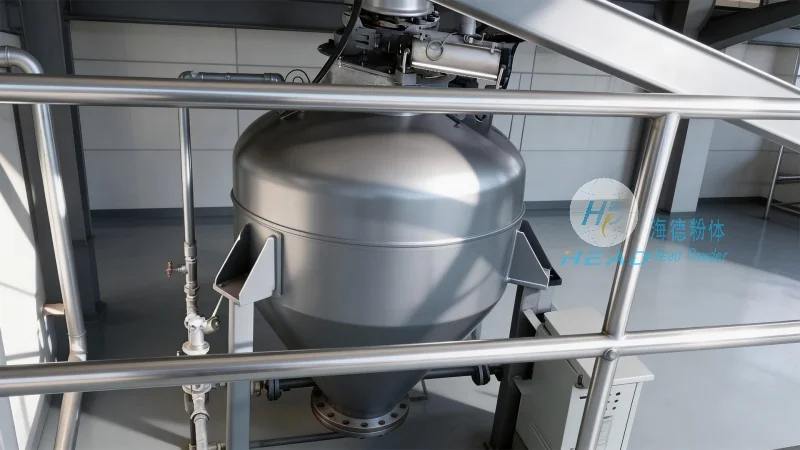
Negative Pressure Air Conveying
Negative pressure air conveying, or vacuum conveying, draws loess into the system via a vacuum. A vacuum pump reduces pipeline pressure, pulling material along with air. Ideal for long distances (up to several kilometers) and multiple collection points, it uses a vacuum pump, material receiver, and pipeline network. Key benefits are lower noise (quieter vacuum pump operation), higher energy efficiency for long distances, and gentler handling of delicate materials. Challenges include complex installation/maintenance (vacuum pump and filtration), and susceptibility to blockages from large particles or moisture.
Key Differences and Performance Metrics
Primary differences lie in air flow direction and pressure differential. Positive pressure systems use compressed air to push material, while negative pressure systems use vacuum to pull it. Energy consumption is a critical factor: positive systems consume more energy for long distances due to high pressure, whereas negative systems are more efficient. Noise levels differ—positive systems are louder, requiring soundproofing; negative systems operate quietly, suitable for noise-sensitive areas. Material handling capabilities vary: positive systems excel with coarse/abrasive materials (high air velocity breaks clumps), while negative systems are better for fine materials (lower velocity reduces breakage).
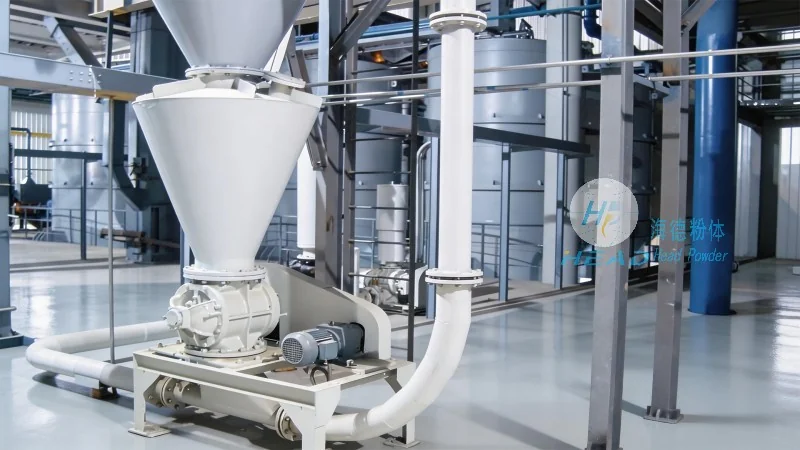
Practical Applications and Case Studies
Positive pressure systems are common in mining (short to medium distances, coarse materials). For example, a Chinese quarry may use a positive system to transport loess to a processing plant. Negative pressure systems are used in agriculture/construction (long distances, fine materials). A rural construction project might use a negative system to collect loess from fields and transport it to the site. Shandong HeadPowder Engineering Co., Ltd. has implemented both systems in various projects, demonstrating expertise in designing efficient loess air conveying solutions.
Conclusion and Recommendations
Both systems offer effective loess transport, with suitability depending on distance, material properties, energy efficiency, and noise. Positive pressure is ideal for short to medium distances and coarse materials; negative pressure for long distances and fine materials. For optimal performance, consider application-specific needs and consult qualified engineers. Shandong HeadPowder Engineering Co., Ltd. specializes in designing, installing, and maintaining air conveying systems for loess, providing customized solutions to ensure efficient, cost-effective, and environmentally friendly transport, supporting successful project execution.