

What is a Dust-Free Automatic Powder Conveying Line? And What Are Its Design Principles?
For industrial applications requiring the handling of powders while maintaining a dust-free environment, the dust-free automatic powder conveying line emerges as a critical solution. This advanced system is engineered to transport bulk powder materials efficiently and safely, ensuring minimal particle dispersion and compliance with stringent cleanliness standards. As a key component in modern powder processing facilities, such lines are essential for industries ranging from pharmaceuticals and food processing to chemical manufacturing and cosmetics.
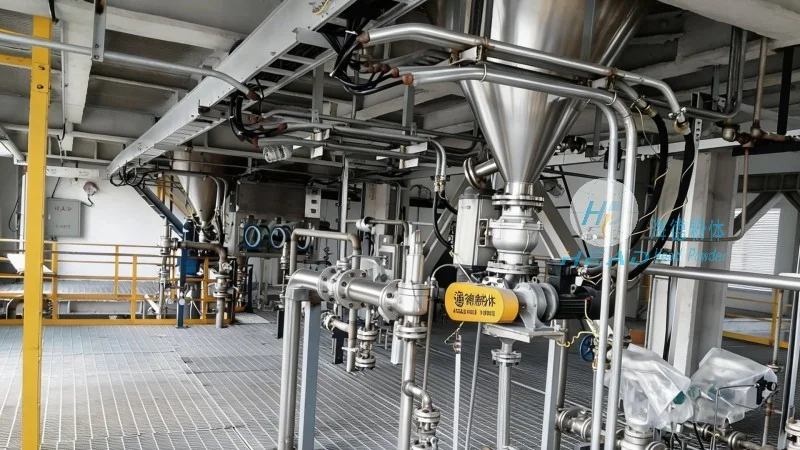
Understanding the Dust-Free Automatic Powder Conveying Line
The dust-free automatic powder conveying line is a sophisticated piece of industrial equipment designed to handle powders without generating airborne dust particles. It integrates multiple components working in tandem to achieve a closed-loop or semi-closed-loop system, preventing contamination and ensuring product purity. The primary goal of this system is to maintain a controlled environment where powders are transferred from one location to another with minimal exposure to the air, thereby reducing the risk of dust explosions and cross-contamination.
About HeadPowder: The Manufacturer
HeadPowder, a leading manufacturer based in Shandong, China, specializes in the design, development, and production of advanced powder handling systems. With a strong commitment to quality and innovation, the company has established itself as a trusted provider of dust-free conveying solutions for various industries. HeadPowder's expertise lies in creating customized systems that meet the specific requirements of clients, ensuring optimal performance and reliability in diverse operational conditions. The company's facilities and technical team are dedicated to delivering high-performance equipment that enhances productivity while maintaining the highest standards of safety and hygiene.
Design Principles of the Dust-Free Automatic Powder Conveying Line
The design of a dust-free automatic powder conveying line is guided by several fundamental principles aimed at achieving efficient, safe, and reliable operation. The core principle is the implementation of a sealed system that minimizes the interaction between the powder and the ambient air. This is typically achieved through the use of airtight hoppers, sealed pipelines, and specialized valves that prevent dust leakage. The system often incorporates positive pressure or negative pressure control to maintain the desired air pressure within the conveying line, further reducing the risk of dust escape.

Another critical design principle is the selection of appropriate conveying methods. Common techniques include pneumatic conveying (both pressure and vacuum systems) and mechanical conveying (such as screw conveyors or belt conveyors). The choice of method depends on factors like the powder's properties (e.g., particle size, moisture content, flowability), the distance to be covered, and the required flow rate. For instance, pneumatic systems are ideal for fine powders that are prone to caking, while mechanical systems may be preferred for bulkier or more abrasive materials. The design also considers the integration of control systems, including sensors and automation technologies, to monitor and regulate the conveying process in real-time. These controls ensure that the system operates within safe parameters, adjusts to changes in material flow, and provides data for performance optimization.
Key Components and Their Functions
The dust-free automatic powder conveying line consists of several key components, each playing a vital role in the overall operation. The primary components include the hopper or feeder, which serves as the storage and feeding unit for the powder. This component is designed to maintain a consistent flow of material into the conveying system, often equipped with level sensors to detect the material level and adjust the feeding rate accordingly. The hopper may also feature a sealing mechanism to prevent dust from escaping during the loading process.
The conveying line itself, which can be made of stainless steel or other corrosion-resistant materials, is the main pathway for transporting the powder. The choice of material is crucial as it must withstand the abrasive nature of the powder and resist contamination. The line may include bends, elbows, or straight sections, with each component designed to minimize pressure loss and maintain the flow of material. For pneumatic systems, the line is connected to a blower or vacuum pump that generates the necessary air pressure to move the powder. The blower is typically equipped with filters to ensure that the air used for conveying is clean, preventing the introduction of foreign particles into the system.
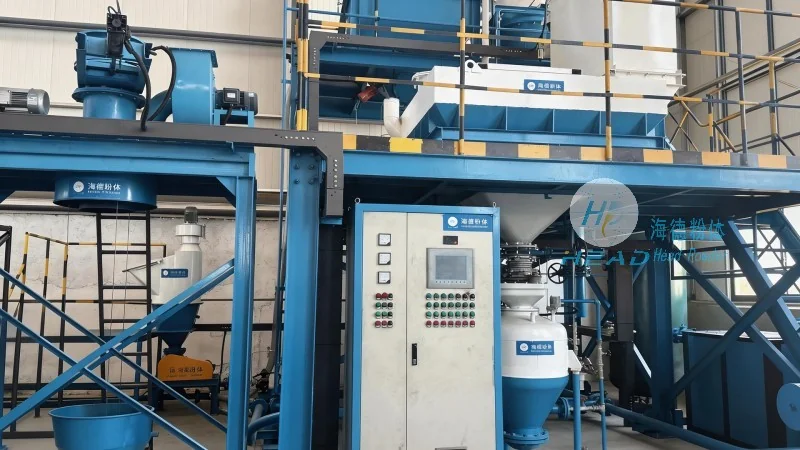
The control valves, such as rotary valves or slide gates, are used to regulate the flow of powder into the conveying line and to direct it to the desired destination. These valves are often equipped with sensors to detect the position and flow rate, allowing for precise control. The receiving hopper or silo at the end of the line serves as the final storage or processing point for the powder. It is designed to maintain the powder's quality and prevent any backflow or spillage. The system may also include cleaning mechanisms, such as air knives or brushes, to remove any residual powder from the components after operation, ensuring the system remains clean and ready for the next batch.
Advantages and Applications
The dust-free automatic powder conveying line offers numerous advantages that make it indispensable in modern industrial settings. One of the most significant benefits is the ability to maintain a dust-free environment, which is critical for industries where product purity and safety are paramount. By preventing dust generation and dispersion, the system reduces the risk of dust explosions, which can be catastrophic in powder handling facilities. Additionally, the sealed design minimizes cross-contamination, ensuring that the powder remains free from external particles and contaminants, which is essential for pharmaceutical and food applications.
Another advantage is the improved efficiency and productivity. The automated nature of the system allows for continuous operation with minimal human intervention, reducing labor costs and increasing throughput. The precise control over the conveying process ensures that the material is transferred at the optimal rate, avoiding overloading or underloading of the system. This leads to consistent product quality and reduced waste. The system also offers flexibility, as it can be customized to handle a wide range of powder types and sizes, making it suitable for various applications.